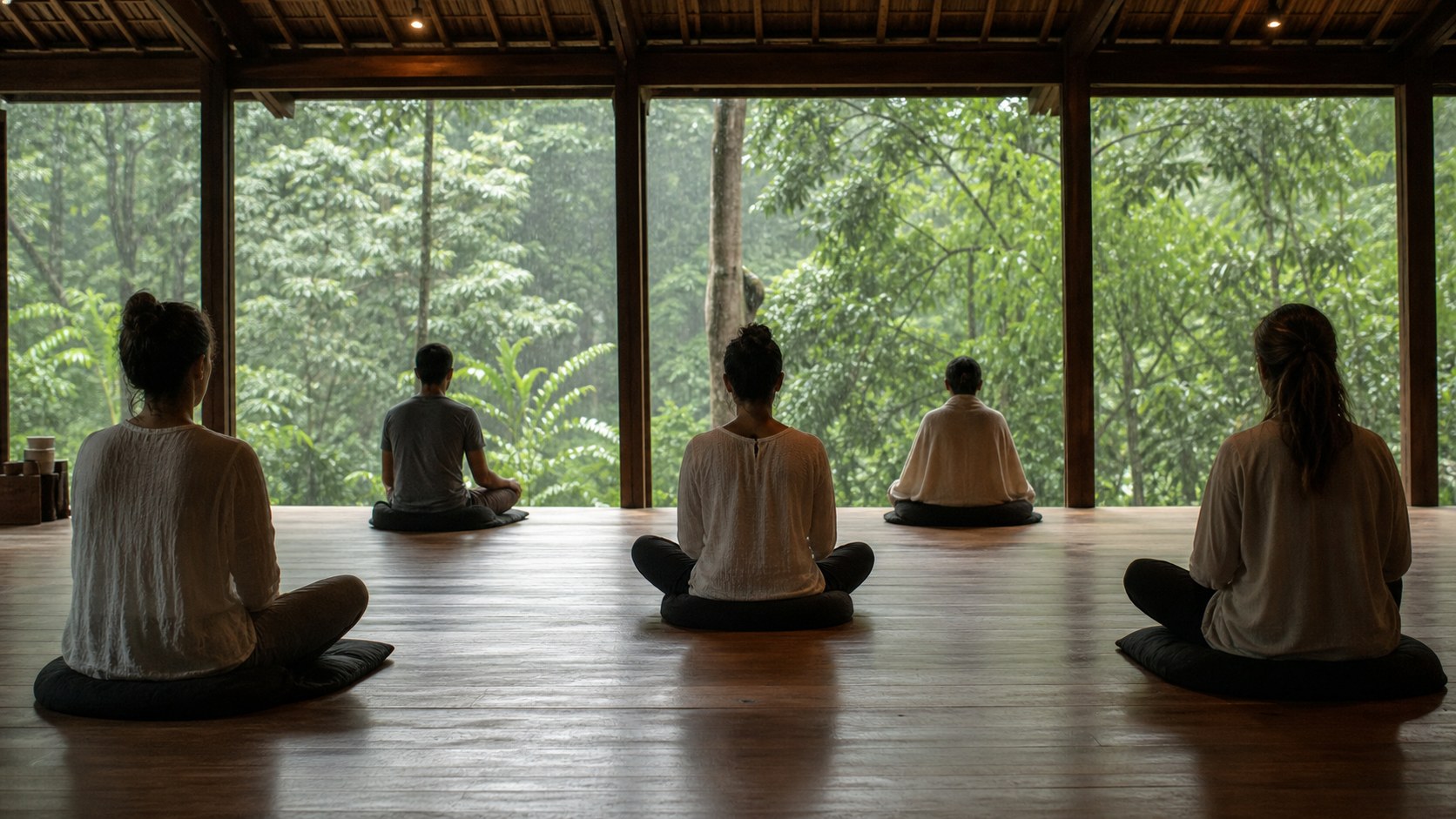
When a Meditation Retreat Is More Than a Quiet Vacation
Meditation retreats can be deeply restorative, but they are not all designed for the same person or the same emotional season. Some offer a gentle weekend of guided breathing and rest. Others involve long hours of silence, strict schedules, limited contact, and practices that can bring buried stress to the surface. The top meditation retreats are not simply the most famous or remote. They are the ones whose structure, teachers, setting, and level of support match what your mind and body can safely receive.
A: They can support clarity, stress reduction, and emotional awareness when matched responsibly to the person.
A: Some can, but many beginners do better with shorter guided or hybrid retreats first.
A: No. It can complement care, but it should not replace professional mental health treatment.
A: A weekend or three-night retreat is often a sensible start.
A: Speak with a teacher or staff member; discomfort can happen and should be supported.
A: Not for secular mindfulness retreats, though traditional centers may include specific customs.
A: Only in some programs; check the format before booking.
A: Comfortable layers, simple toiletries, medications, a journal if allowed, and easy shoes.
A: Start with a short daily routine that fits ordinary life.
A: Look for steadier attention, kinder self-talk, realistic habits, and gentler reentry afterward.
Know the Difference Between Rest and Intensive Practice
A restful retreat may include short sits, mindful walks, yoga, journaling, and plenty of unscheduled time. An intensive retreat may ask guests to sit for many hours, follow silence, avoid phones, and stay with difficult emotions without ordinary distractions. Both can be valuable, but they serve different needs.
Travelers looking for mental health support should be especially honest. If you are exhausted, a punishing schedule may not be wise. If you want serious practice, a light spa-style meditation program may feel too shallow. The right fit matters more than the prestige of the center.
Meditation is simple in form but not always easy in experience. Choosing carefully helps the practice become supportive rather than overwhelming.
Teacher Quality and Emotional Safety
A strong meditation retreat has teachers who explain practice clearly, normalize difficulty, and maintain healthy boundaries. They do not promise instant transformation or treat distress as failure. They know when to encourage persistence and when to recommend rest, grounding, or outside support.
If a retreat touches trauma, grief, addiction, depression, or anxiety, ask what professional support is available and what the staff is trained to handle. Meditation can complement mental health care, but it should not be marketed as a cure-all. Ethical programs are precise about scope.
Silent Retreats, Guided Retreats, and Hybrid Formats
Silent retreats can be powerful because they remove performance and constant social processing. Without ordinary conversation, the mind has space to reveal its patterns. That can feel peaceful, boring, tender, or surprisingly intense depending on the person and the day.
Guided retreats are often better for beginners because instruction, discussion, and questions provide orientation. Hybrid retreats may use silence in the morning, teaching sessions later, and optional movement to keep the experience balanced. A first retreat does not have to be extreme to be meaningful.
The best format is one you can actually inhabit. If the idea of silence feels intriguing but intimidating, start with a shorter retreat rather than committing to a long residential program immediately.
Settings That Support Practice
Forests, monasteries, coastal centers, mountain hermitages, and simple rural retreat houses all support meditation in different ways. Nature helps many people settle because sound and light become gentle anchors. A beautiful setting is helpful, but it should not become a substitute for good teaching.
Practical comfort also matters. Sleep, temperature, food, walking space, and clean facilities shape whether the nervous system can soften. A retreat does not need luxury, but unnecessary discomfort can dominate attention, especially for beginners.
Mental Health Benefits and Realistic Expectations
Meditation retreats may help people notice thought patterns, reduce reactivity, sleep more deeply, or reconnect with grief and gratitude. They can create enough distance from ordinary demands for the mind to reorganize. That can feel transformative, but transformation is rarely tidy.
Some people also experience restlessness, sadness, irritation, or anxiety during retreat. These reactions do not mean the retreat failed. They may mean the mind finally has fewer distractions. Good programs give language and support for this without dramatizing it.
The healthiest expectation is openness. Go for practice, not a guaranteed breakthrough.
Returning Home With Care
The days after a retreat matter. Noise, inboxes, family needs, and travel logistics can feel sharper after silence. Plan a gentle reentry if possible: simple meals, limited commitments, and time to integrate what you noticed.
Choose a small daily practice before leaving. Ten minutes of sitting, mindful walking, or a device-free morning can preserve the retreat's value better than grand promises. The goal is not to live as if you are still at the center. It is to bring one honest thread of attention back into real life.
Some travelers benefit from journaling after practice, while others need a break from analysis. Choose the integration style that keeps you steady. If writing turns every sit into a project, a quiet walk may be more helpful. If silence becomes vague, a few plain notes can preserve what you learned.
A strong retreat also teaches respect for limits. Leaving a session to rest, asking for help, or choosing a gentler program next time can be wise practice. Transformation is not proven by overriding yourself. It is often shown by listening sooner.
If the retreat opened difficult material, arrange support rather than trying to manage everything privately. A therapist, trusted friend, teacher, or support group can help translate insight into care. Integration is not weakness; it is how deeper work becomes livable.
Small daily continuity matters more than trying to recreate the retreat at home in full detail later on.
A meditation retreat transforms mental health most responsibly when it increases clarity, self-compassion, and practical steadiness rather than chasing a dramatic spiritual identity or judging every ordinary emotion as a problem to eliminate forever.
Cost and culture deserve attention. Donation-based centers, Buddhist monasteries, secular mindfulness retreats, yoga centers, and luxury wellness resorts all operate differently. Read expectations around chores, dress, silence, meals, and teacher access before booking.
Beginners should avoid measuring themselves against experienced practitioners. Sitting still can be hard, and the mind may feel louder before it feels calmer. A kind retreat environment treats that as normal training, not personal failure.
If you are under active psychiatric care, ask your clinician before attending an intensive silent retreat. This is especially important when medication changes, recent crisis, trauma symptoms, or severe insomnia are present. Responsible preparation protects the possibility of real benefit.
A retreat schedule should be read like a map of the nervous system. Wake times, sitting periods, meals, work practice, rest, teacher meetings, and lights-out all shape the experience. A program that looks elegant online may feel demanding in real life if there is little rest or no room to ask questions.
Location affects practice more than people expect. A remote forest center may help attention soften, while a city retreat may be easier to reach and integrate. Mountain silence can feel spacious, but altitude or cold may distract some guests. The most supportive setting is the one that helps you stay present without adding unnecessary strain.
Mental health transformation is often gradual. A retreat may not remove anxiety or sadness, but it may change your relationship to them. You might notice earlier signs of tension, soften harsh self-talk, or understand which habits keep your mind constantly activated. Those shifts can be practical and profound without feeling dramatic.
Teacher interviews or small-group check-ins can make a retreat safer for beginners. They give participants a place to ask whether sleepiness, agitation, grief, or boredom is normal. Without that support, people may misinterpret common meditation experiences as personal failure. Good guidance turns confusion into practice material.
Silence should not mean abandonment. Even in strict silent retreats, there should be a clear way to speak with staff about health, safety, or serious distress. Travelers should know this process before arriving. A responsible container allows silence while still protecting human needs.
Retreats with movement can be especially helpful for people who live mostly in their heads. Walking meditation, gentle yoga, mindful chores, or slow stretching give the body a role in practice. For some guests, these embodied periods are what make seated meditation sustainable.
Food and caffeine changes can influence mood. A sudden shift to very light meals, no coffee, or unfamiliar eating times may affect headaches, irritability, or energy. Ask about the menu if you are sensitive. A retreat should challenge habits thoughtfully, not create avoidable physical distress.
The social environment after silence also matters. Some retreats end with conversation, group reflection, or practical integration. Others close very quietly. If you know abrupt transitions are hard for you, choose a format that includes a gentle ending rather than a sudden return to ordinary noise.
Secular mindfulness retreats can fit travelers who want practical language without religious framing. Traditional Buddhist centers may offer deeper lineage, chanting, ritual, and discipline. Yoga-based retreats often blend breath, movement, and philosophy. Understanding the frame helps prevent misplaced expectations.
Screening forms are signs that a retreat takes participant wellbeing seriously. Questions about mental health history, medications, mobility, emergency contacts, or prior retreat experience help staff judge fit. Be honest, because a mismatch discovered before arrival is far better than a crisis during silence.
Retreats that advertise transformation should still sound grounded. Be cautious with promises of permanent peace, guaranteed healing, or secret techniques. Real meditation practice is usually humbler. It trains attention, steadiness, compassion, and awareness through repetition.
A meditation retreat may reveal how tired you are. Some guests sleep more than expected during the first day or two. That is not necessarily avoidance. The body may be taking the first safe chance it has had to recover.
If difficult emotions arise, grounding practices can help. Feeling feet on the floor, opening the eyes, walking slowly, speaking with a teacher, or taking a mindful break can keep practice within a workable range. Retreats should not frame overwhelm as spiritual achievement.
For people traveling with a partner or friend, separate expectations are useful. One person may want silence, while the other may want guided reflection. Attending the same retreat does not mean having the same inner experience.
Reentry should include media caution. After days with limited input, news, social feeds, and crowded airports can feel unusually sharp. Give yourself permission to return gradually with simple food, fewer obligations, and a quieter evening.
A retreat can be especially helpful when it teaches you how your mind behaves under less stimulation. You may notice planning loops, self-criticism, resentment, grief, or the urge to escape boredom. Seeing those patterns in a supported setting can make them less invisible at home.
The best centers give practical instructions for difficult moments. They may suggest returning to breath, softening the body, naming emotions, opening the eyes, or taking a mindful walk. Simple tools matter because retreat insight is not useful if guests feel trapped inside intensity.
Follow-up support can extend the benefit. Some teachers offer online groups, practice interviews, recommended readings, or local community suggestions. A retreat that points you toward continued practice is often more responsible than one that sends guests home with only a dramatic closing ceremony.
Mental health transformation should be measured gently. Better sleep, fewer reactive moments, kinder self-talk, or the ability to pause before answering an email all count. The retreat does not need to produce a cinematic breakthrough to be worthwhile.
The deepest retreat benefit may be ordinary: learning that you can pause, feel, breathe, and choose a response with slightly more space. That small space can change how daily life feels.