Cultural Festivals Show a Community in Motion
The best cultural festivals around the world do more than entertain visitors. They show how communities remember, celebrate, mourn, welcome seasons, honor faith, pass down skills, and create public identity. A cultural festival can fill streets with music, flowers, food, masks, candles, drums, dance, or silence, but the visible beauty is only the surface. Travelers who prepare well can experience the event as a living tradition rather than a colorful interruption in an itinerary.
A: A cultural festival has local meaning and continues beyond visitor entertainment.
A: Sometimes, but only with careful etiquette and respect for restricted moments.
A: Choose one with clear visitor guidance, manageable crowds, and a tradition you want to understand.
A: Learn the meaning, dress rules, photo limits, participation norms, and current dates.
A: Small festivals can offer more context and less crowd pressure, but famous events can still be meaningful.
A: A guide is useful when the event has complex rituals, routes, language, or etiquette.
A: Avoid flattening language such as exotic or untouched, and describe specific things you learned instead.
A: Yes, when timing, crowds, heat, and behavior expectations fit the child.
A: Photograph less than you think, and prioritize wide scenes over intrusive close-ups.
A: Meaning, timing, community participation, and respectful attention make it memorable.
What Separates Cultural Festivals From Tourist Shows
A cultural festival has meaning that continues whether visitors arrive or not. It may be tied to religious calendars, harvests, historical memory, family gatherings, craft traditions, seasonal change, or regional identity. Tourist shows can be enjoyable, but they are usually scheduled for outside consumption. Cultural festivals belong first to the people who keep them alive.
That difference should shape traveler behavior. Visitors are not the main audience, even when they are welcome. The best travelers watch for cues, follow barriers, respect quiet moments, and understand that participation must be invited rather than assumed.
Festivals of Memory, Faith, and Renewal
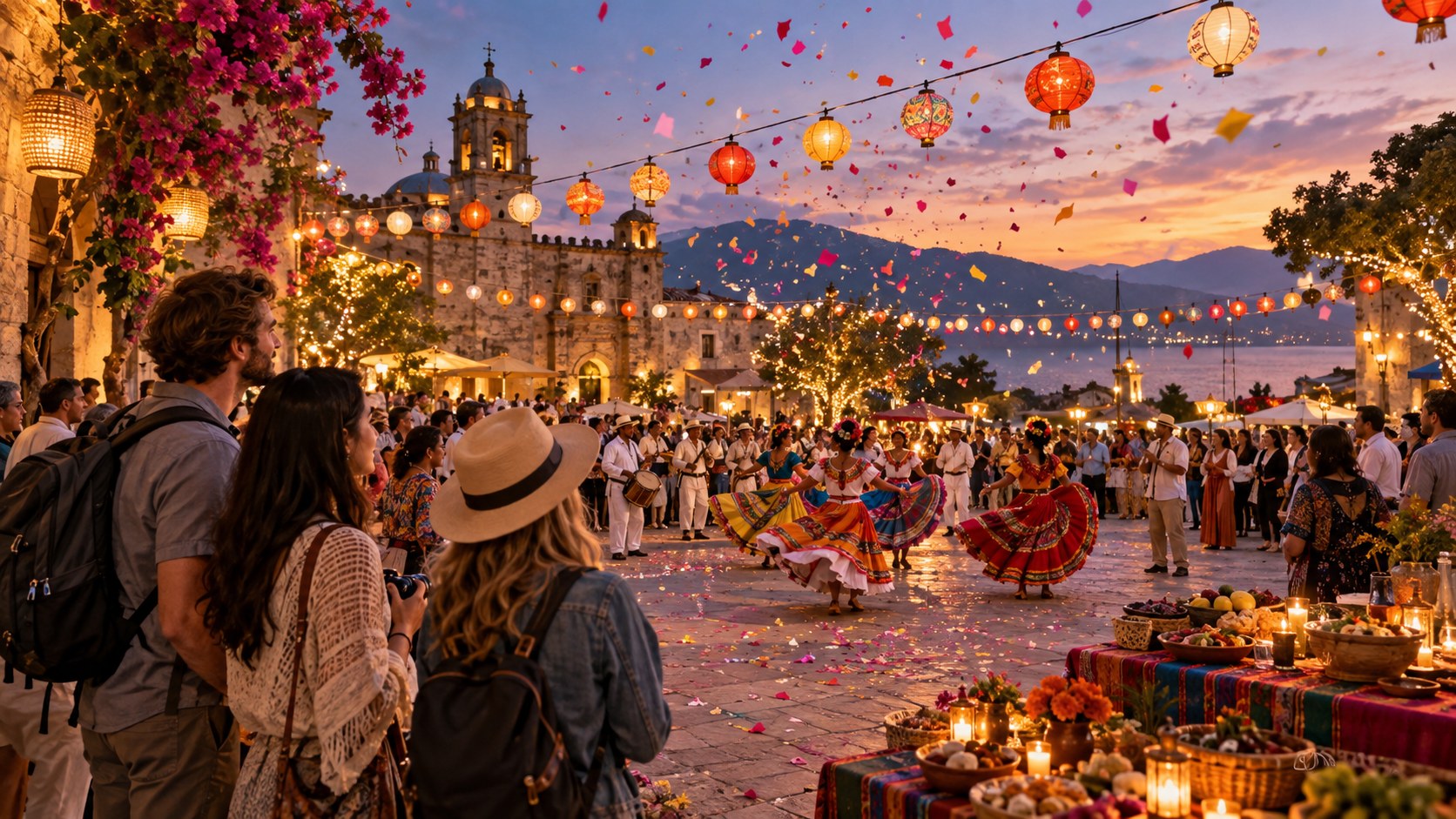
Many cultural festivals carry spiritual or ancestral meaning. Day of the Dead in Mexico, Obon in Japan, Semana Santa in Spain and Latin America, Diwali in India, Vesak in Buddhist communities, and many local saint days combine public beauty with private devotion. Travelers may see candles, altars, processions, offerings, music, food, and decorated streets, but these elements often hold meaning deeper than their appearance.
Visitors should learn basic etiquette before arriving. Some events allow broad public celebration. Others include prayers, mourning, or family rituals where cameras and loud behavior are inappropriate. A respectful traveler can be moved by an event without trying to enter every part of it.
Festivals of Food, Harvest, and Season
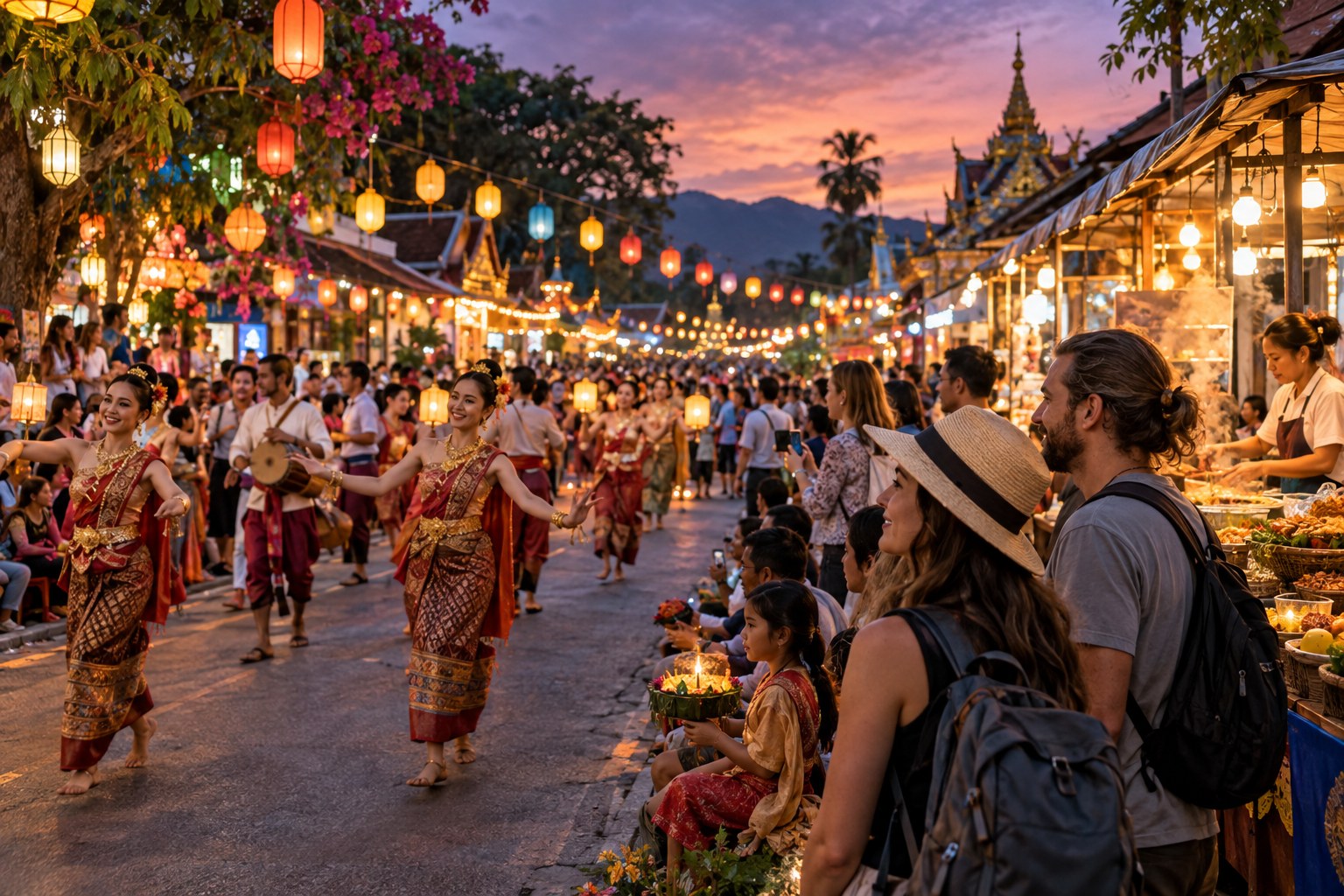
Harvest and seasonal festivals are cultural because they show how communities mark time. Grape harvests, truffle fairs, rice planting events, maple celebrations, olive harvests, seafood festivals, lantern festivals, flower festivals, and winter markets reveal the relationship between landscape and celebration. They connect agriculture, weather, labor, taste, and public gathering.
These festivals often offer excellent entry points for travelers because food creates conversation. Ask vendors what is seasonal, what their family eats, or how the product is usually prepared. The best experiences connect eating with the work behind the table.
Performance, Costume, and Public Identity
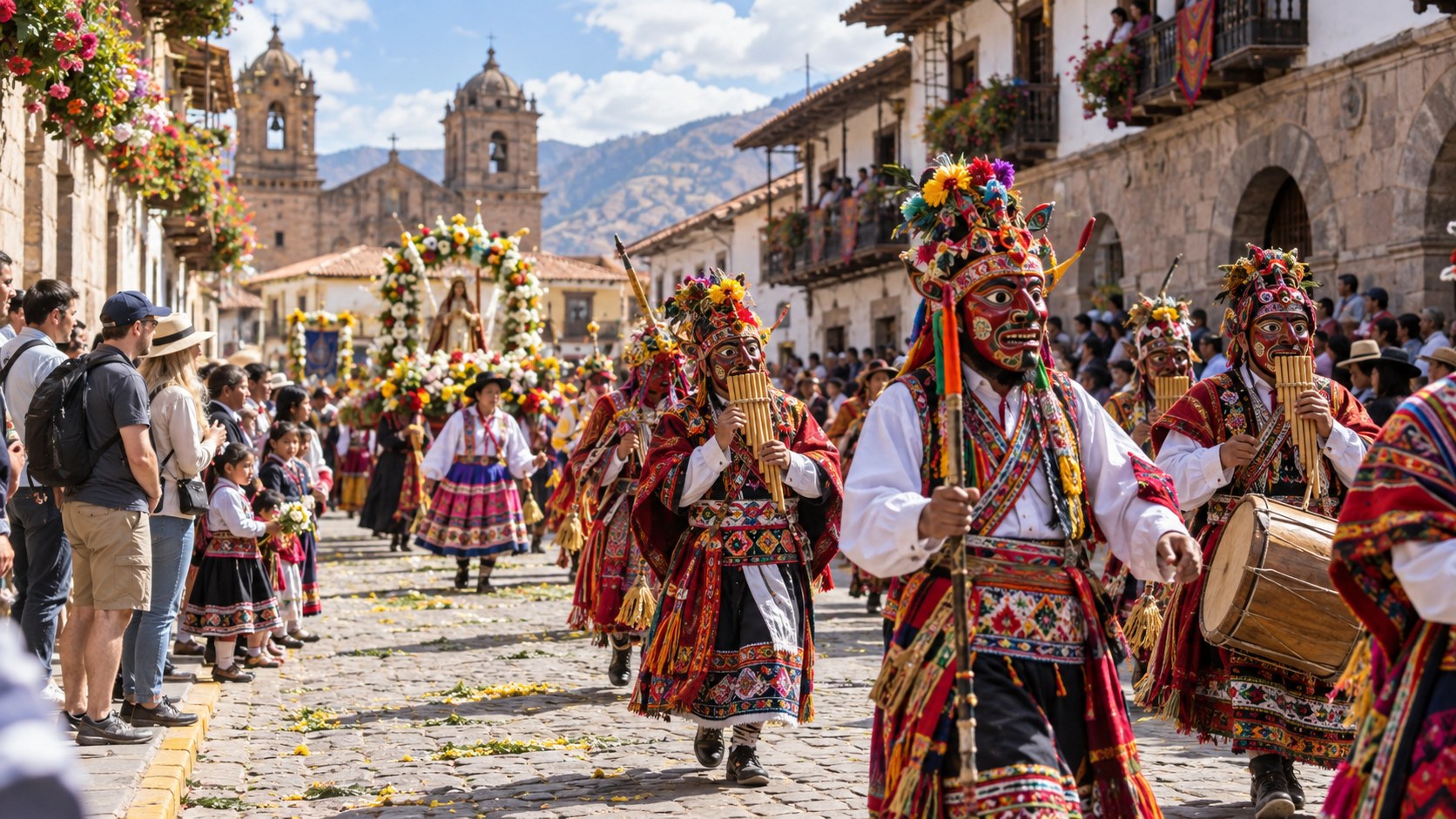
Costume, dance, music, masks, and performance can express identity in concentrated form. Carnival traditions, masked festivals, Indigenous gatherings, regional dance festivals, drumming events, and folk music celebrations may reveal stories of resistance, pride, colonization, migration, religion, or local humor. The surface may be joyful, but the roots can be complex.
Travelers should avoid reducing costumes to spectacle. Do not touch clothing, interrupt performers, or treat masks as props. If a festival includes workshops, talks, museums, or community guides, use them to understand what the public performance is carrying.
How to Plan for Cultural Festival Depth
Planning should begin with the festival's calendar and meaning. Confirm current dates, then learn the event's structure: opening rituals, main procession, neighborhood events, market days, quiet ceremonies, closing moments, and visitor zones. A traveler who understands the sequence can choose better viewing times and avoid crowding the most sensitive moments.
It also helps to build context before arrival. Read a local source, visit a museum, book a guide, or ask hosts what visitors often misunderstand. Cultural festivals become richer when travelers know what they are seeing.
Leaving With Better Stories
The stories travelers tell after a cultural festival should be careful. Avoid calling an event exotic, primitive, wild, or untouched. Name the place, the tradition, the people who explained it, and what you learned. Admit what you did not understand. A festival is not a costume box for visitors. It is a community's public memory and shared time.
When approached well, a cultural festival can become one of travel's most generous experiences. It lets visitors stand near meaning without owning it. That is enough, and often more powerful than pretending to belong.
Cultural festivals can be surprisingly quiet. Not every important event is loud or colorful. Some of the most moving moments may be a procession turning silent, a family tending an altar, a prayer beginning, or a street pausing for a ritual.
The best festival photographs often come from wider scenes rather than close faces. Streets, light, food, movement, architecture, and public gathering can tell the story without intruding on individuals. Ask before portraits, especially when children, elders, worshippers, or performers are involved.
Travelers should spend money in ways that support the event. Local food, official tickets, artisan work, community tours, and locally owned lodging can help. Bargain-hunting at a festival may miss the point when people are sharing labor and tradition.
A cultural festival may also reveal disagreement inside a community. Some residents may love tourism, while others may feel crowded or priced out. Visitors should not assume one cheerful interaction means every impact is positive. Move with care.
If a festival feels overwhelming, step back. A side street, museum, courtyard, or quiet cafe can offer perspective. Taking a break does not mean missing the event. It may help travelers return with more patience and attention.
Families should choose festival moments carefully. Children may enjoy music, food, and color, but long waits, heat, late nights, and dense crowds can make the day hard. Shorter visits and clear meeting points help.
Some cultural festivals require advance permissions, reserved seating, or local introductions. Others are fully public. Knowing the difference prevents accidental disrespect and helps travelers avoid unreliable operators promising access they cannot ethically provide.
Climate and weather should be part of festival planning. Heat, rain, altitude, dust, cold nights, or muddy fields can shape comfort. Practical preparation helps visitors stay respectful when the day becomes physically demanding.
Travelers who want depth should look for festival education before the main event. Exhibitions, rehearsals, lectures, temple visits, cooking classes, or craft demonstrations can make public celebration more understandable.
The best cultural festival trips end with gratitude. The traveler has witnessed something that belongs to others and has been allowed to stand near it. That feeling should inspire careful behavior during the trip and careful language afterward.
Cultural festivals should be understood as calendars, not isolated attractions. Preparation may begin weeks before the public event, and meaning may continue through family visits, temple rituals, cleaning, cooking, or community gatherings after visitors leave. The visible day is only part of the tradition.
Travelers should learn who is allowed to explain the festival. Some meanings are shared publicly, while others belong to families, elders, religious leaders, or specific communities. Respecting limits on explanation is part of respecting the festival itself.
Local businesses can help visitors experience the event more responsibly. A family-run guesthouse, independent restaurant, craft shop, or resident-led tour may provide practical advice and keep money closer to the community. The festival trip becomes less extractive when spending choices are thoughtful.
Cultural festivals can be emotionally complex. Joy, grief, devotion, pride, satire, remembrance, and political identity may all appear in the same event. Visitors should avoid deciding too quickly what the festival means based only on color or music.
A respectful traveler also pays attention to fatigue. Heat, standing, incense, music, crowds, and late nights can wear people down. Taking breaks helps visitors remain patient and prevents frustration from turning into poor behavior.
Some events change under tourism pressure. Routes may be adjusted, performances shortened, prices raised, or rituals moved. Travelers should ask how tourism is affecting the celebration and support forms of access that protect local control.
The best cultural festival photos include context: streets, hands making food, musicians tuning, decorations being carried, families waiting, or light changing over a plaza. These images often tell a better story than intrusive close-ups.
Cultural festival travel works when visitors remember that they are temporary. They can witness, learn, spend carefully, and leave gently. The festival belongs to those who will return to it next year.
A good cultural festival trip starts with research into the people who maintain it. Artists, religious communities, farmers, elders, musicians, dancers, neighborhood associations, and local officials may all carry different parts of the event. Knowing who does the work helps visitors see more than the surface.
Travelers should be careful with language after the trip. Calling a festival strange, primitive, exotic, or crazy can flatten traditions that deserve better. More respectful language describes what was seen, what was learned, and what remains outside the visitor's understanding.
Some cultural festivals welcome hands-on participation through workshops, meals, dances, or craft sessions. Others reserve participation for community members. Visitors should accept both possibilities with equal grace because observation can be meaningful when participation would be inappropriate.
The best festivals often reveal ordinary skills made public. Cooking, weaving, drumming, flower arranging, mask making, boat building, horse handling, chanting, or street decorating may become part of a larger celebration. Watching that labor closely can be more interesting than chasing the most photographed moment.
A destination's museums and cultural centers can help travelers understand festival symbols before the streets fill. Even a short visit can clarify why colors, foods, songs, routes, or costumes matter. Context turns a beautiful event into a readable one.
Visitors should also respect fatigue among local participants. Performers, vendors, police, volunteers, clergy, and families may be working long hours. Patience in lines, kindness in crowded spaces, and realistic expectations are simple ways to honor that labor.
Cultural festival planning should include an exit strategy. Crowds leaving at once can overwhelm transit and narrow streets. Knowing a quieter route, later departure time, or nearby meal option helps travelers avoid adding pressure to the busiest moment.
A festival's meaning may change depending on where a visitor stands. The front row might offer spectacle, while a side street may reveal preparation, waiting, joking, prayer, or exhaustion. Moving thoughtfully between these spaces can create a fuller understanding.
Travelers should also ask whether a festival is changing. Climate pressures, migration, political shifts, tourism growth, and younger generations can all reshape public celebrations. Understanding change prevents visitors from treating culture as frozen for their enjoyment.
Food traditions deserve careful attention because they often carry memory. Festival dishes may mark harvest, mourning, fasting, abundance, religious observance, or family reunion. Eating them slowly and asking respectful questions can reveal history that a parade alone cannot explain.
A cultural festival does not have to be comfortable to be valuable. Crowds, unfamiliar rituals, solemn moods, or confusing symbolism may challenge visitors. The goal is not to smooth everything into easy entertainment, but to remain attentive without demanding that the event simplify itself.
Travelers should leave room for humility when they do not understand. A festival can be beautiful without being fully explainable to outsiders, and that limit deserves respect.
A good cultural festival itinerary balances major events with slower interpretation. Spend time with exhibitions, local guides, food traditions, and neighborhood walks before or after the crowded peak. That wider rhythm helps the visitor see celebration as part of a living culture rather than a single performance.