The Best Eco-Lodges Make Sustainability Visible
The best eco-lodges around the world are not just beautiful cabins in natural settings. They are places where lodging is designed around conservation, local benefit, careful resource use, and meaningful interpretation. A good eco-lodge may still offer comfort, excellent food, and memorable views, but it should also be honest about energy, water, waste, staffing, land protection, and community relationships. Sustainable stays work best when guests can see how the lodge cares for the place that hosts it.
A: An eco-lodge is lodging designed to reduce impact, support conservation, benefit local people, and educate guests.
A: No; they range from simple cabins to luxury stays, but all should explain their impacts honestly.
A: Ask specific questions about energy, water, waste, staffing, food, land protection, and community benefit.
A: It can be, but energy source, climate, building design, and guest use matter.
A: Certification can help, but transparent practices and local reputation are also important.
A: They can be when longer stays, local benefit, and strong systems balance the transport impact.
A: Use fewer resources, follow wildlife rules, respect staff, and learn from guides.
A: Yes, especially at lodges with safe trails, patient guides, and clear expectations.
A: Sometimes, because fair wages, conservation fees, and responsible systems cost money.
A: Guests leave rested, informed, and connected to protecting the place.
What Separates an Eco-Lodge From a Nature Hotel
A nature hotel may be located near a forest, beach, desert, or mountain. An eco-lodge should go further. It should reduce impact, hire and train local staff, protect habitat, manage waste and water, source food thoughtfully, and help guests understand the surrounding ecosystem.
The difference is transparency. Eco-lodges should be able to explain how power is generated, how wastewater is treated, how buildings were placed, how guides are trained, and how nearby communities benefit. Vague language is not enough.
Rainforest Eco-Lodges
Rainforest lodges in Costa Rica, Ecuador, Peru, Borneo, Madagascar, Uganda, and other biodiverse regions can be extraordinary when they protect habitat and support local guides. Raised paths, small groups, night walks, birding decks, and naturalist-led interpretation can make the forest easier to understand without overwhelming it.
Guests should expect some humility. Rain, insects, humidity, and hidden wildlife are part of the experience. A lodge that pretends the rainforest can be made perfectly convenient may be hiding costs in energy, chemicals, or habitat disturbance.
Desert, Mountain, and Island Eco-Lodges
Desert eco-lodges must take water seriously. Mountain lodges must manage trail pressure, heating, transport, and waste. Island lodges must address reefs, freshwater, imported goods, and limited disposal. Each ecosystem has different sustainability challenges.
Travelers should judge a lodge by how well it fits its place. Solar power may be central in one region, while composting toilets, local stone, shuttle access, rainwater harvesting, reef protection, or wildlife corridors may matter more somewhere else.
Community-Owned and Indigenous-Led Stays
Some of the most meaningful eco-lodges are community-owned, cooperative, or Indigenous-led. They may offer wildlife guiding, cultural interpretation, traditional food, craft, forest stewardship, or conservation education rooted in lived knowledge.
Travelers should approach these stays as guests, not consumers of culture. Follow photography rules, respect private spaces, pay fair prices, and understand that some knowledge may not be shared. Community-led does not mean everything is available to visitors.
Comfort, Luxury, and Honest Tradeoffs
Eco-lodges can be simple or luxurious. Comfort is not automatically irresponsible, but luxury needs honest accounting. Pools, imported foods, air conditioning, daily laundry, private transfers, and large rooms can all increase impact if not managed carefully.
The best lodges explain tradeoffs rather than pretending they have none. Guests should appreciate comfort more when they understand the systems behind it and participate in reducing avoidable waste.
How to Choose the Right Eco-Lodge
Start with the lodge's relationship to land and community. Does it protect habitat? Does it employ local guides? Does it buy local food? Are conservation fees clear? Are buildings placed carefully? Does the stay teach guests about the region?
Then match the lodge to your travel style. Families, birders, honeymooners, hikers, and solitude seekers need different rhythms. The most sustainable stay is one where guests are comfortable enough to follow the rules and engaged enough to care.
Certifications can be useful, especially when they are rigorous and current. Still, guests should read beyond badges. A lodge should communicate practices in plain language and answer questions without defensiveness.
Food is one of the clearest signs of lodge values. Local ingredients, reduced waste, seasonal menus, kitchen gardens, and fair relationships with producers show that sustainability extends beyond the guest room.
Guiding quality matters as much as architecture. A brilliant naturalist can turn a simple lodge into an unforgettable learning experience. A poorly trained guide can damage wildlife behavior even at a beautiful property.
Travelers should also consider length of stay. Reaching remote lodges can involve flights, boats, or rough roads. Staying longer usually creates better value for the community and reduces the feeling of rushing through fragile places.
A good eco-lodge prepares guests before arrival. Packing advice, cultural etiquette, wildlife rules, water-use guidance, and transport options should be shared early. Responsible behavior begins before check-in.
The best stays leave guests with affection and responsibility. Travelers should depart understanding the place more clearly and wanting to support its protection, not merely remembering the view from the deck.
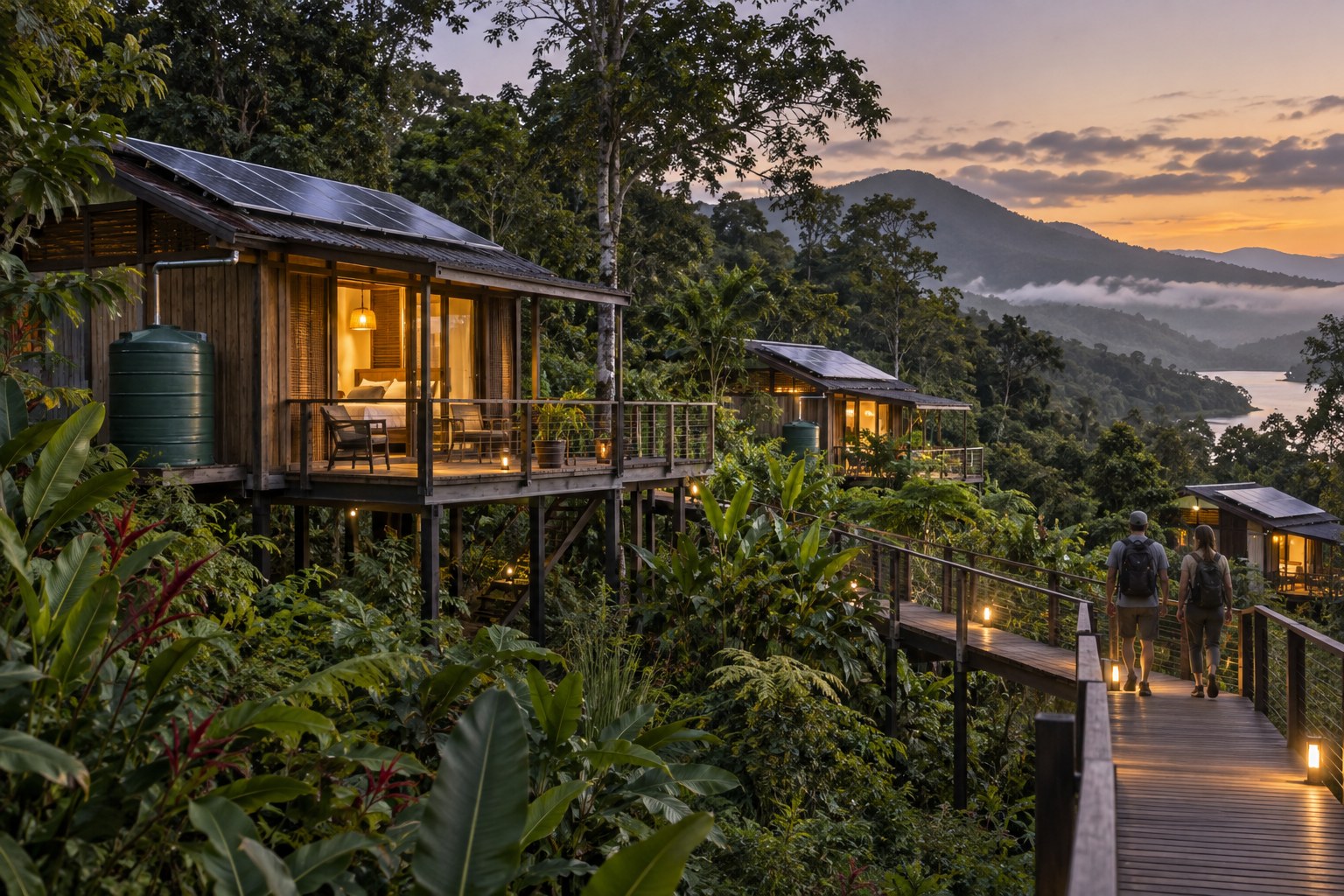
Eco-lodges should be evaluated by site design. Buildings placed around existing trees, raised walkways over fragile ground, natural ventilation, shaded decks, and careful lighting can reduce impact while improving the guest experience. A lodge that looks dramatic but scars a hillside or blocks wildlife movement is not succeeding.
Energy systems deserve attention, but travelers should ask how they work in daily life. Solar panels, batteries, efficient fans, passive cooling, limited generator hours, and guest education can all be part of a responsible system. The goal is not just having equipment visible on a roof. It is reducing demand and managing comfort honestly.
Water practices are especially important in lodges near deserts, islands, reefs, and seasonal rivers. Rainwater capture, greywater systems, low-flow fixtures, careful laundry policies, and native landscaping can all matter. Guests should understand local scarcity before requesting long showers, daily linen changes, or lush lawns in dry places.
Waste handling is another test. Remote lodges may have to carry waste long distances or process it on site. Refillable toiletries, composting, recycling where real, reduced packaging, and kitchen waste planning all show seriousness. If a lodge cannot explain where trash goes, guests should be cautious about its claims.
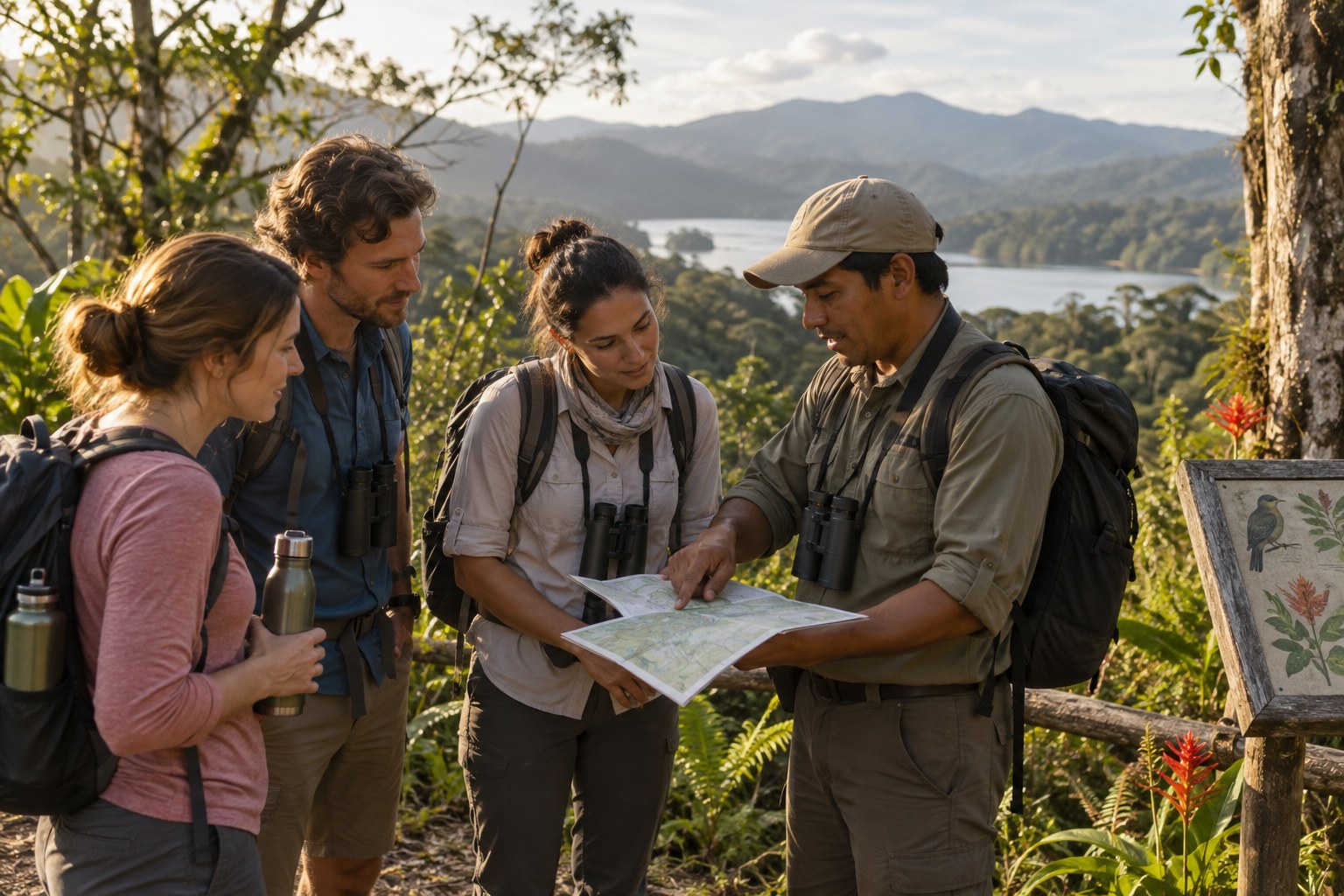
The best eco-lodges make guides central. Naturalists, cultural interpreters, trackers, boat operators, and community hosts turn a stay into learning. Their knowledge deserves fair pay and visible respect. Guests should tip appropriately, follow instructions, and avoid treating guides as background staff.
Lighting can affect wildlife. Bright paths, decorative floodlights, and careless beach lighting may disturb insects, birds, turtles, and nocturnal mammals. Eco-lodges should use low, shielded, warm lighting and explain nighttime behavior to guests. A darker property can be more beautiful and more responsible.
Sound matters too. Loud music, vehicle noise, generators, and guest shouting can change the atmosphere for wildlife and nearby residents. Quiet hours are not just about guest relaxation. They help the lodge fit into its habitat. Travelers who want nightlife should choose a different setting.
Community relationships should be more than a paragraph on a website. Local ownership, revenue sharing, guide training, school partnerships, conservation jobs, craft purchasing, and resident consultation can all show real connection. Guests should look for specifics and listen to how staff describe the lodge's role.
Eco-lodge comfort is best when it comes from design rather than excess. Breezes, shade, screens, thoughtful bedding, local materials, good food, and well-trained staff can feel luxurious without hiding heavy resource use. Sustainable hospitality can be generous without being wasteful.
The strongest eco-lodges help guests leave as advocates. A traveler should depart knowing what habitat was protected, which community benefited, what pressures remain, and how to support the work later. The stay becomes more than accommodation. It becomes a relationship with a place.
Guests should read pre-arrival materials closely. Eco-lodges often provide packing lists, luggage limits, transfer instructions, wildlife rules, cultural etiquette, and notes about electricity or connectivity. These details are part of the sustainability system. Ignoring them can create unnecessary work for staff and avoidable impact on the site.
The setting should shape expectations. A rainforest lodge may have insects and humidity, a desert camp may have limited water, and an island stay may restrict waste. These are not failures when they are managed safely and explained honestly. They are reminders that the lodge is located in a real ecosystem.
Eco-lodges can also protect land through buffer zones, private reserves, community conservancies, or partnerships with parks. Travelers should ask what area is protected and how protection is funded. A beautiful room matters less than the lodge's long-term relationship to habitat.
Guest behavior can support or undermine a lodge's work. Leaving trails, feeding animals, wasting water, ignoring quiet hours, or demanding exceptions creates pressure on staff and landscape. A responsible guest helps the lodge keep its promises by participating in the rules.
Some of the best eco-lodges are not famous. Small locally run stays may have modest websites but excellent guide knowledge, strong community ties, and careful resource use. Travelers should not let glossy photography be the only measure of quality.
A sustainable stay should feel rooted. Materials, meals, stories, paths, views, and staff knowledge should connect guests to the specific place. When a lodge could be anywhere, its eco claims deserve more scrutiny.
Eco-lodges should also be honest about access. Remote beauty often depends on boats, small planes, long drives, or specialized transfers. A responsible lodge helps guests understand that footprint and encourages longer stays, shared transfers, or lower-impact routes where possible.
Housekeeping policies can reveal values. Linen reuse, refillable toiletries, composting, line drying, and thoughtful cleaning products may seem small, but they show whether sustainability reaches daily operations. Guests should cooperate with these systems instead of expecting invisible convenience.
Local design can make a stay more meaningful. Buildings that respond to climate, use appropriate materials, preserve shade, and frame views without dominating the landscape feel more connected to place. Eco-lodge architecture should support the habitat rather than compete with it.
The best eco-lodge guests ask better questions at checkout than at booking. What project needs support now? Which season is hardest? What visitor behavior helps most? Those questions can turn a pleasant stay into ongoing care for the destination.
Eco-lodges also need good relationships with neighboring protected areas. A lodge that benefits from a park, reef, forest, or community reserve should support its management through fees, guide cooperation, monitoring, education, or visitor compliance. Location alone is not a contribution.
Guests should pay attention to how a lodge talks about wildlife. Respectful language presents animals as wild neighbors, not guaranteed entertainment. If staff are pressured to produce sightings at any cost, the lodge's conservation values may be weaker than its marketing.
A strong lodge can make simple routines feel meaningful. Refilling bottles, walking raised paths, sorting waste, eating seasonal food, and turning lights down at night become part of the stay. Guests participate in the system rather than merely observing it.
The best sustainable stays are memorable because they are specific. The smell of rain on timber, a guide naming frogs after dark, a local breakfast, or a quiet solar-lit path can matter more than generic luxury. Place is the point.
Choosing an eco-lodge is ultimately choosing a temporary home inside someone else's landscape. The best guests treat that home with care, curiosity, and gratitude, then carry the lodge's lessons into future travel choices.
That is when a stay becomes more than lodging and starts to become stewardship.
Good guests remember that stewardship after checkout.
They book future trips with sharper questions and better habits.
That is sustainable hospitality working well.