An Eco-Travel Bucket List Should Be Built Around Care
An eco-travel bucket list for nature lovers should feel exciting, but it should not treat fragile places as prizes to collect. The best list balances wonder with responsibility: reefs that need careful swimmers, forests that need trained guides, wildlife that needs distance, villages that need fair income, and landscapes that need travelers to move slowly. Nature lovers often want to see as much as possible, yet eco-travel asks a better question: how can a trip help protect what it reveals?
A: Trips that connect nature, conservation, local benefit, and low-impact behavior belong.
A: Some can, but only when energy, water, waste, staffing, food, and conservation practices are transparent.
A: Not always; lesser-known reserves may offer better learning and lower crowd pressure.
A: Match your interests to the place's strongest conservation story and access rules.
A: Only when the work is locally requested, supervised, and suited to your skills.
A: Treating fragile places as a checklist instead of a responsibility.
A: Yes, when transit, parks, food systems, waterways, and local conservation are part of the trip.
A: Use distance, patience, and long lenses rather than changing animal behavior.
A: Usually no; reusable basics, proper shoes, binoculars, and respectful habits matter more.
A: Notice which habits you can carry into everyday choices and future trips.
Rainforest Journeys for Patient Travelers
A rainforest journey belongs on many eco bucket lists because it teaches attention. Costa Rica's Osa Peninsula, Ecuador's Amazon lodges, Peru's Tambopata, Borneo's river forests, and Madagascar's reserves can introduce travelers to birds, primates, frogs, insects, orchids, and trees that hold entire worlds.
These trips work best with local naturalists and enough time. A rushed rainforest visit can feel like a green blur. A slower one teaches calls, tracks, fruiting trees, night sounds, and the importance of habitat protection.
Reef, Mangrove, and Marine Conservation Trips
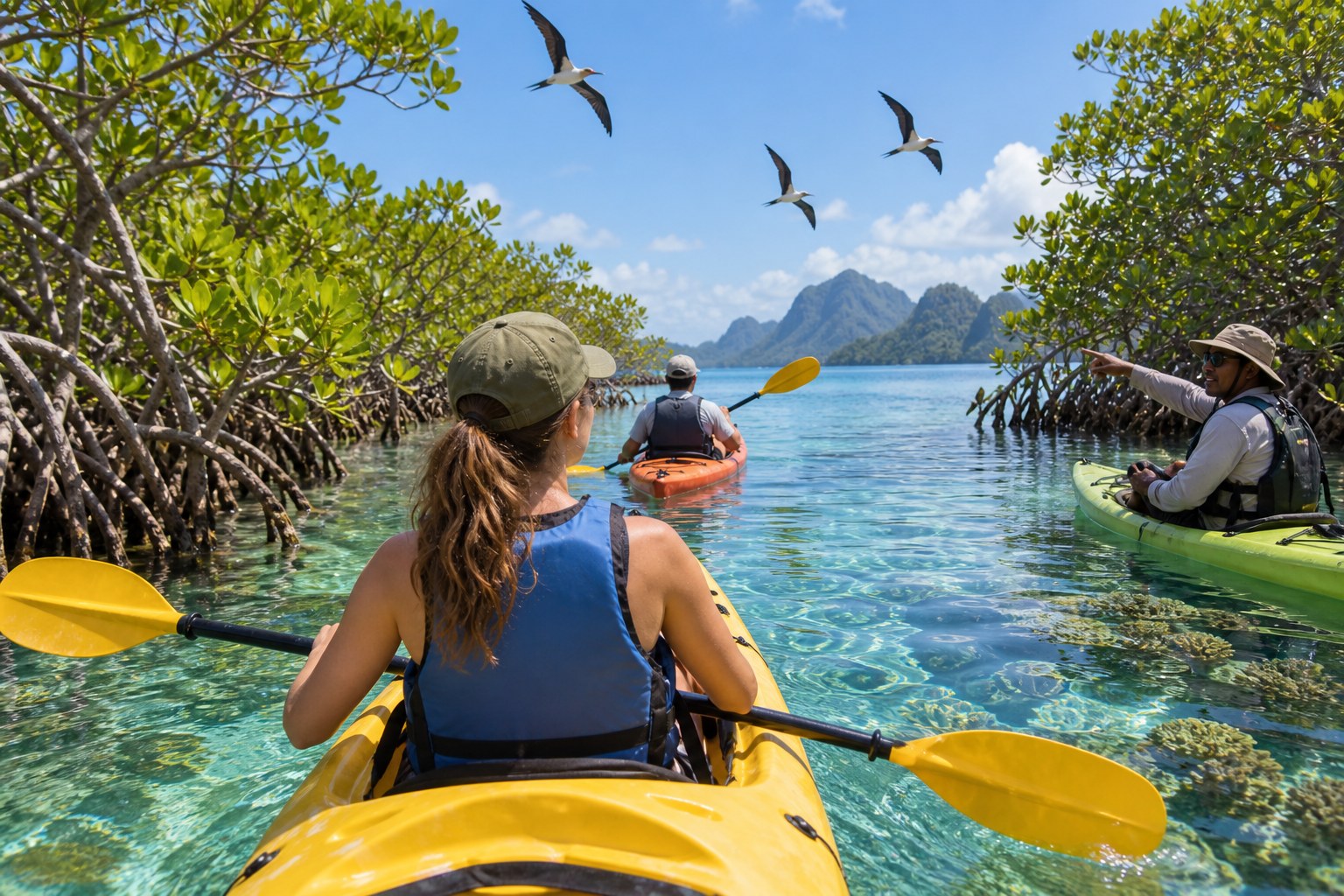
Marine eco-travel can include snorkeling protected reefs, kayaking mangroves, joining turtle monitoring where appropriate, visiting seagrass projects, or learning how coastal communities protect fisheries. Palau, Belize, Raja Ampat, the Maldives, Australia's reef regions, and many smaller marine reserves offer different versions of this work.
The key is choosing operators who protect the water. Boats should follow distance rules, guides should teach reef behavior, and travelers should never touch coral, chase wildlife, or buy marine souvenirs. A bucket-list reef should remain alive after the trip.
Wildlife Viewing Without Contact
Nature lovers often dream of gorillas, whales, bears, elephants, wolves, turtles, birds, or big cats. Ethical wildlife travel belongs on the list when it funds habitat and keeps animals wild. The experience may be less predictable than captive encounters, but it is far more meaningful.
Good wildlife trips use distance, patience, limits, and trained guides. If an operator allows handling, feeding, baiting, or crowding wild animals, it does not belong on an eco-travel bucket list.
Rewilding, Restoration, and Conservation Learning
A modern eco bucket list can include rewilding landscapes, restored wetlands, native forest projects, regenerative farms, and conservation science experiences. These trips help travelers see repair rather than only untouched beauty.
Restoration travel is valuable because it tells a more honest story. Many beloved landscapes are recovering from logging, overgrazing, mining, pollution, or habitat loss. Visiting responsibly can support the people doing the long work of healing land.
Slow Travel and Low-Impact Routes
Not every eco bucket-list trip has to be remote. Rail journeys through green regions, bike touring, long-distance walking, canal travel, local buses to parks, and slower city-nature combinations can reduce transport pressure and deepen the experience.
Slow routes also change attention. The traveler notices food systems, water, public space, local markets, and smaller habitats. Eco travel becomes a way of moving through the world, not only a label attached to one lodge.
Eco-Lodges and Community Stays
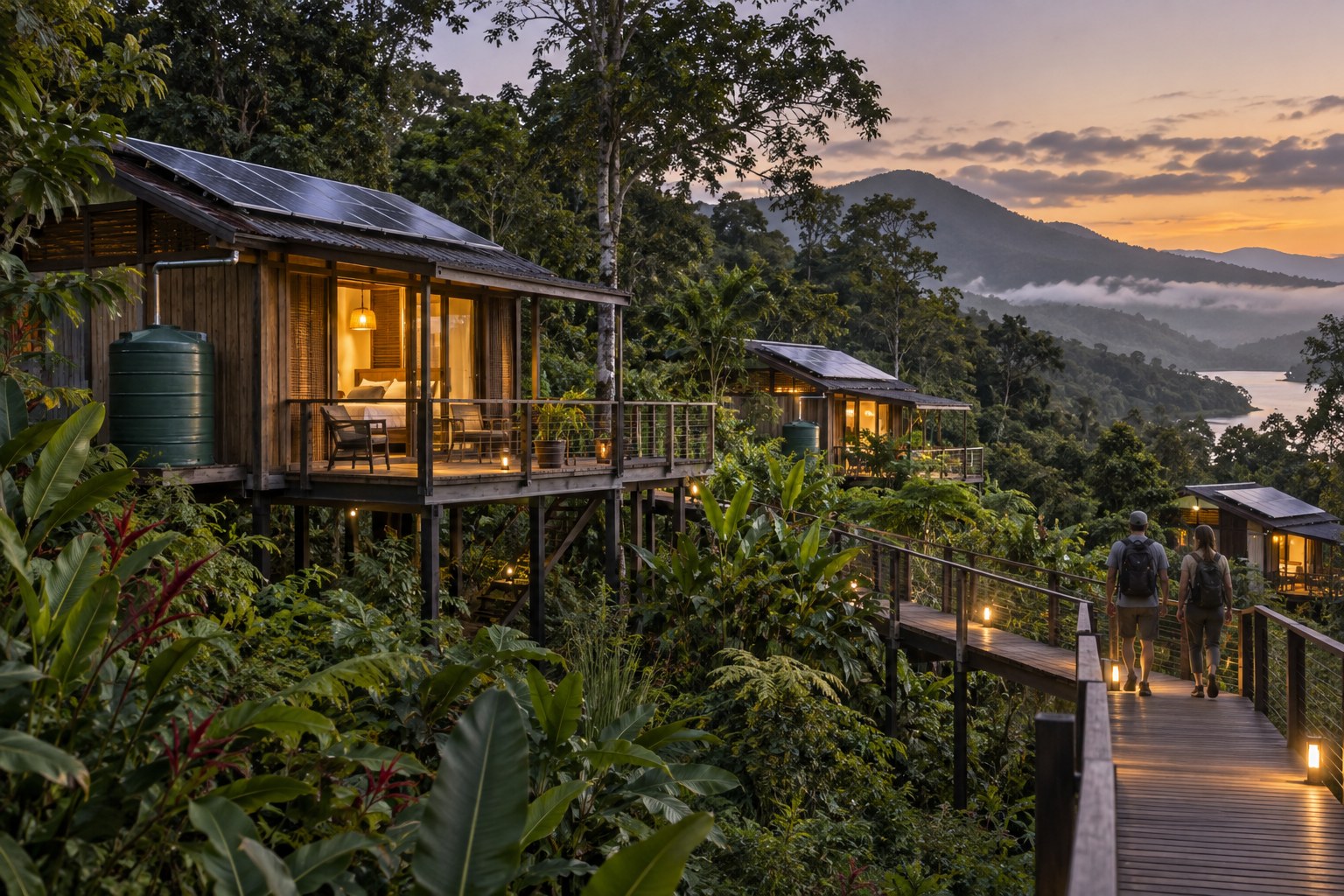
A well-run eco-lodge or community stay can become the center of a bucket-list trip. The best ones hire locally, conserve water and energy, reduce waste, support guides, protect habitat, and explain their practices without pretending to be perfect.
Travelers should look for transparency. Ask what conservation fees fund, how staff are trained, where food comes from, how waste is handled, and whether nearby communities have real decision-making power.
A useful bucket list should include different ecosystems: forest, coast, wetland, mountain, desert, island, and grassland. Variety prevents eco travel from becoming a narrow idea of greenery and helps travelers understand how conservation changes by place.
The list should include one nearby trip. A local wetland, dark-sky park, restored prairie, community farm, or regional trail can teach many of the same habits as a faraway reserve. Eco travel begins close to home when travelers choose to notice.
Budget tiers make the list usable. Keep one local weekend, one regional nature trip, one international conservation journey, and one long-term dream. This prevents the bucket list from becoming an excuse to wait for a perfect expensive vacation.
Every item should include a responsibility note. Write down the main rule: keep distance from wildlife, use reef-safe practices, hire local guides, pack out waste, avoid peak crowding, or support restoration. The note keeps ethics attached to excitement.
Nature lovers should also include learning goals. Identifying ten bird calls, understanding mangroves, learning about Indigenous land care, or seeing how a watershed works can make a trip more satisfying than simply chasing scenery.
The best eco bucket list remains flexible. Climate change, visitor limits, community rules, restoration needs, and seasonal closures can change what responsible access looks like. A good traveler updates the list as conditions change.
A strong eco-travel bucket list should include one trip that teaches water. That might be a mangrove kayak, glacier-fed river walk, wetland birding weekend, coral reef snorkel, or watershed tour near a city. Water connects farms, forests, wildlife, energy, and communities. Once travelers see that connection, they often understand sustainability more clearly than they would from a scenic overlook alone.
Another entry should focus on night. A dark-sky reserve, turtle nesting beach, rainforest night walk, desert stargazing trip, or nocturnal wildlife outing can reveal how much life depends on darkness. Responsible night experiences use red lights where appropriate, limit noise, avoid flash photography, and follow guides closely. Darkness is habitat, not just atmosphere.
Nature lovers should include one trip built around restoration rather than untouched beauty. A restored wetland, rewilded estate, former mine turned habitat, native prairie project, or community forest can be inspiring because it shows repair in progress. These places remind travelers that conservation is not only about saving pristine landscapes. It is also about helping damaged places recover.
The list can include one food-based eco journey. Regenerative farms, traditional fisheries, shade-grown coffee regions, agroforestry projects, community gardens, and farmers markets reveal how eating shapes landscapes. A traveler who understands food systems may make more sustainable choices long after the trip ends. Nature travel and food travel are often more connected than itineraries admit.
Eco bucket lists should make room for learning from Indigenous and local stewardship where communities invite visitors. This requires extra care because cultural knowledge is not a product to extract. Choose experiences led by the community, follow boundaries around stories or sacred places, and pay fairly. The goal is not to collect wisdom, but to respect land relationships that existed long before tourism.
A list for nature lovers should avoid the trap of constant remoteness. Remote trips can be wonderful, but they often require more fuel, more logistics, and more pressure on fragile places. Balance them with nearby parks, regional trails, rail-accessible landscapes, and longer stays. The result is a richer and more usable list.
Wildlife-focused bucket-list trips should be organized around behavior rather than species trophies. Watching cranes migrate, turtles nest from a safe distance, whales feed offshore, or elephants move toward water can be more meaningful than simply checking an animal name. Behavior teaches ecology. A static photo rarely tells the whole story.
The list should include one seasonally specific journey. Fall migration, spring wildflowers, monsoon renewal, winter tracking, salmon runs, or dry-season waterhole viewing all show how nature changes through time. Seasonal travel encourages visitors to follow ecological rhythm rather than expecting the same experience year-round.
A practical eco bucket list includes a refusal list. Write down experiences you will not support: captive wildlife selfies, reef-damaging tours, exploitative volunteer projects, wasteful luxury in water-stressed places, or operators that ignore community rules. Clear refusals make booking easier when tempting marketing appears.
The best eco bucket list should end with action at home. After seeing a reef, forest, wetland, or farm system, travelers can support local habitat, reduce waste, vote for conservation, volunteer nearby, or choose better products. Nature travel is most powerful when it changes the traveler's normal life.
A nature lover's list should include one trip with a scientist, ranger, or specialist guide. Learning how experts count birds, monitor coral, track mammals, restore dunes, or measure water quality can make conservation concrete. The traveler sees that protection is not an abstract value. It is daily work done by trained people with limited time and resources.
The bucket list can also include one quiet repeat destination. Returning to the same wetland, forest, coast, or mountain over several seasons teaches change better than constant novelty. Familiarity reveals migrations, flowering cycles, erosion, restoration progress, and the effects of weather. Repetition can make nature travel more intimate.
Some eco dreams need patience because visitor numbers are limited. Gorilla permits, island access, nesting beaches, fragile caves, and high-demand trails may require advance planning or waiting years. That delay is not a flaw. Scarcity can protect the experience from becoming destructive.
Travelers should include one trip that centers plants rather than animals. Cloud forests, wildflower valleys, ancient trees, desert blooms, peatlands, and botanical reserves can be astonishing when guides explain their relationships with water, soil, insects, birds, and people. Plant-focused travel often creates a deeper sense of ecosystem.
An eco bucket list should include a lower-consumption challenge. Travel with carry-on only, avoid internal flights, use trains for a full itinerary, eat mostly local seasonal food, or go a day without single-use packaging. The point is not perfection. It is learning what choices are realistic and where better systems are needed.
The strongest list is not just where to go, but how to behave when you arrive. Each destination should come with a pledge: stay on trails, keep distance, hire local expertise, reduce waste, learn the rules, and let the place be more important than the itinerary.
Travelers can also add one conservation success story. Visiting a recovered wetland, protected turtle beach, revived forest, or community conservancy can be deeply encouraging. These places show that damage is not always the end of the story when protection, funding, and local leadership continue over time.
A good bucket list includes one trip where the traveler learns to identify species responsibly. Birding, tide-pool walks, plant walks, or tracking workshops can sharpen attention without disturbing wildlife. Naming what you see often leads to caring more about what happens next.
The list should leave space for disappointment. Weather may cancel a boat trip, animals may not appear, trails may close, or a famous view may be hidden. Eco travel becomes mature when the traveler can still value the habitat without receiving the exact scene imagined.
Bucket-list planning should also include who gets paid. Local guides, boat operators, park staff, cooks, drivers, farmers, and conservation workers all shape the trip. Choosing businesses that value those people makes the list more ethical.
The best nature lovers come home less hungry for spectacle and more committed to protection. That change is a better measure than the number of famous places completed.
A bucket list built this way stays joyful without becoming careless. It gives nature lovers dreams worth planning and responsibilities worth carrying.
That balance keeps the list inspiring without separating wonder from stewardship.
It also gives each future journey a clearer purpose.