The Best Program Begins With a Real Need Defined Locally
Volunteer travel can support worthwhile work, but good intentions do not guarantee good outcomes. A responsible program begins with a host organization’s long-term priorities, then recruits people whose skills, time, language, and availability genuinely fit those priorities. It does not create tasks to entertain travelers, replace paid local jobs, expose children or patients to a stream of strangers, or promise personal transformation as the main result. Before paying, ask who requested the work, who supervises it, why a visitor is needed, how fees are allocated, and what happens after volunteers leave. Background checks, safeguarding, risk management, insurance, training, and honest role descriptions are basic requirements. The program models below can be meaningful when those protections are present and the traveler accepts that service is accountable work, not a vacation accessory.
A: Long enough to train contribute and hand over without burdening the host.
A: Sometimes for bounded team tasks but not for relationship-dependent roles.
A: Usually short-term visitors should choose roles without direct child contact.
A: No practice requires appropriate credentials supervision and legal permission.
A: Only with documented welfare no-contact rules and independent oversight.
A: Only when skilled work is needed and local employment is not displaced.
A: Treat a simple guarantee as a warning sign.
A: Only with informed consent and a respectful safeguarding policy.
A: It can be but its purpose and recipients must be transparent.
A: Donate skills remotely or support a locally led organization financially.
Long-Term Conservation Field Assistant Programs
Conservation projects may recruit assistants for wildlife surveys, camera-trap maintenance, plant monitoring, acoustic recording, habitat mapping, or data entry. The strongest roles have a clear research protocol, qualified local leadership, necessary permits, realistic training, and a commitment of several weeks or months. Applicants should know whether their observations will contribute to management, publication, or long-term monitoring. Ask why an unpaid traveler is needed and whether local researchers receive paid opportunities. Field conditions can involve heat, cold, insects, boats, night work, remote housing, or repetitive data collection. Never handle wildlife without authorization and competence. A credible program values accurate records more than dramatic encounters and may assign many hours to cleaning equipment, verifying data, or waiting quietly.
Community-Directed Habitat Restoration Teams
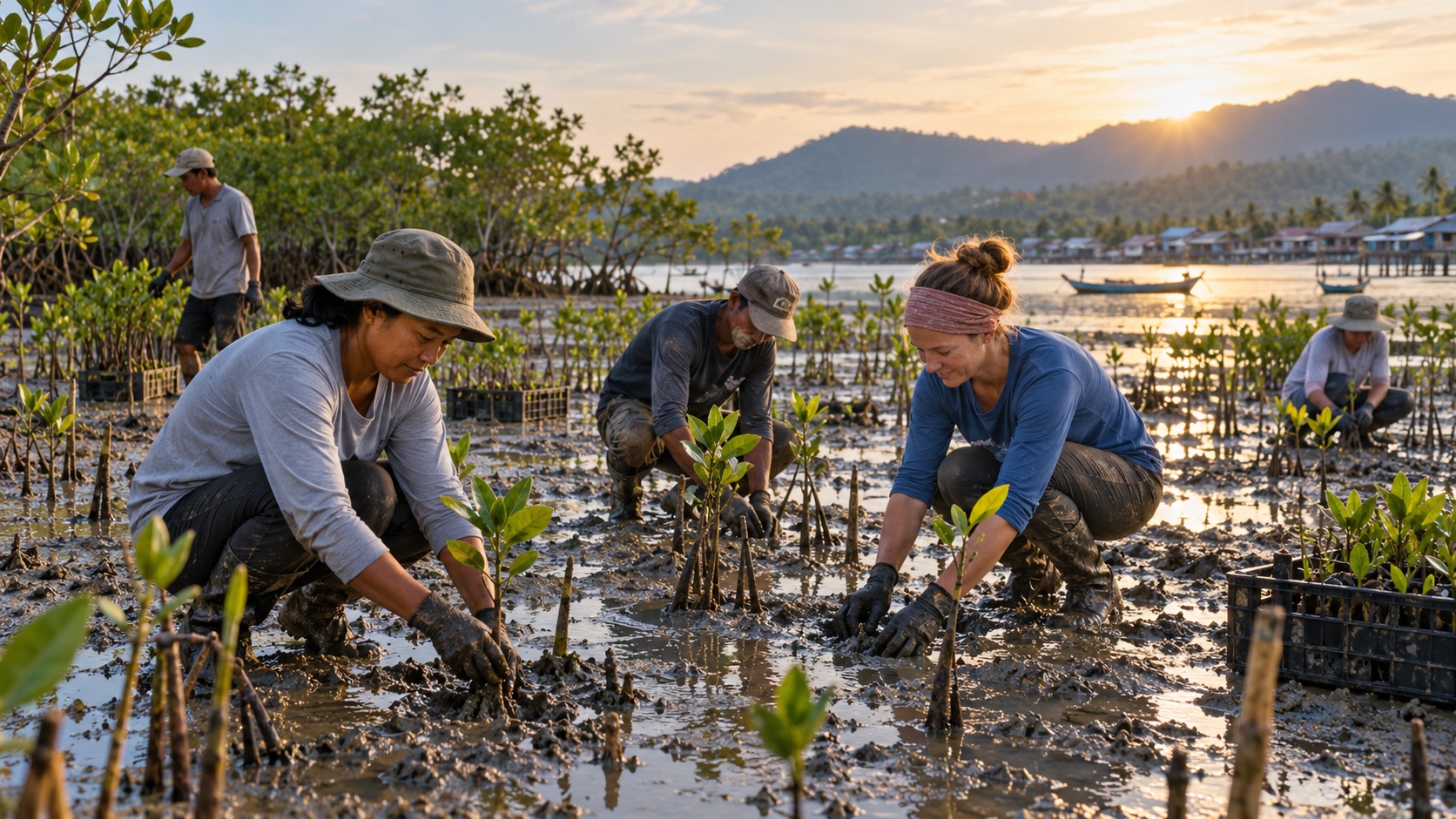
Mangrove planting, invasive-plant removal, watershed repair, dune stabilization, and native-forest restoration can accommodate short teams when the work is scientifically planned and locally requested. Planting photographs are easy to market, but responsible restoration begins with site assessment, appropriate native species, nursery quality, seasonal timing, maintenance, and long-term monitoring.
Ask who owns or manages the land, how the project selected its method, and who cares for the site after departure. Volunteers need tools, protective equipment, safe transport, sanitation, and supervision. Physical labor should supplement rather than replace local jobs. The program should explain survival rates and setbacks, not count every seedling placed in the ground as a permanent success.
National Park and Trail Stewardship Programs
Park agencies and conservation nonprofits sometimes organize trail repair, campsite maintenance, erosion control, litter removal, habitat surveys, and visitor education. These roles can have clear boundaries and professional supervision. Domestic or regional programs may also reduce travel emissions and administrative complexity compared with flying across the world for similar work.
Confirm age, fitness, tool, camping, transport, and weather requirements. Trail construction is technical work; volunteers should not improvise drainage, cut vegetation, or move stone without direction.
Pay attention to accessibility and whether the program provides reasonable role alternatives. Staying after the work period to visit nearby communities can create a balanced trip without treating the project site as a private attraction.
Archaeology Programs With Research Standards
Archaeological field schools and supervised volunteer excavations can support documentation, conservation, laboratory processing, and public interpretation. A legitimate project has permits, professional leadership, research questions, site security, artifact policies, and a plan for curation. Participation fees may cover instruction, equipment, lodging, and research, but they should be explained clearly.
Do not join programs that encourage participants to keep artifacts, buy antiquities, or excavate without authorization. Expect careful recording and repetitive processing rather than constant discovery. Cultural heritage belongs within legal and community frameworks, especially where descendant communities have interests in the site. Ask how local scholars, students, and workers participate and how findings will be stored and shared. Field schools should publish what instruction participants receive and whether academic credit is independently recognized. Accessibility can be difficult at excavation sites, but organizers should describe terrain, shade, toilets, lifting, and alternative laboratory roles before enrollment. Heat illness and repetitive strain are real risks. Participants also need guidance on discussing discoveries publicly, because premature location details or photographs can expose a site to looting and undermine the research process.
Skilled Engineering and Technical Assignments
Engineers, architects, information specialists, mechanics, and other professionals may contribute through placements designed around a host’s technical request. Useful assignments often involve training, systems review, documentation, maintenance planning, or remote collaboration rather than arriving with a prefabricated solution. Professional credentials do not replace cultural orientation or local authority. The scope should identify deliverables, decision rights, data ownership, liability, and the local counterpart who will continue the work. Hardware donations are harmful when replacement parts, power, software, or maintenance cannot be sustained. Volunteers should avoid practicing outside their expertise and should document limitations openly. A good outcome strengthens the host organization’s capacity instead of making it dependent on the visitor.
Public Health Roles for Qualified Professionals
Licensed clinicians and public health specialists may be useful in roles requested by recognized institutions, but cross-border health work carries serious ethical and legal duties. Credentials, local authorization, supervision, malpractice coverage, language support, patient consent, infection control, referral pathways, privacy, and continuity of care all require confirmation before travel.
Students and unlicensed volunteers must never perform procedures beyond their permitted scope. Short clinics can create fragmented care or divert patients from local systems if poorly designed. Strong programs prioritize training, systems support, or carefully integrated services led by local health professionals. When those conditions are absent, financial support, formal education, or remote technical assistance may be more responsible than direct patient contact. Ethical review should be visible in the program structure. Ask whether a hospital, ministry, university, or professional council approves the work and how complaints are handled. Interpreters must be trained in confidentiality, not recruited casually from nearby staff. Volunteers should learn local treatment protocols and resource constraints without assuming that familiar equipment or medications are appropriate. A placement that cannot arrange follow-up care should not initiate interventions that require it.
Animal Welfare Support Without Tourist Contact
Animal shelters, rescue centers, and conservation facilities may need cleaning, food preparation, enclosure maintenance, behavioral observation, administration, or fundraising support. Avoid any program built around holding, bathing, walking, or photographing wild animals. Terms such as sanctuary and rescue are not regulated consistently, so examine governance, veterinary care, breeding policy, acquisition, release goals, and visitor contact.
Domestic animal shelters may offer clearer short-term tasks, though training and vaccination rules still matter. With wildlife, independent welfare evidence and no-contact policies are essential.
Volunteers should not post distressing animal images for personal promotion. The daily work may be dirty and repetitive, which is precisely why a serious role description should emphasize duties rather than access.
Marine Research and Seagrass Monitoring
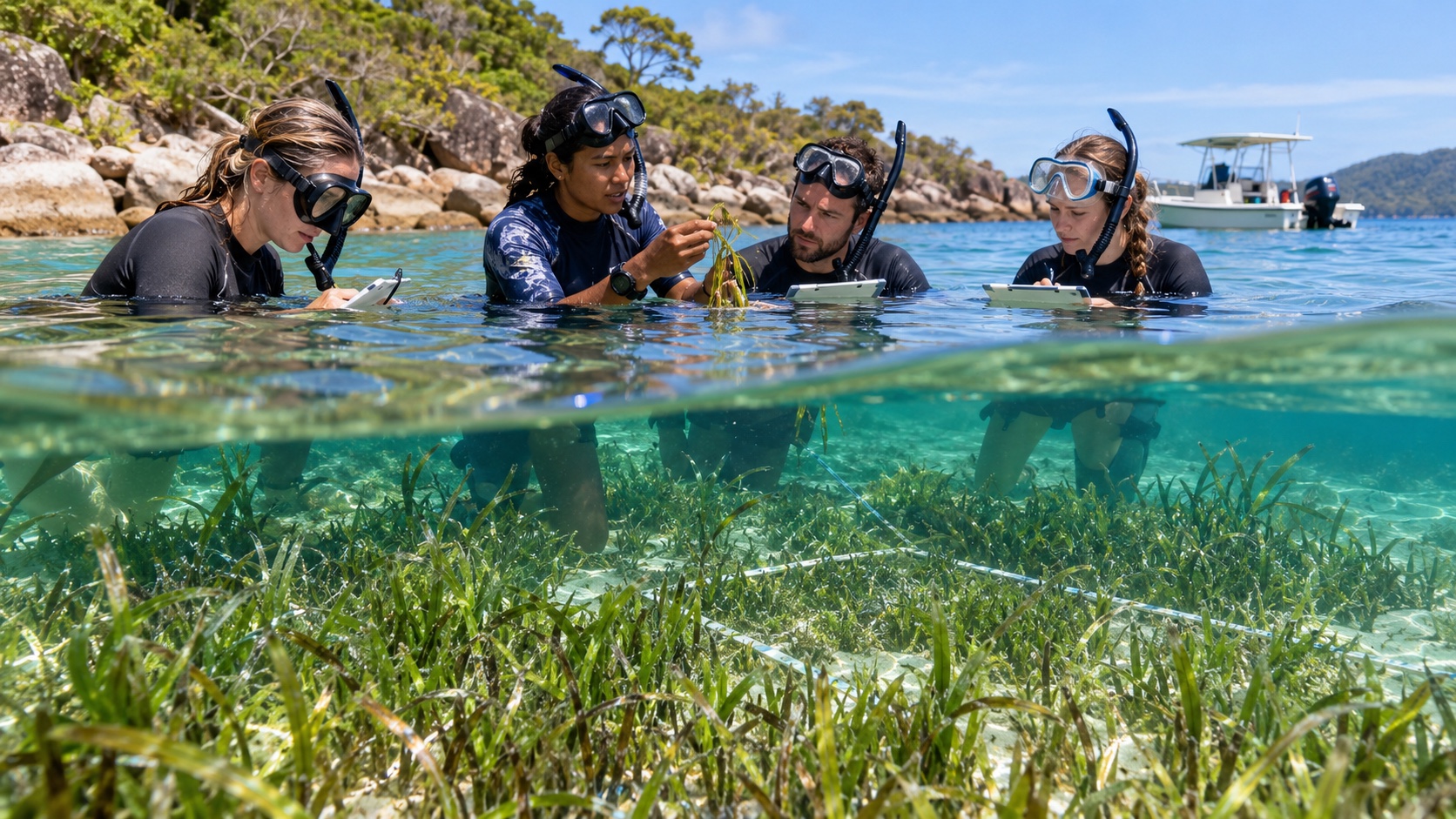
Marine programs may involve seagrass transects, reef surveys, water-quality sampling, beach profiles, fisheries data, or marine-debris audits. A useful placement has permits, standardized methods, trained scientific supervision, safety systems, and a clear plan for data. Diving roles require appropriate certification, current experience, and medical fitness; enthusiasm cannot substitute for competence underwater. Ask how boats, fuel, equipment, wastewater, and field stations are managed. Volunteers must not touch coral or wildlife to create an observation. Shore-based data processing may be as valuable as time in the water. Programs should publish findings or explain how results support local management, while recognizing that a week of volunteer observations is not automatically rigorous science. Coastal projects can also affect fishers, tourism workers, and customary users. Researchers should consult those groups and communicate results in accessible forms, not merely extract measurements for an overseas institution. Volunteers need sun and heat protection, boat briefings, hydration, secure data handling, and plans for poor weather. If a research day is canceled, accept laboratory or education tasks rather than pressuring staff to enter unsafe conditions.
Disaster Response Only Through Trained Systems
Traveling independently to a disaster area can obstruct roads, consume scarce lodging, create safety risks, and burden responders. Volunteers should deploy only through established organizations that request their skills, manage credentials, provide security and medical systems, and coordinate with local authorities. Most spontaneous travelers are more useful by donating to trusted local response groups.
Even experienced professionals need a defined role, incident command, protective equipment, insurance, and psychological preparation. Do not collect graphic images or personal stories for social media.
Recovery lasts long after news attention fades, so later assignments in logistics, rebuilding, case management, or technical support may be more useful than immediate arrival. The affected community determines the need and timing.
Farm Exchange Programs With Honest Expectations
Farm exchanges trade scheduled help for accommodation, meals, and learning rather than functioning as charitable service. They can offer insight into food production and rural life, but participants need clear hours, tasks, supervision, safety equipment, sleeping conditions, insurance, and visa information. Labor law may apply even when no cash changes hands.
Read independent reviews and communicate directly with the host before arrival. Ask about transport, dietary needs, animals, machinery, chemical use, internet, and the process for leaving if conditions feel unsafe. A farm exchange should not market routine private labor as community development. Treat the host relationship as a mutual agreement with boundaries, not an invitation to unlimited work or unlimited hospitality.
Remote Skills-Based Volunteering Before Travel
Translation, design, accounting, data analysis, grant research, software support, curriculum review, and communications can sometimes be contributed remotely. Starting online lets both sides test the relationship, clarify needs, and avoid travel that adds little value. It may also reveal that a local paid professional is the better solution, which responsible volunteers should accept.
Protect confidential data, define ownership of work, use secure systems, and schedule across time zones without imposing. If an in-person visit later becomes useful, the traveler arrives with context and an established counterpart. Remote service should still be host-led and bounded; free work can create the same dependency or displacement risks as an overseas placement.
Remote roles can be made more equitable by defining a limited schedule and respecting the host’s working hours. Do not expect immediate replies because the volunteer donated time. Translate technical language, provide editable files in accessible formats, and avoid tools that require expensive subscriptions after handover. When a task is complete, document passwords and ownership through secure organizational channels and delete local copies of confidential material. Good remote service is deliberately easy for the host to maintain. Keep an independent record of the application, role description, payments, insurance, emergency contacts, and concerns raised during the placement. This is not distrust; it is ordinary risk management. If duties change into unsupervised child contact, unauthorized clinical work, wildlife handling, unsafe construction, or another role beyond consent and competence, stop. Use the reporting process and leave when necessary rather than continuing because the trip was expensive.
Evaluate What Remains After You Leave
The best program can explain what success looks like after the volunteer departs. Useful indicators might include a maintained trail section, verified monitoring records, transferred technical skills, documented systems, or restoration survival measured over time. Photographs of smiling participants are not evidence of impact. Request a role description, budget explanation, safeguarding policy, safety plan, host contact, and former-participant reference. Compare the placement with donating the same fee or hiring local expertise. If the organization becomes defensive, guarantees transformation, or sells access to vulnerable people or wildlife, leave. Meaningful volunteer travel requires humility: the visitor is temporary, the host’s work is continuous, and declining an unsuitable role can be the most responsible choice.