The Most Responsible Experience Often Uses What a Place Already Has
Eco-friendly travel is strongest when it relies on existing railways, paths, public spaces, locally owned businesses, trained resident guides, and well-managed protected areas. It becomes weaker when a company builds a resource-heavy attraction and adds environmental language afterward. Travelers do not need a perfect itinerary, but they should compare real impacts: how they arrive, how often they move, how water and waste are handled, whether wildlife remains undisturbed, and whether local people control the experience. An electric vehicle or reusable bottle can help without settling the larger question. The ideas below work in many regions and budgets. Use them as planning models, then verify the operator, season, accessibility, safety, and destination rules that apply to the exact trip.
A: Not always but it is often worth comparing on practical routes.
A: They can expand access when riders follow traffic trail and battery rules.
A: Every ship has impacts so compare size fuel waste routes and local benefit carefully.
A: No poor waste fire and site choices can cause serious harm.
A: Transparent hosting realistic work boundaries and genuine local operations.
A: Only through programs with sound methods supervision and useful data.
A: Some are but no-contact welfare evidence and independent oversight are essential.
A: No direct reduction should come before any additional climate contribution.
A: Share transfers combine stops and avoid unnecessary driving.
A: Move less and spend more time in one place.
Take a Scenic Rail Journey With a Longer Stay
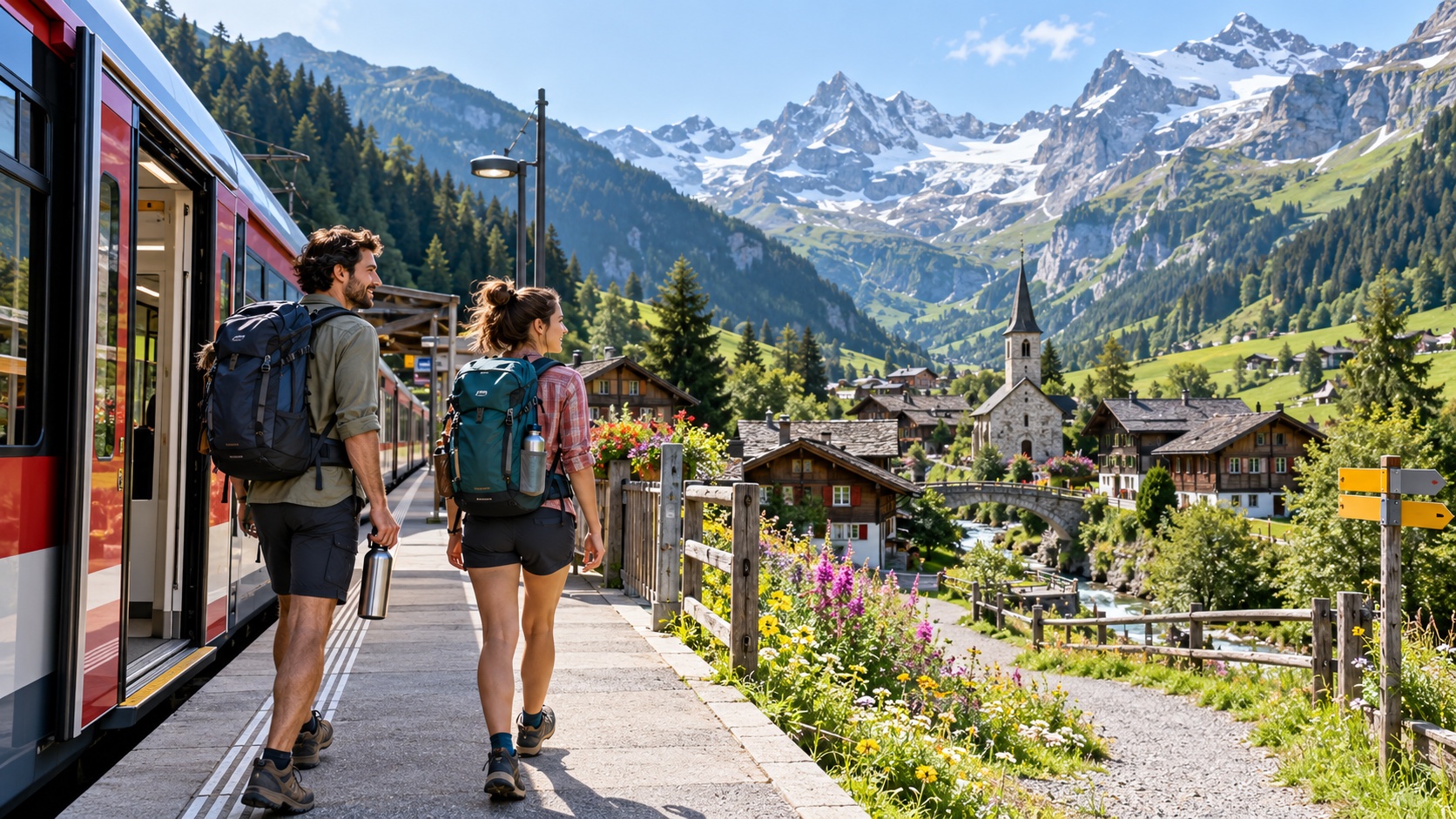
Rail turns transportation into part of the experience while connecting city centers, villages, and landscapes without repeated airport transfers. Switzerland, Austria, Japan, Canada, and many European regions offer memorable routes, but the responsible principle is broader than a famous train. Choose a practical line, pack light, bring food in reusable containers where permitted, and stay several nights at the destination.
Do not assume a premium sightseeing carriage is the lowest-impact option simply because it runs on rails. Compare ordinary regional service, reservations, energy claims, and how the trip connects at each end.
Avoid riding a long route solely to return immediately by another mode. A walkable base, local meals, and day hikes reached by transit can make the journey a coherent vacation instead of a transport trophy.
Cycle a Region at the Pace of Its Communities
A multi-day bicycle trip can connect farms, small towns, rivers, and heritage sites with little local pollution. Routes along the Danube, in the Netherlands, through Japanese islands, or across wine regions demonstrate different models. E-bikes can widen participation, provided riders understand braking, battery range, trail rules, and secure storage.
Choose a route that matches traffic confidence, fitness, and weather rather than chasing distance. Luggage transfer adds vehicles, so ask how it operates and decide whether carrying a compact load is realistic. Use designated paths, yield correctly, and avoid blocking village streets. Locally owned inns and restaurants distribute spending along the route, while rest days protect both bodies and the quality of the experience.
Walk a Long-Distance Trail Without Racing It
Long-distance walking routes allow travelers to notice geology, farms, languages, weather, and daily life at human speed. The Camino de Santiago, Kumano Kodo, England Coast Path, and many regional trails offer established services, but popularity can concentrate pressure. Select stages based on ability, book legitimate accommodation, and stay on the signed route. Carry required safety gear and enough water without overpacking. Use luggage transfer only when it makes the trip accessible or physically sustainable, and learn how the service consolidates vehicles. Respect private property, livestock, quiet hours, and trail closures. A shorter section walked attentively can be more responsible than an ambitious itinerary that depends on constant pickups or leaves the traveler too exhausted to behave carefully. Walking routes also require sanitation and waste planning. Use public toilets and official facilities, carry difficult litter to a place that can process it, and never leave food scraps because they appear biodegradable. In dry regions, refill water where infrastructure can support it instead of depending on many single-use bottles. Trail communities are homes as well as service stops; keep early departures quiet and do not occupy doorways, fountains, or benches with spread-out gear.
Join a Community Conservancy Safari
Community conservancies in parts of Kenya, Namibia, and elsewhere can link wildlife habitat with local governance, guiding, employment, and tourism revenue. Models differ widely, so ask who holds decision-making authority, how land-use agreements work, what portion of fees stays locally, and whether residents describe the partnership in the same terms as the operator.
Small camps and low vehicle numbers can reduce pressure, but luxury does not prove fairness. Wildlife must retain the freedom to move away, and drivers should never crowd or block an animal. Spend several days in one conservancy, follow community access rules, and learn about grazing, water, education, and coexistence rather than seeing the landscape only through wildlife sightings.
Snorkel or Dive With a Reef-Conscious Operator
Reef experiences can build support for marine protection when operators use moorings, limit groups, prevent contact, and teach guests how currents, fins, sunscreen, and wildlife distance affect the site. A responsible guide assesses ability honestly and may redirect a guest to a sheltered location rather than risk coral damage or personal safety.
Check equipment maintenance, boat capacity, waste practices, fuel use, and protected-area permits. Never stand on coral, chase turtles, hold marine animals, or take shells.
If swimming skills are limited, select a glass-bottom boat, guided shore walk, or interpretation center. The best activity is the one the traveler can complete calmly without needing a guide to rescue the habitat from their movements.
Stay on a Working Farm With Clear Boundaries
Farm stays can connect travelers with regional food, land management, and rural livelihoods. A genuine host explains which areas are private, what activities visitors may join, how animals should be approached, and whether participation is educational or productive work. Guests should not expect a polished performance that interrupts the farm’s actual schedule. Ask about water, waste, chemical use, animal welfare, seasonal labor, and sourcing without demanding perfection. Eat what the region produces and follow biosecurity around livestock or crops. Children need supervision near machinery and animals. A stay of several nights supports the host more effectively than a quick photo stop, especially when travelers also purchase food or crafts with clear provenance. Food experiences should remain proportionate to the farm’s work. Do not demand out-of-season dishes, unrestricted access to kitchens, or special activities solely for social media. If volunteering is offered, clarify immigration and labor implications as well as hours and safety. Paying for accommodation and instruction may be more honest than exchanging a few unskilled hours for lodging. Reviews should describe the hosting accurately without exposing the family’s private routines or location details beyond what they publish.
Book Indigenous-Led Cultural and Nature Interpretation
Indigenous-led tourism gives communities authority over which stories, places, foods, language, and activities they share. Examples exist across Australia, Canada, New Zealand, Latin America, the Arctic, and many other regions. Verify ownership or formal leadership rather than accepting imagery added to an outside company’s product.
Hosts may restrict photography, access, names, or participation for cultural reasons. Follow those boundaries without complaint. Pay the stated price, listen before asking personal questions, and avoid treating a short tour as permission to speak for the community afterward. When nature interpretation and cultural knowledge are presented together, do not separate the ecology from the people whose responsibilities have shaped that landscape.
Contribute to Well-Designed Citizen Science
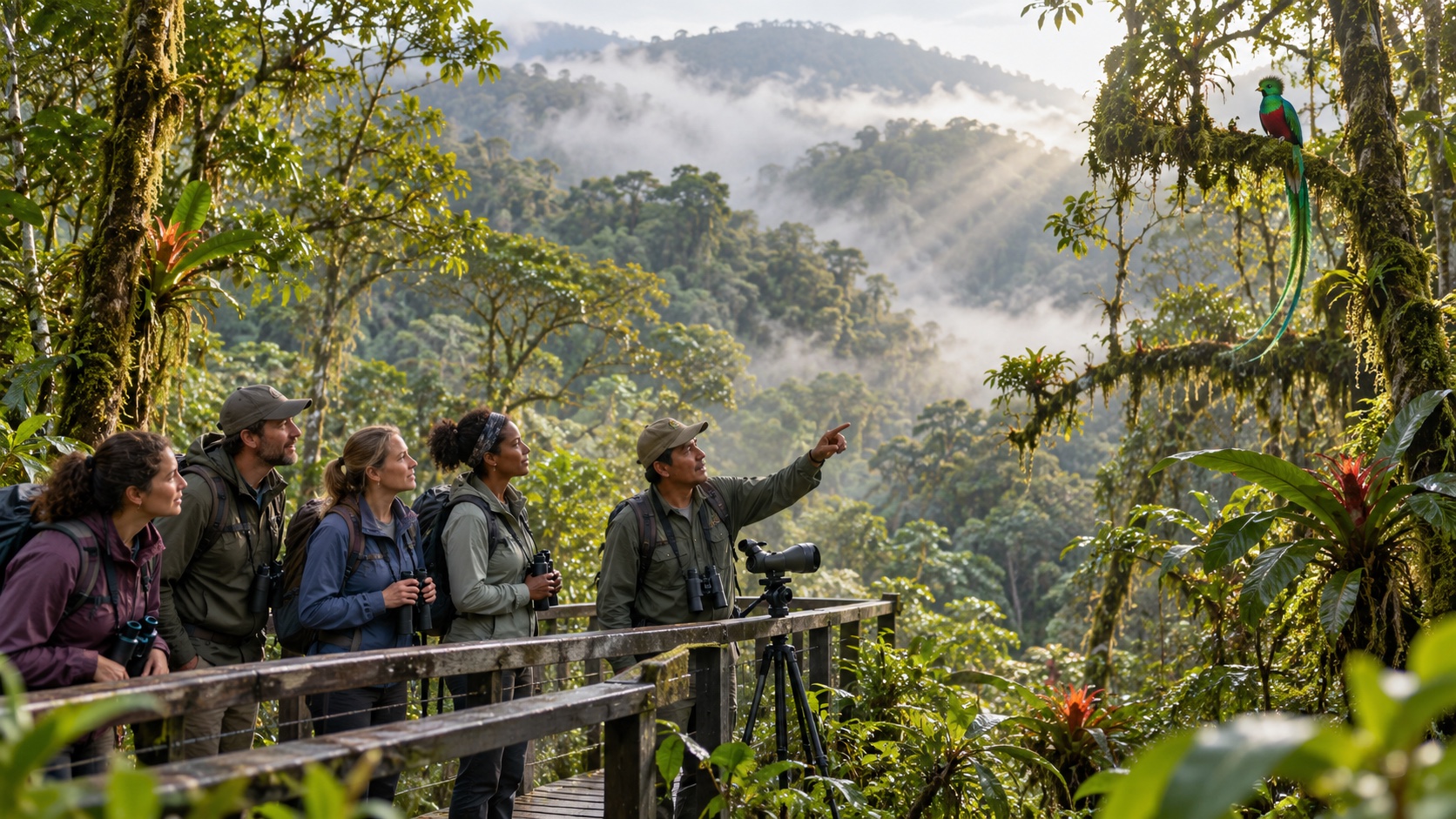
Citizen-science trips may involve bird counts, reef surveys, insect monitoring, trail observations, archaeology documentation, or night-sky measurements. A credible program explains the research question, protocol, training, data quality, supervision, safety, and how observations will be stored or used. Participation should fill a genuine need rather than inventing busywork for visitors. Ask whether local researchers and institutions lead the project and whether volunteers need particular skills. Never collect samples, handle wildlife, or enter restricted areas without formal authorization. A short traveler may contribute best through standardized observation rather than complex fieldwork. The value comes from accurate data and learning, not from wearing research gear for a photograph.
Paddle a Protected Waterway Quietly
Kayaks and canoes provide low-noise access to wetlands, mangroves, lakes, and sheltered coasts. They also place people close to nesting banks, shallow vegetation, and wildlife escape routes. Choose an operator that limits groups, checks weather, provides flotation equipment, teaches technique, and uses launch sites designed to withstand traffic.
Maintain distance from animals, avoid landing on unapproved shores, and never drag a boat across seagrass or fragile banks. Paddlers need sun, cold-water, wind, and capsize preparation appropriate to the region. A guided half-day on a well-managed route may create less disturbance than an unguided attempt to reach a hidden location shared online.
Data quality depends on consistency. Arrive on time, calibrate equipment as instructed, record absences as carefully as sightings, and never adjust a result to make the day more interesting. Some programs allow travelers to continue observations at home, extending the value beyond one trip. Ask whether findings are open, shared with land managers, or published in annual reports. If organizers cannot explain the purpose of the data, the activity may be education rather than research and should be marketed honestly.
Plan a Dark-Sky Stay With Low Light Impact
Dark-sky tourism can extend rural income beyond daylight hours while teaching astronomy and the ecological effects of artificial light. Desert lodges, mountain communities, islands, and designated reserves may offer guided viewing. Good programs use shielded red lights, small groups, safe paths, and interpretation that connects the sky with local science and cultural knowledge. Avoid driving with high beams near an observing site, shining lights across other guests, or using flash around nocturnal wildlife. Check moon phase, weather, temperature, and accessibility before booking. A cloudy night should have an alternative program rather than pressure to travel farther into unsafe conditions. Support accommodations that reduce unnecessary exterior lighting throughout the year, not only during tours.
Explore an Urban Greenway by Transit and Foot
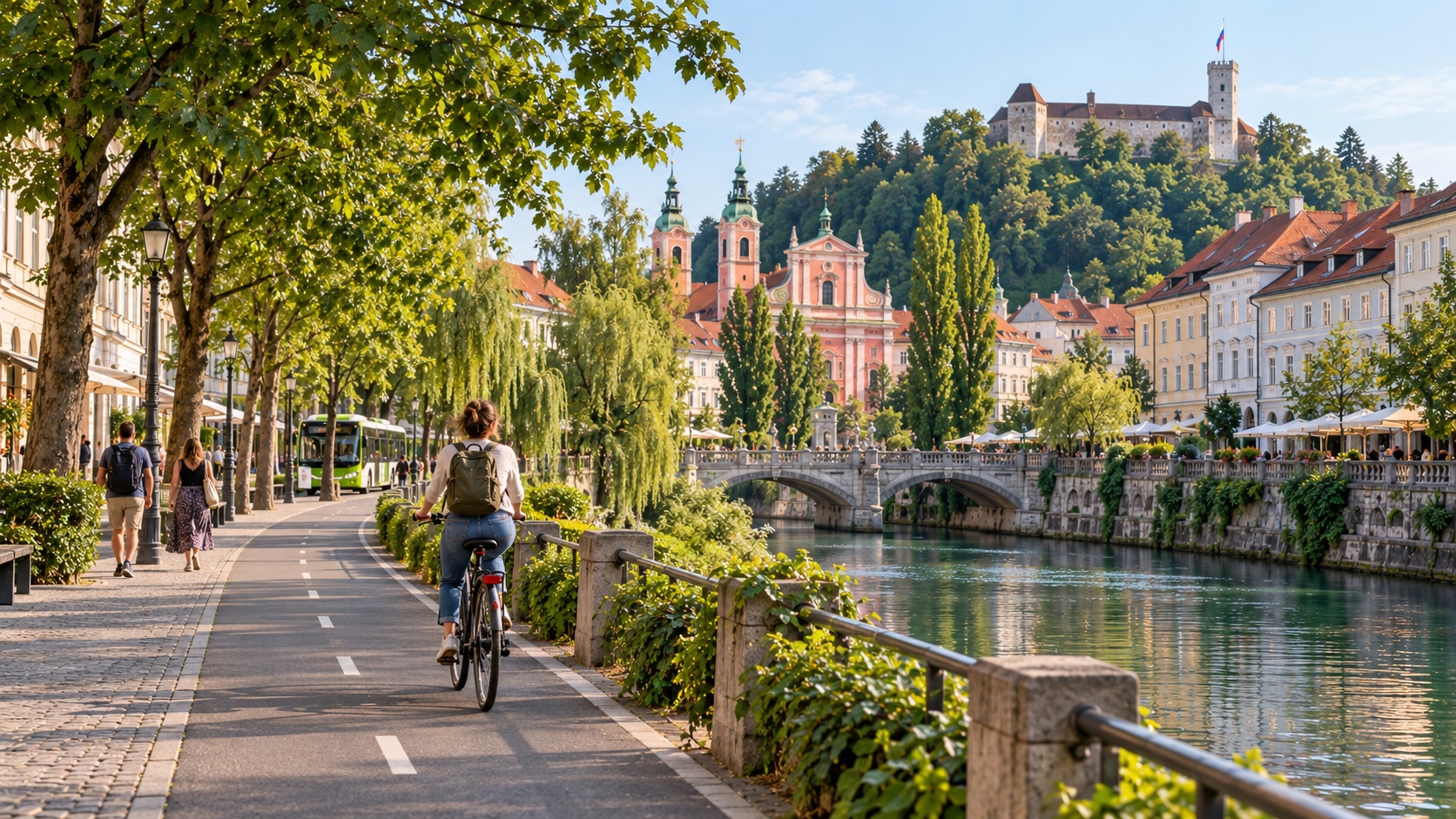
City travel can be resource efficient when visitors use existing transit, parks, markets, museums, and neighborhood businesses. Seoul’s restored waterways, Singapore’s park connectors, European river paths, and greenways across the Americas offer varied examples. The point is not to find a perfect green city but to navigate one without adding unnecessary vehicles or crowding.
Stay near a useful transit line, learn fare rules, and schedule attractions by neighborhood. Walk through residential areas quietly and keep building entrances clear. Visit public parks as shared civic spaces, follow bicycle separation, and carry litter to an appropriate bin. Spending at independent restaurants and shops beyond the central visitor district can broaden economic benefit without turning an ordinary neighborhood into the next overcrowded attraction. Accessibility belongs in low-impact planning. A traveler who needs step-free transport, temperature control, an adapted bicycle, or closer vehicle access should ask early and reject shame about using necessary resources. Responsible operators describe terrain and facilities accurately, offer reasonable alternatives, and avoid treating disability as incompatible with nature. The goal is thoughtful resource use and dignified participation, not a narrow performance of physical hardship.
Make Fewer Experiences Mean More
An overloaded vacation creates extra transfers, hurried purchases, and pressure to ignore weather or site limits. Choose two or three anchor experiences, leave space between them, and stay in one base. The resulting trip can use less transportation while giving travelers time to understand local food, history, ecosystems, and daily routines.
Measure success by quality of participation rather than the number of green labels collected. Verify certification, ownership, safety, conservation relationships, and local rules.
Decline animal contact, staged community encounters, and activities that lack a clear purpose. Eco-friendly travel is not a separate product category; it is a way of choosing and conducting any experience with evidence, restraint, and respect.