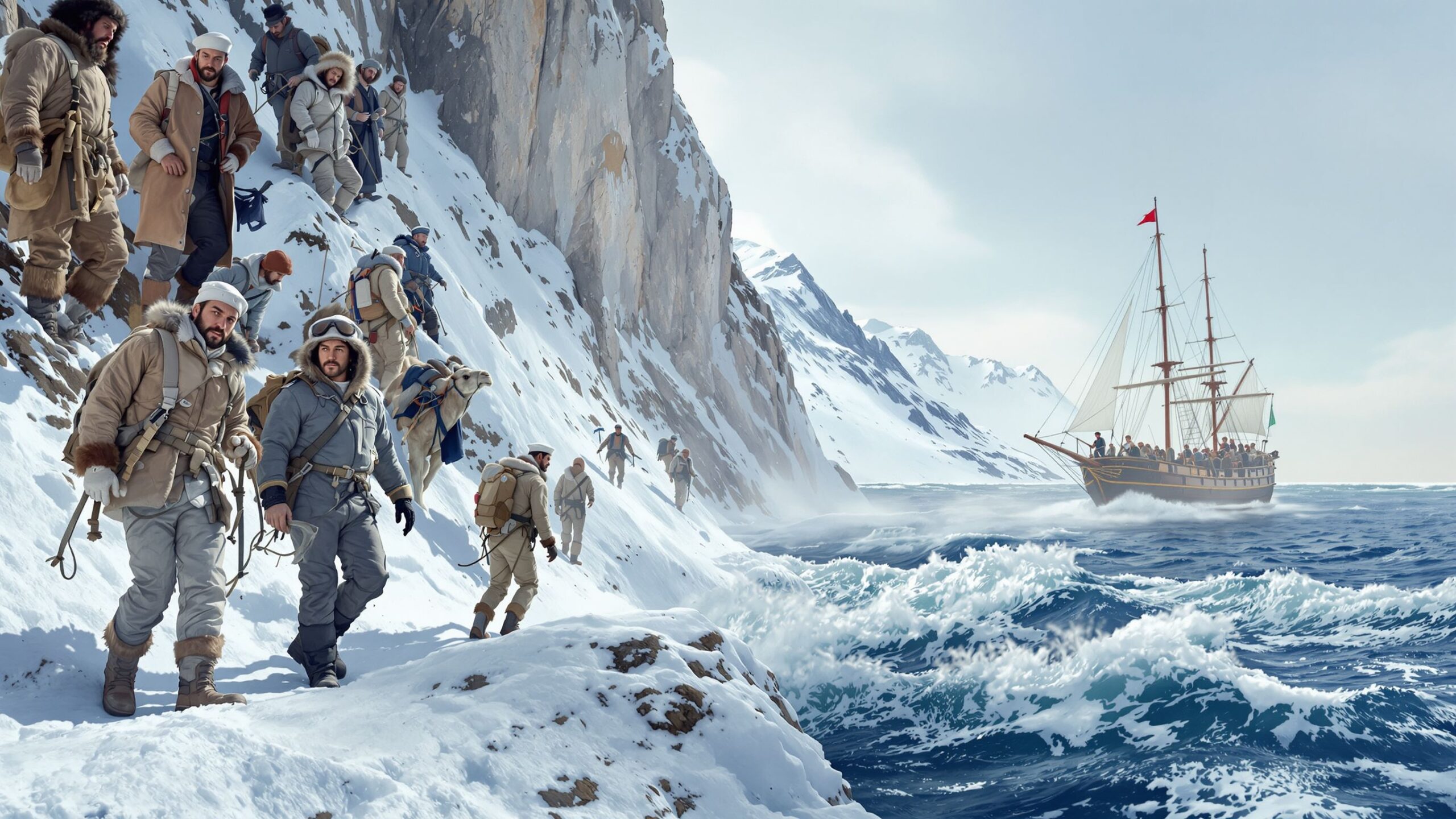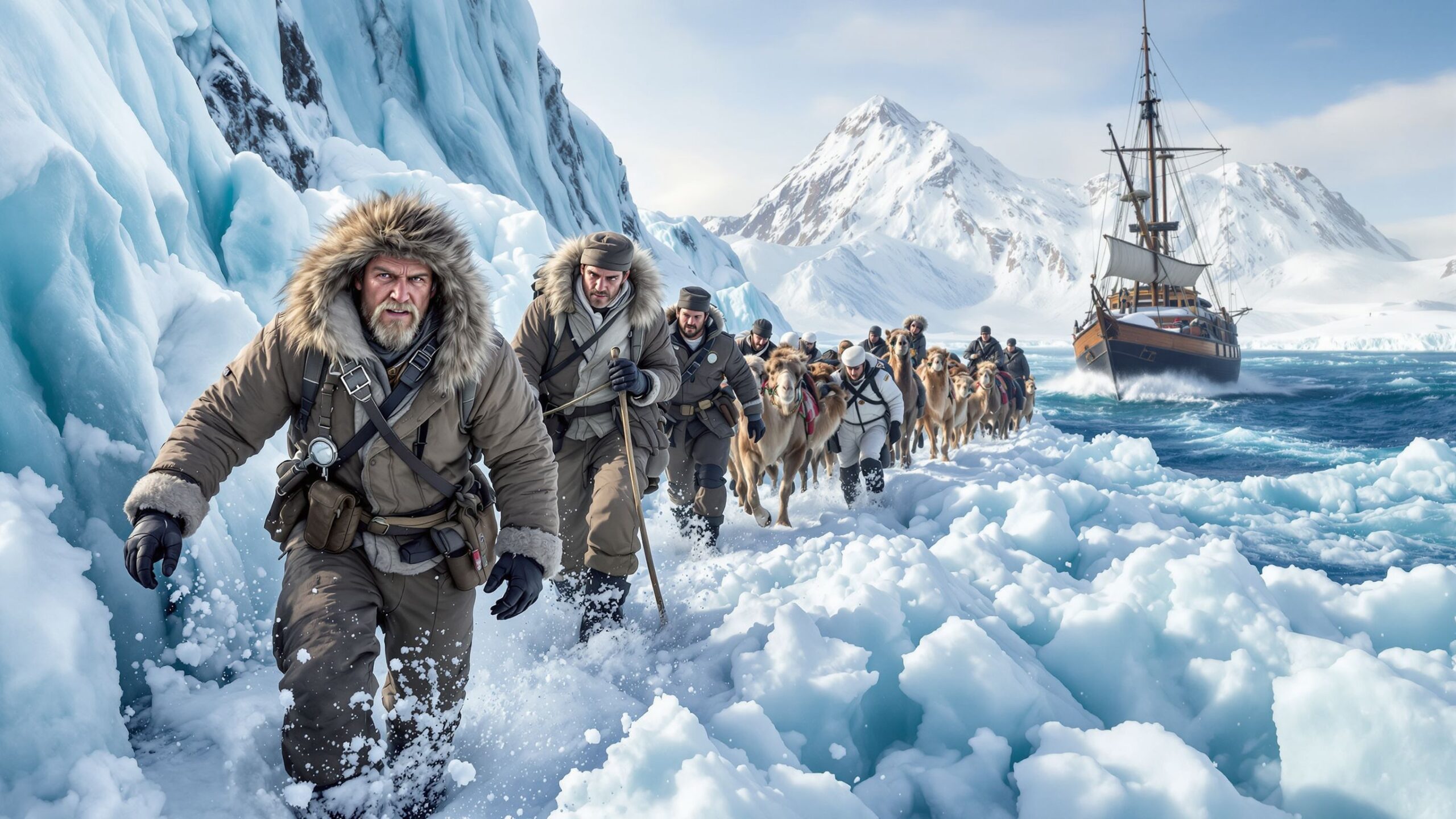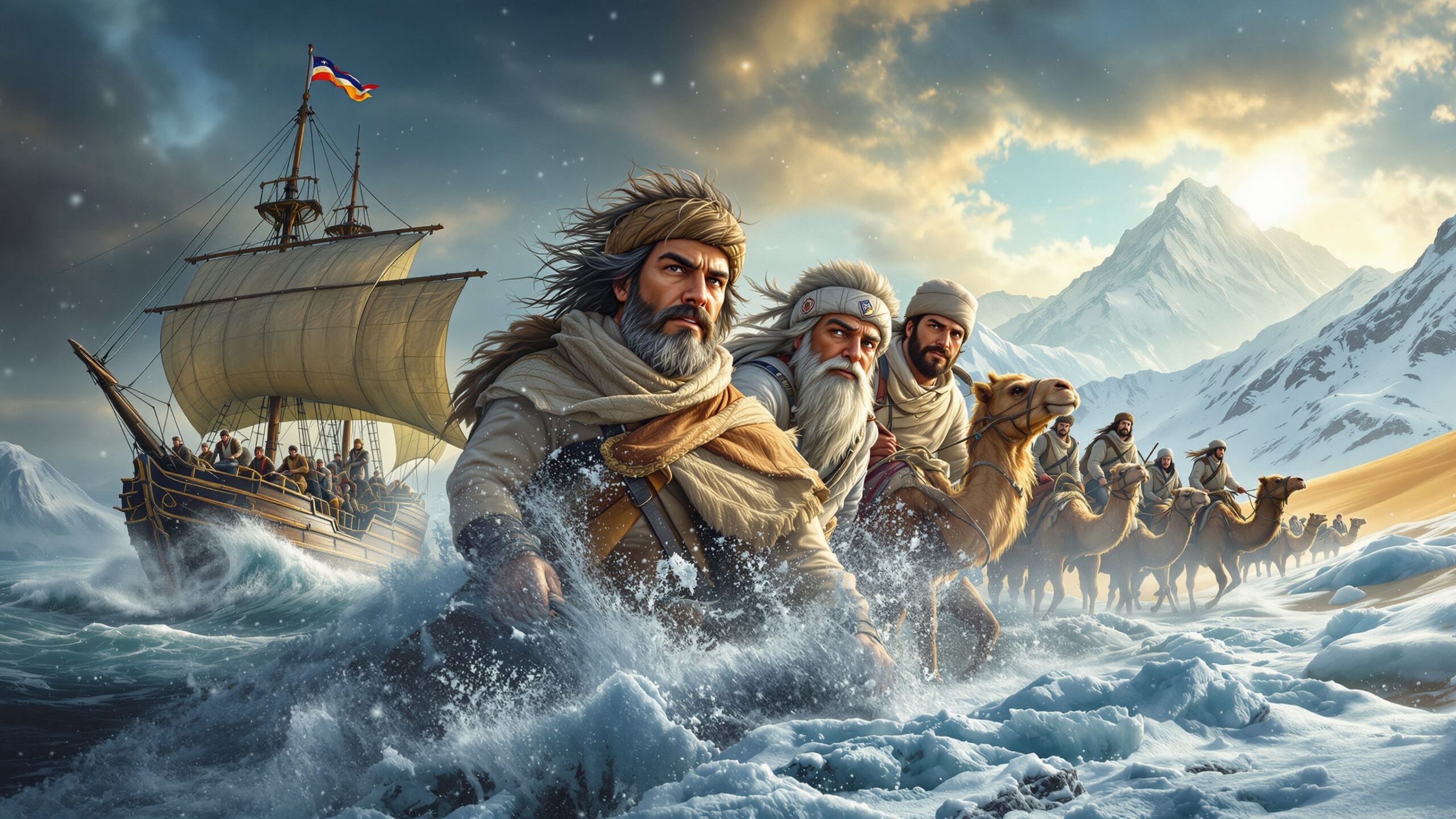
Throughout history, there have always been people willing to step beyond the edge of the known world. While most stayed close to familiar lands and safe routes, explorers chose uncertainty. They sailed into uncharted oceans, crossed dangerous deserts, climbed impossible mountains, and entered territories no one from their world had seen before. Their courage changed geography, trade, science, and human understanding forever.
These explorers did more than travel. They redrew borders, connected civilizations, opened trade routes, and sometimes triggered massive political change. Their journeys shaped the maps hanging in classrooms today and influenced how nations grew, fought, and cooperated across centuries.
Some were driven by ambition and empire, others by science or simple curiosity. Some became heroes, while others remain controversial figures because of the consequences of their discoveries. But whether celebrated or debated, their influence cannot be denied.
The story of famous explorers is really the story of humanity’s endless need to ask one question: what lies beyond the horizon?
A: Christopher Columbus is one of the most famous, though his legacy is deeply controversial.
A: Magellan’s expedition completed the first circumnavigation, with Juan Sebastián Elcano leading the final return.
A: He led enormous Chinese naval voyages that connected trade and diplomacy across the Indian Ocean.
A: No. Indigenous peoples already lived there, and Norse explorers reached North America earlier.
A: James Cook’s voyages greatly influenced European mapping of the Pacific region.
A: Explorers bring back measurements, route notes, coastline details, and geographic observations.
A: Usually not. Many arrived in lands already known to Indigenous or local communities.
A: Nellie Bly, Gertrude Bell, Jeanne Baret, and Sacagawea all shaped exploration history in different ways.
A: Compasses, sextants, charts, chronometers, journals, star navigation, and later scientific instruments.
A: Their journeys reveal courage, ambition, science, cultural contact, colonial power, and the changing idea of the world.
Marco Polo and the Road to the East
Long before ocean voyages dominated exploration, Marco Polo became one of the most famous land travelers in history. Born in Venice in the 13th century, he traveled with his father and uncle along the Silk Road to the court of Kublai Khan in Asia.
The journey took years and crossed mountains, deserts, and powerful empires. For Europeans of that time, Asia was a place of mystery, filled with stories but little direct knowledge. Marco Polo’s travels offered something rare—detailed firsthand descriptions of China, Central Asia, and the Mongol Empire.
He reportedly served under Kublai Khan and spent many years in the East before returning home. His writings, known as The Travels of Marco Polo, introduced European readers to places they had only imagined.
Though some historians debate parts of his account, his influence on exploration was enormous. His stories inspired generations of future explorers, including Christopher Columbus, who carried a copy of Polo’s writings during his own voyages.
Christopher Columbus and the Atlantic Crossing
In 1492, Christopher Columbus launched one of the most world-changing expeditions in history. Sponsored by Spain, he believed he could reach Asia by sailing west across the Atlantic Ocean.
At the time, many feared the ocean’s unknown vastness. His crew sailed for weeks without seeing land, and fear of failure or death created tension among the sailors. But eventually, land was spotted in the Bahamas, marking the beginning of sustained European contact with the Americas.
Although Columbus believed he had reached islands near Asia, he had actually opened the door to an entirely different continent for European powers. His voyages changed world trade, colonization, migration, and global politics forever.
Columbus remains one of the most debated explorers in history because of the devastating consequences colonization had on Indigenous peoples. Still, his role in changing the world map is impossible to ignore.
Ferdinand Magellan and the Shape of the Earth
Ferdinand Magellan’s expedition proved something humanity had long suspected but never fully demonstrated—that the Earth could be circumnavigated by sea.
In 1519, Magellan led five ships from Spain in search of a western route to the Spice Islands. The journey was brutal. His fleet faced storms, starvation, disease, mutiny, and deadly conflict.
Finding the narrow passage through South America that now bears his name, the Strait of Magellan, was a major achievement in itself. But crossing the Pacific Ocean nearly destroyed the expedition.
Magellan was killed in the Philippines and never completed the journey himself. Yet one ship, the Victoria, returned to Spain in 1522 with only 18 survivors aboard, completing the first successful voyage around the globe.
This expedition permanently changed world maps and navigation. It showed the true size of Earth and reshaped how people understood the planet.
Zheng He and the Treasure Fleets of China
While European explorers often dominate history books, Zheng He was one of the greatest explorers the world has ever seen. In the early 15th century, he commanded enormous Chinese treasure fleets during the Ming Dynasty.
His ships were far larger than European vessels of the same era, and his expeditions reached Southeast Asia, India, the Arabian Peninsula, and East Africa. These voyages were not focused on conquest, but on diplomacy, trade, and showcasing Chinese power.
Zheng He established relationships between distant kingdoms and expanded maritime trade networks across the Indian Ocean. His fleets carried goods, ambassadors, and political influence across continents.
Had these expeditions continued longer, global history might have looked very different. Though later Chinese rulers ended the voyages, Zheng He remains a symbol of exploration on a massive international scale.
Lewis and Clark and the American Frontier
In 1804, Meriwether Lewis and William Clark began one of the most important land explorations in American history. After the Louisiana Purchase, President Thomas Jefferson sent them west to map the newly acquired territory and find a route to the Pacific Ocean.
Their Corps of Discovery traveled thousands of miles across rivers, forests, plains, and mountains. They documented animals, plants, landscapes, and Native American nations they encountered along the way.
Their survival depended heavily on Indigenous knowledge, especially from Sacagawea, whose guidance and diplomacy were essential to the expedition’s success.
Crossing the Rocky Mountains nearly broke the expedition, but they eventually reached the Pacific coast in 1805.
Their journey provided the United States with critical geographic knowledge and helped define the map of the American West.
James Cook and the Pacific World
Captain James Cook transformed European understanding of the Pacific Ocean. In the 18th century, he completed three major voyages for Britain, mapping islands, coastlines, and sea routes across the Pacific.
Cook explored New Zealand, the eastern coast of Australia, Hawaii, and parts of the Arctic. His charts were so accurate that many were used for generations.
Unlike earlier explorers focused only on conquest, Cook’s missions also emphasized science. His ships carried astronomers, botanists, and naturalists who studied everything from plants to stars.
His voyages expanded knowledge of the Pacific world and played a major role in British imperial growth. Though his expeditions also connected to colonial expansion, his navigational achievements remain extraordinary.
Cook’s work turned large blank spaces on world maps into known geography.
Roald Amundsen and the Polar Frontier
Some of the final blank spaces on maps were not oceans, but the frozen poles. Norwegian explorer Roald Amundsen became one of the greatest polar explorers in history by mastering survival in Earth’s harshest environments.
He first navigated the Northwest Passage, proving ships could travel through the Arctic between the Atlantic and Pacific Oceans. Later, he turned his focus to Antarctica and the race for the South Pole.
In 1911, Amundsen and his team became the first humans to reach the South Pole. His success came from careful planning, the use of sled dogs, and respect for Indigenous Arctic survival methods.
His rival, Robert Falcon Scott, arrived later and died on the return journey, making the race one of the most dramatic stories in exploration history.
Amundsen’s achievements completed some of the last major geographic discoveries on Earth.
Sir Edmund Hillary and Tenzing Norgay on Everest
Maps show height as well as distance, and Mount Everest stood as the ultimate unexplored challenge for centuries. In 1953, Sir Edmund Hillary and Tenzing Norgay made history by becoming the first confirmed climbers to reach the summit of the world’s tallest mountain.
Their expedition faced avalanches, freezing temperatures, dangerous icefalls, and the deadly effects of extreme altitude. Climbing above the “death zone” meant every breath became difficult and every step demanded enormous effort.
Using oxygen equipment and years of mountaineering experience, they made their final push and reached the summit on May 29.
Their achievement was celebrated around the world and became a symbol of perseverance and teamwork. It also highlighted the essential expertise of Sherpa climbers, whose role in Himalayan exploration had long been underestimated.
They proved that even the highest point on Earth could be reached.
Neil Armstrong and the Map Beyond Earth
Perhaps the greatest explorer of the modern age was not crossing an ocean, but stepping onto another world. In 1969, Neil Armstrong became the first human to walk on the Moon during the Apollo 11 mission.
Alongside Buzz Aldrin and Michael Collins, Armstrong represented a new kind of exploration—space exploration. This was no longer about filling blank spaces on Earth’s map, but about expanding the map of humanity itself.
When Armstrong stepped onto the lunar surface, it became one of the defining moments in world history. It proved that exploration had entered a new era beyond Earth.
The Moon landing changed science, politics, and human imagination forever. It showed that the spirit of exploration had no limits, not even the sky.
Why Explorers Still Matter Today
Even in a world where satellites can map nearly every corner of Earth, explorers still matter. Today’s explorers dive into deep oceans, study remote rainforests, climb dangerous peaks, and prepare for missions to Mars.
The meaning of exploration has changed, but the courage behind it remains the same. It is still about stepping into uncertainty and asking questions no one has answered before.
Historical explorers remind us that progress often begins with risk. Every major discovery once seemed impossible. Every blank spot on the map represented fear, mystery, and opportunity.
Their stories also remind us that exploration carries responsibility. Discovery can lead to connection and knowledge, but it can also bring conflict and consequences. Understanding both sides makes history more honest.
Final Thoughts on the Explorers Who Changed the World
The most famous explorers in history did more than travel—they transformed civilization. They changed maps, connected continents, and expanded what humanity believed was possible.
From Marco Polo crossing the Silk Road to Neil Armstrong stepping onto the Moon, each explorer pushed beyond known boundaries and left a permanent mark on history.
Some were driven by trade, some by ambition, some by science, and some by pure curiosity. But all of them shared one powerful trait: they refused to accept the limits of the known world.
Because of them, the world became larger, smaller, and more connected all at once. Their journeys remind us that exploration is not just about finding new places. It is about changing how we see ourselves and our place in the universe.