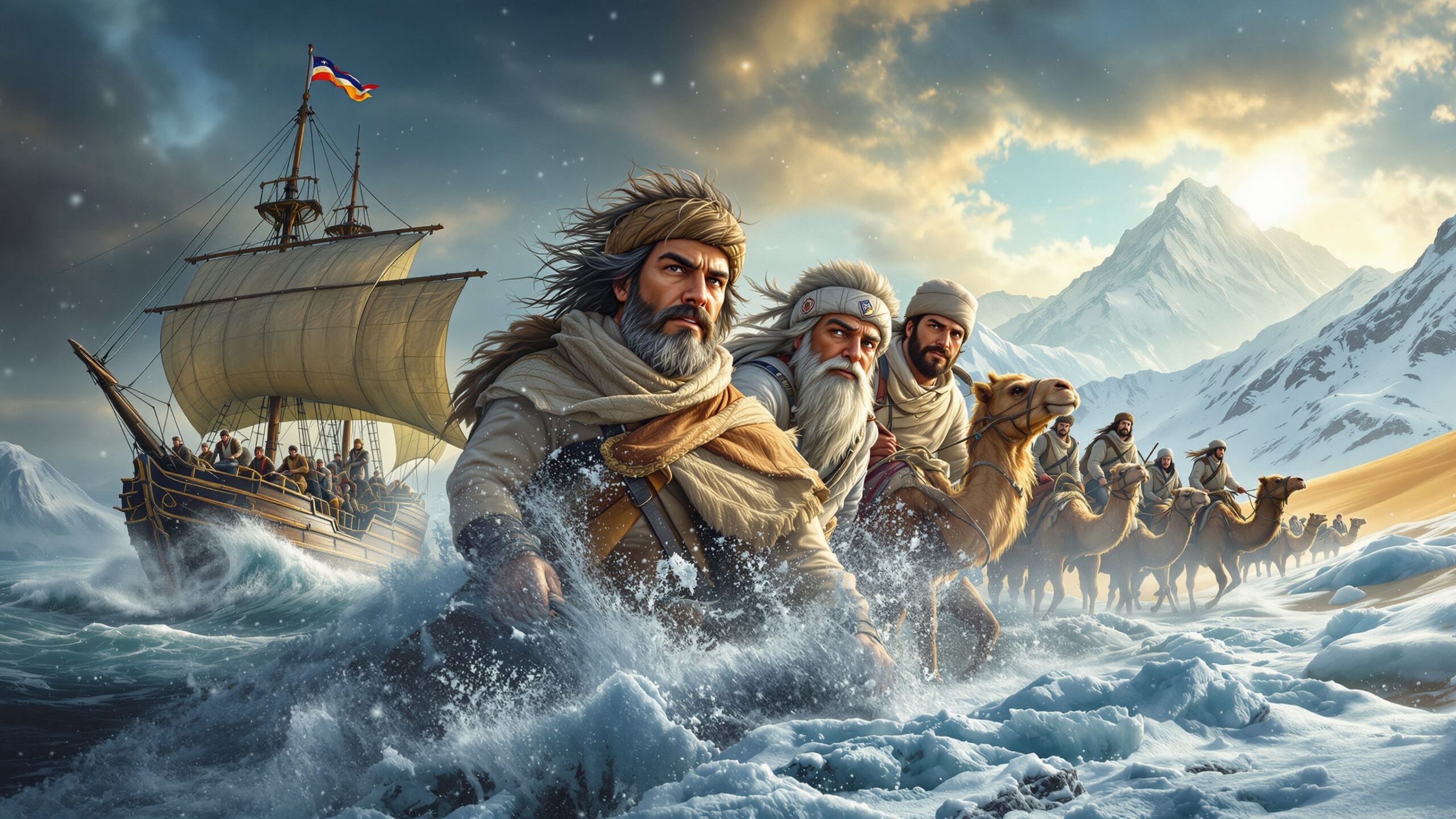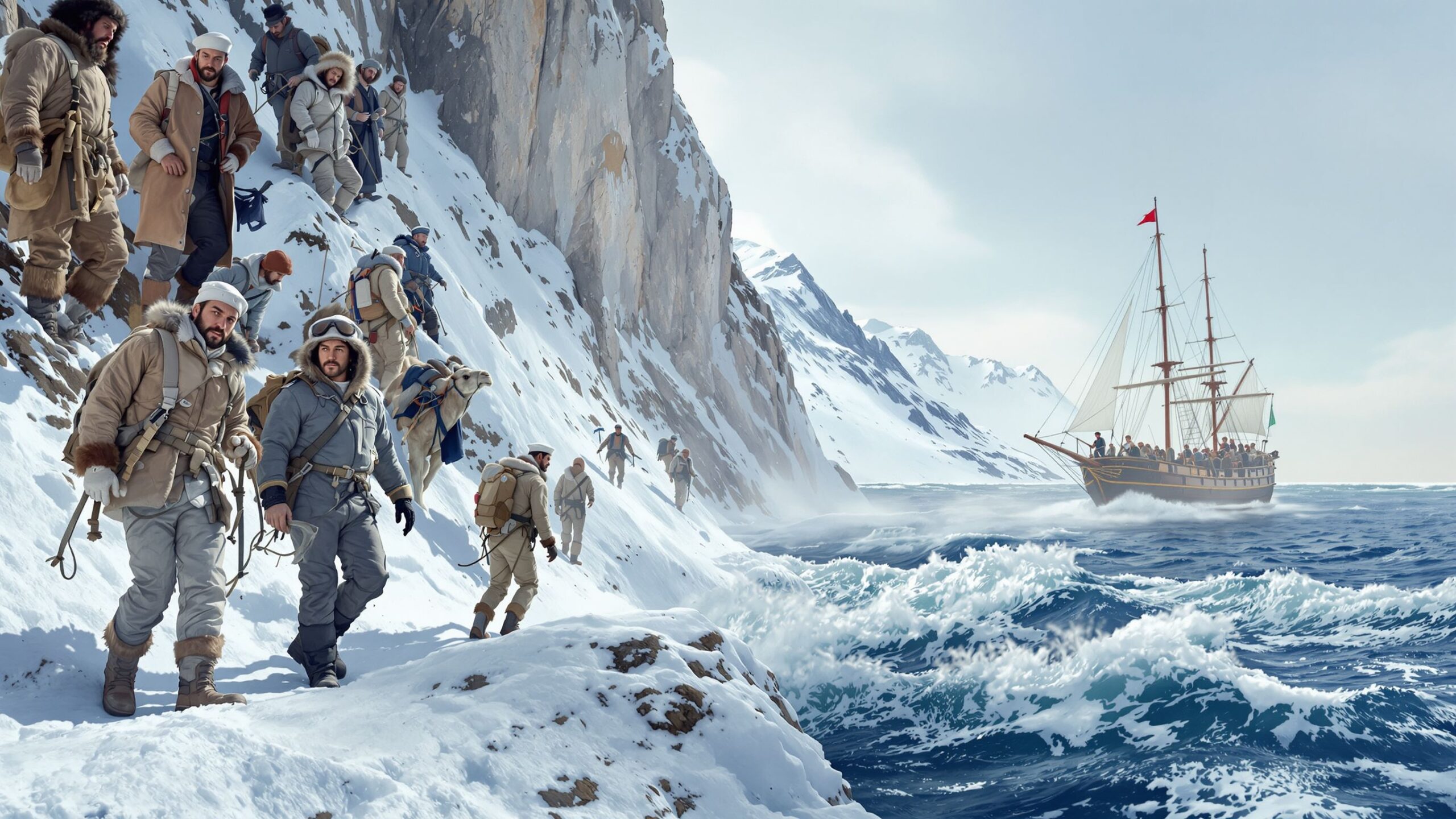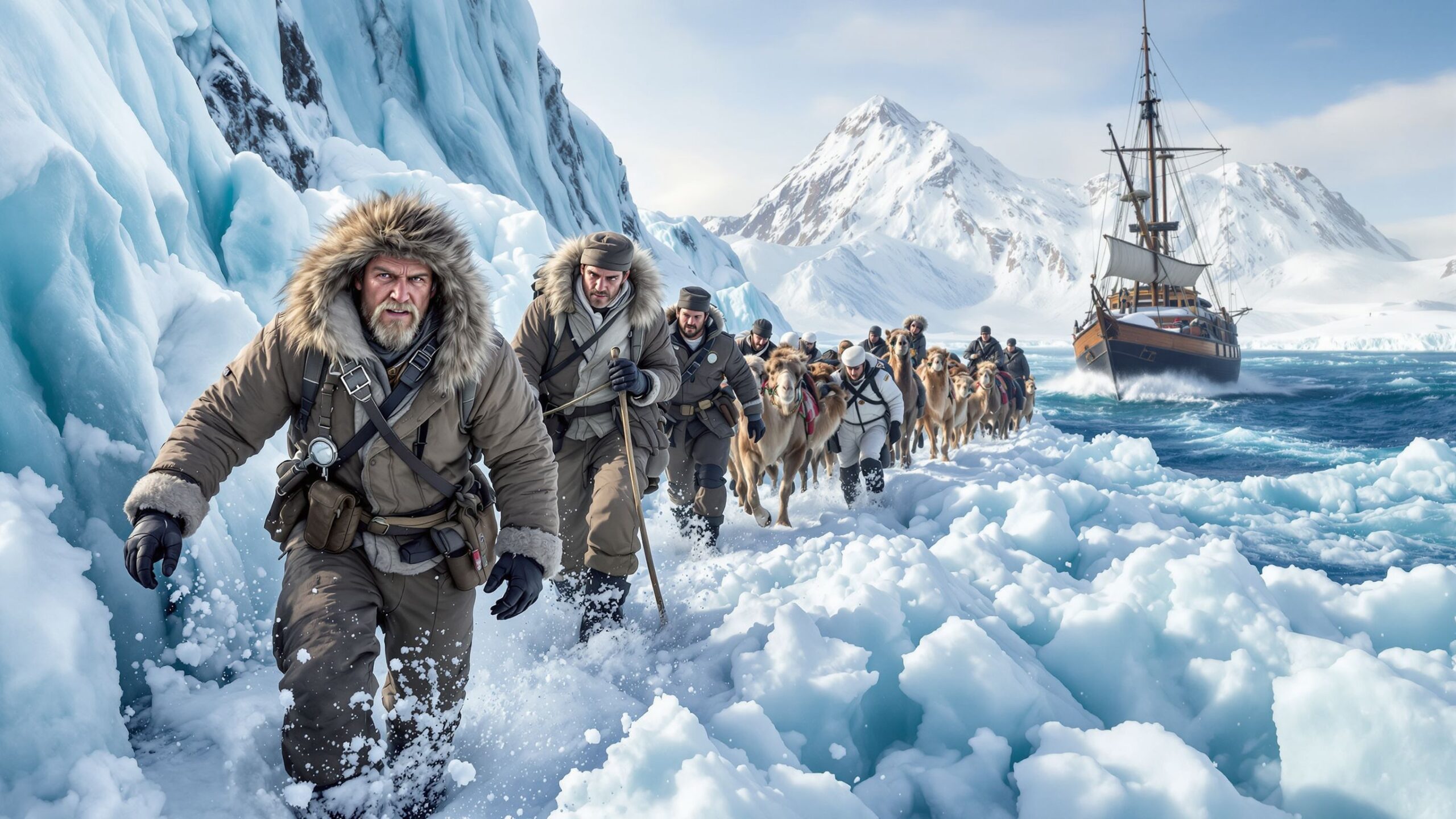
Throughout history, adventure has driven people far beyond the safety of home and into the unknown. Some journeys were inspired by survival, others by science, wealth, fame, or the simple desire to discover what no one had seen before. These expeditions were not ordinary trips. They were life-threatening challenges that demanded courage, leadership, and the willingness to risk everything.
From frozen polar regions to burning deserts, from the highest mountain peaks to the vast emptiness of space, the greatest adventure expeditions in history pushed human endurance to its limits. These explorers faced storms, starvation, illness, isolation, and death. Some returned as legends, while others never made it home.
What makes these journeys unforgettable is not just the places they reached, but the human spirit they revealed. Adventure expeditions are stories of determination, resilience, and the refusal to turn back when the path disappears.
The greatest adventure expeditions ever attempted continue to inspire because they prove that history is often written by those brave enough to step into the unknown.
A: Extreme risk, historic ambition, difficulty, endurance, and lasting influence.
A: Shackleton’s Endurance expedition is often considered one of the greatest survival stories.
A: Roald Amundsen’s team reached the South Pole first in 1911.
A: Thin air, freezing temperatures, avalanches, storms, exhaustion, and technical terrain made it deadly.
A: Yes. It was a human expedition to another world and one of history’s boldest journeys.
A: Poor planning, weather, disease, bad maps, supply problems, leadership mistakes, or impossible conditions.
A: They provided route knowledge, survival skills, translation, food sources, and cultural understanding.
A: Yes. Better gear helps, but mountains, oceans, caves, deserts, and polar regions remain dangerous.
A: Space, Antarctica, Everest’s death zone, and the deep ocean are among the most extreme.
A: They show humans confronting the unknown with courage, obsession, teamwork, and survival instinct.
Ernest Shackleton and the Endurance Expedition
Few adventure stories are as powerful as Ernest Shackleton’s Endurance expedition to Antarctica. In 1914, Shackleton set out to achieve the first land crossing of Antarctica, a goal considered nearly impossible at the time.
Before the crossing could even begin, disaster struck. His ship, the Endurance, became trapped in thick sea ice in the Weddell Sea. For months, the crew waited as the ice slowly crushed the ship until it finally sank, leaving them stranded in one of the harshest environments on Earth.
What followed became one of the greatest survival stories in history. Shackleton kept his men alive while they camped on drifting ice for months before escaping in lifeboats to Elephant Island.
From there, Shackleton and a small team sailed over 800 miles across the violent Southern Ocean in a tiny open boat to South Georgia Island. After landing, they crossed mountains and glaciers on foot to reach help.
Remarkably, every single crew member survived. The Endurance expedition is remembered not for conquest, but for extraordinary leadership and survival against impossible odds.
Roald Amundsen and the Race to the South Pole
The race to the South Pole was one of the most dramatic adventure expeditions ever attempted. Norwegian explorer Roald Amundsen and British explorer Robert Falcon Scott both wanted to be the first humans to stand at the southernmost point on Earth.
Amundsen prepared with precision. He studied Arctic survival methods, used sled dogs efficiently, and planned every stage of the expedition carefully. His understanding of extreme conditions became his greatest advantage.
In December 1911, Amundsen and his team successfully reached the South Pole and safely returned. Their victory became one of the greatest achievements in polar exploration.
Scott arrived weeks later only to discover he had lost the race. His return journey ended in tragedy when he and his team died in the brutal Antarctic conditions.
This expedition became a powerful lesson in preparation, endurance, and the harsh reality of adventure at the edge of the world.
Sir Edmund Hillary and Tenzing Norgay on Mount Everest
For centuries, Mount Everest represented the ultimate adventure challenge. Its height, extreme weather, and deadly conditions made it one of the most dangerous places on Earth.
In 1953, Sir Edmund Hillary of New Zealand and Nepali Sherpa Tenzing Norgay achieved what many believed was impossible. They became the first confirmed climbers to reach the summit of the world’s highest mountain.
Their climb was physically and mentally exhausting. Avalanches, freezing temperatures, dangerous icefalls, and thin air pushed their bodies to the limit. Above the “death zone,” every breath became a struggle.
Using oxygen equipment and years of climbing experience, they made their final summit push and stood at the top of the world on May 29.
Their success became a global symbol of perseverance and teamwork. It also brought long-overdue recognition to the critical role of Sherpa climbers in Himalayan exploration.
Ferdinand Magellan and the First Voyage Around the World
Adventure on the ocean could be just as deadly as adventure on land. In 1519, Ferdinand Magellan began one of the boldest sea expeditions in history—the first attempt to sail around the world.
With five ships and over 270 men, Magellan set out from Spain to find a western route to the Spice Islands. The voyage quickly became a nightmare of storms, hunger, mutiny, and disease.
Finding the dangerous passage through South America that now bears his name, the Strait of Magellan, was a major achievement. But crossing the Pacific Ocean nearly destroyed the crew.
Magellan was killed in the Philippines during a local conflict and never completed the voyage himself. Yet one ship, the Victoria, returned to Spain in 1522 with only 18 survivors aboard.
The expedition proved the Earth could be circumnavigated and changed navigation forever. It remains one of the greatest maritime adventures ever attempted.
Lewis and Clark and the Journey Across the American West
In 1804, Meriwether Lewis and William Clark led the Corps of Discovery on one of the greatest overland expeditions in North American history. Their mission was to explore the newly acquired Louisiana Territory and find a route to the Pacific Ocean.
The team traveled thousands of miles through rivers, plains, forests, mountains, and unfamiliar wilderness. They mapped landscapes, recorded wildlife, and established contact with Native American tribes across the continent.
Their journey would have been far more difficult without the help of Indigenous guides, especially Sacagawea, whose knowledge and diplomacy were essential to their survival.
Crossing the Rocky Mountains nearly ended the mission. Harsh weather, hunger, and exhaustion tested the group constantly.
When they finally reached the Pacific Ocean, it marked one of the greatest achievements in American exploration and permanently changed the map of the American West.
Thor Heyerdahl and the Kon-Tiki Expedition
Not every great adventure expedition belonged to ancient history. In 1947, Norwegian explorer Thor Heyerdahl launched one of the boldest modern experiments in exploration.
He believed ancient South Americans could have reached Polynesia using simple rafts. To test this theory, he built a wooden balsa raft called Kon-Tiki using traditional methods and set sail across the Pacific Ocean.
Many experts believed the journey was impossible and dangerous. Yet Heyerdahl and his small crew traveled over 4,000 miles across open ocean before reaching the islands of Polynesia.
The expedition proved that such a voyage was physically possible, even if historians continued debating the theory itself.
Kon-Tiki became famous because it combined adventure, science, and extraordinary personal risk in one unforgettable expedition.
Apollo 11 and the Ultimate Adventure
No expedition in human history expanded adventure further than Apollo 11. In 1969, humanity left Earth and landed on the Moon for the first time.
Astronauts Neil Armstrong, Buzz Aldrin, and Michael Collins represented a new age of exploration. Their mission was not about crossing oceans or mountains, but about stepping onto another world.
The risks were enormous. Technology had never attempted anything like it, and failure could have meant disaster in space with no possibility of rescue.
When Armstrong and Aldrin landed the lunar module Eagle on the Moon, history changed forever. Armstrong’s first step became one of the most iconic moments in human history.
Apollo 11 proved that adventure had no final border. The Moon landing redefined exploration and became the greatest expedition humanity had ever attempted.
The Silk Road Journeys of Marco Polo
Adventure does not always happen in ice or on mountains. In the 13th century, Marco Polo’s long journey from Venice to the court of Kublai Khan became one of history’s greatest travel expeditions.
Crossing deserts, mountain ranges, and unfamiliar empires, Marco Polo traveled thousands of miles through the Silk Road trade network into Asia.
For Europeans of his time, these lands were filled with mystery and myth. His journey offered rare descriptions of China, Central Asia, and the Mongol Empire.
His writings inspired generations of explorers who dreamed of reaching the East themselves. His adventures showed that cultural discovery could be just as powerful as geographic conquest.
Marco Polo’s expedition proved that adventure could change minds as much as maps.
Why Adventure Expeditions Still Matter Today
Modern technology has made exploration safer, but adventure still exists. Today, explorers dive into deep oceans, climb dangerous peaks, cross remote deserts, and prepare for missions to Mars.
The spirit behind great expeditions remains the same. Adventure means stepping into uncertainty with no guarantee of success. It demands courage, preparation, and the willingness to fail.
These historic journeys matter because they remind us that progress often begins with discomfort. Discovery belongs to those willing to leave the familiar behind.
They also teach humility. Nature remains stronger than ambition, and every mountain, ocean, and wilderness reminds us how small we are in comparison.
Adventure expeditions continue to inspire because they reveal the best of human determination when faced with the impossible.
Final Thoughts on History’s Greatest Adventure Expeditions
The greatest adventure expeditions ever attempted were never just about reaching a destination. They were about testing limits, discovering new worlds, and proving what human beings could survive and achieve.
From Shackleton’s frozen survival in Antarctica to Armstrong’s first step on the Moon, these journeys show that exploration is one of humanity’s deepest instincts.
Some explorers found glory, some found tragedy, and some found both. But all of them stepped forward when turning back would have been easier.
That is what makes their stories unforgettable. Adventure is not simply movement across land or sea. It is the decision to face fear, accept uncertainty, and keep going anyway.
As long as humans continue asking what lies beyond the horizon, the age of great expeditions will never truly end.