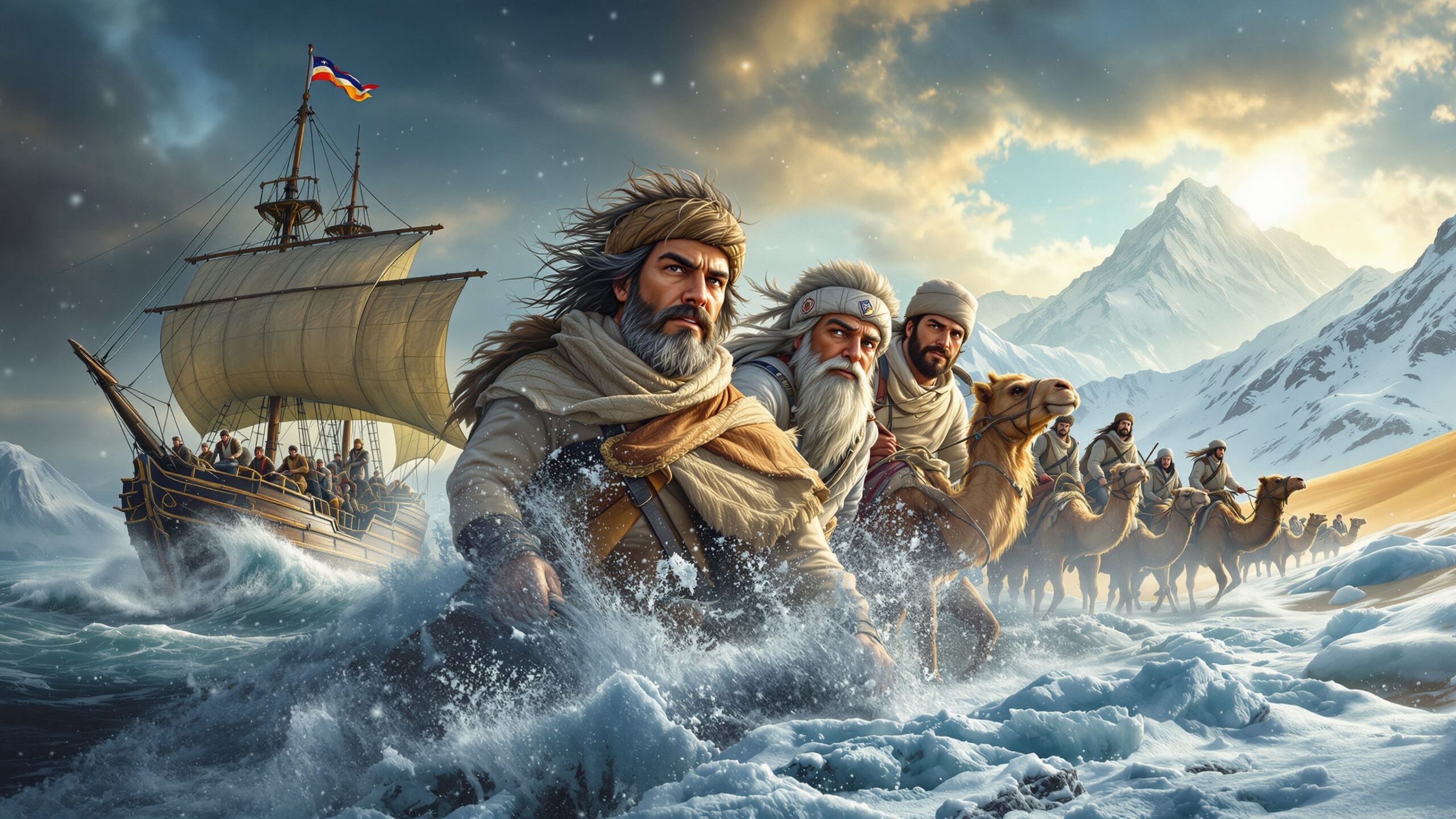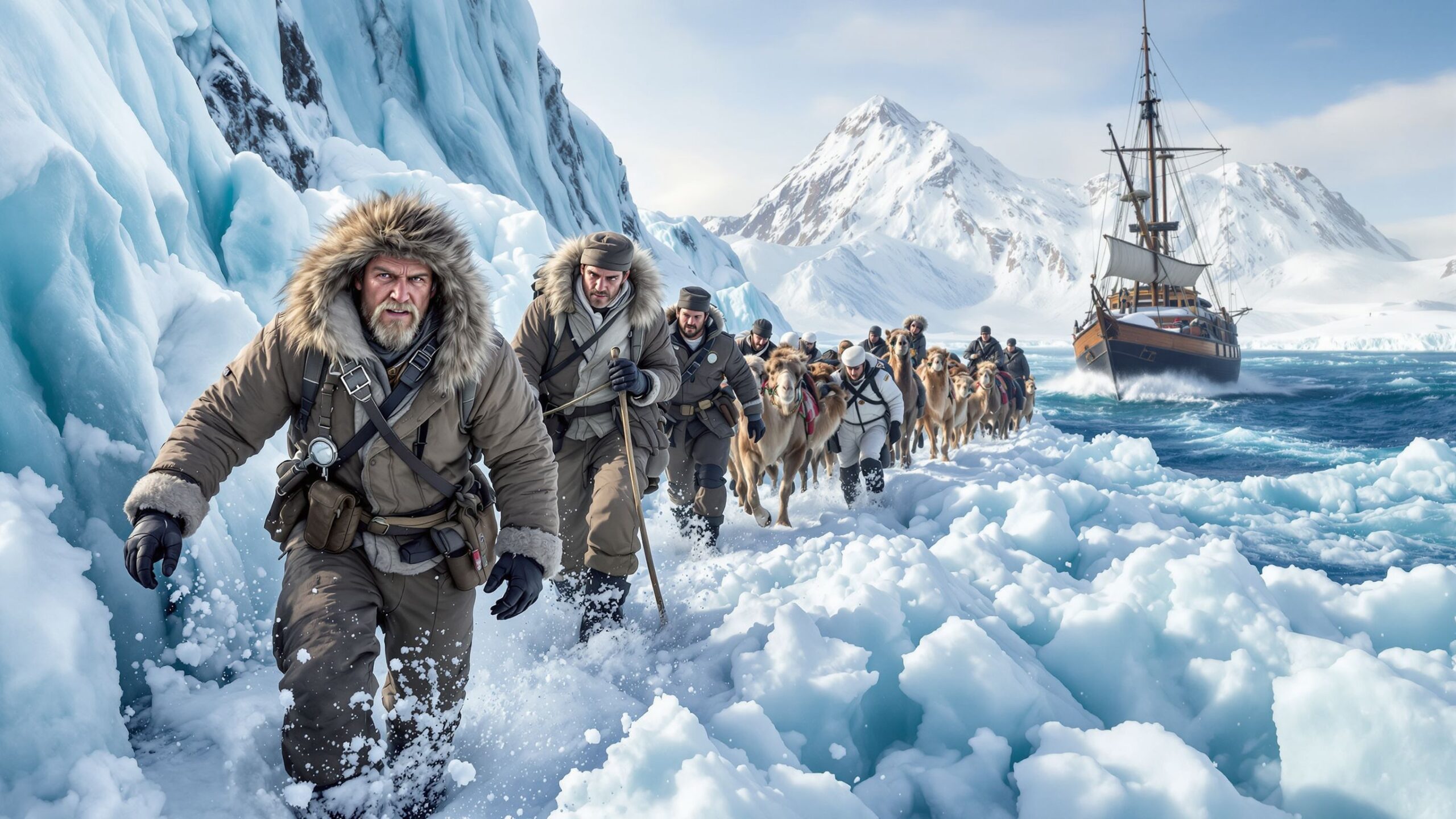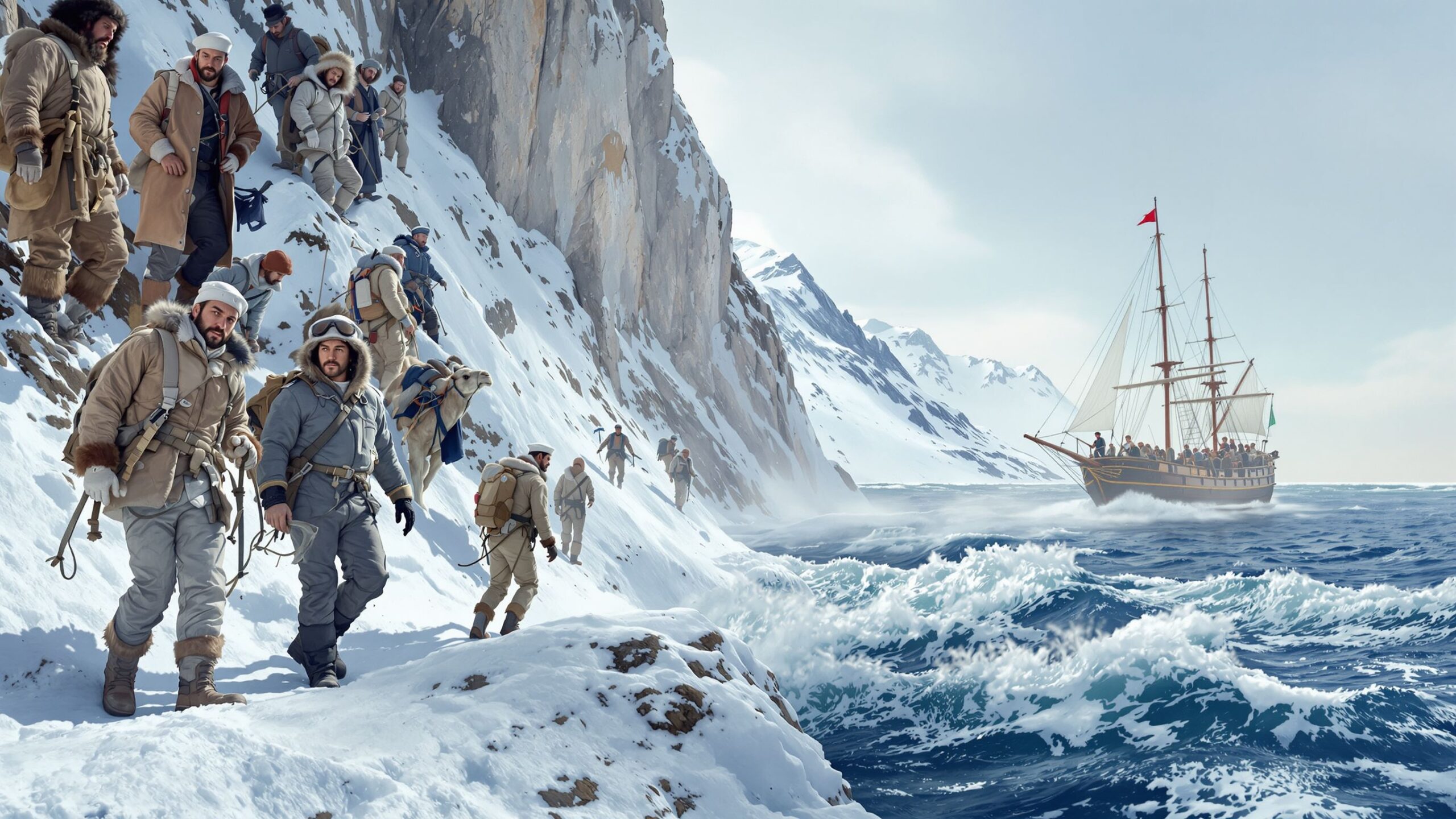
Throughout human history, the desire to explore the unknown has shaped civilizations, changed maps, and rewritten the story of the world. From frozen polar landscapes to uncharted oceans, from dangerous deserts to towering mountain peaks, epic expeditions have tested the limits of human courage, endurance, and imagination. These journeys were never just about reaching a destination—they were about discovery, survival, ambition, and sometimes pure obsession.
Some expeditions were driven by trade and empire, while others were inspired by science, survival, or the dream of glory. Some ended in triumph, while others became tragic legends passed down for generations. What unites them all is the extraordinary human spirit behind them. These explorers stepped into places where no clear path existed, risking everything for knowledge, fame, and the simple need to know what lay beyond the horizon.
The most epic expeditions in world history are not only stories of geography. They are stories of resilience, leadership, failure, and transformation. They reveal how exploration shaped the modern world and how individuals facing impossible odds changed history forever.
A: Scale, danger, discovery, endurance, historic impact, and the difficulty of reaching the goal.
A: Magellan’s expedition completed the first circumnavigation, though Juan Sebastián Elcano led the final return.
A: Roald Amundsen’s team reached the South Pole first in 1911.
A: Because his crew survived a catastrophic Antarctic disaster and was rescued without loss of life.
A: No. Many brought knowledge and connection, but some also caused colonization, violence, disease, and exploitation.
A: They often provided navigation, survival knowledge, translation, food sources, and local expertise.
A: Disease, starvation, storms, shipwrecks, extreme weather, conflict, and lack of accurate maps.
A: Yes. Space exploration continues the tradition of traveling into dangerous unknown environments.
A: They reveal how courage, ambition, science, power, survival, and culture shape history.
A: Preparation matters, but adaptability often determines who survives when the unknown takes over.
The Voyage of Christopher Columbus and the Age of Atlantic Exploration
One of the most famous expeditions in history began in 1492, when Christopher Columbus sailed west across the Atlantic Ocean under the sponsorship of Spain. His goal was to find a new route to Asia by crossing the ocean rather than traveling east through dangerous and politically complex trade routes.
With three ships—the Niña, the Pinta, and the Santa María—Columbus and his crew entered waters that many Europeans feared were endless and unknowable. Weeks passed without land, and tension among the sailors grew dangerously high. Supplies were limited, fear spread, and mutiny seemed possible.
When land was finally spotted in the Bahamas, the world changed forever. Although Columbus did not reach Asia as he intended, his voyage opened sustained contact between Europe and the Americas, launching an era of exploration, colonization, trade, and enormous historical consequences.
This expedition remains one of the most transformative in world history because it reshaped global politics, economics, and culture on a scale never seen before.
Ferdinand Magellan and the First Circumnavigation of the Earth
Few expeditions were as daring as Ferdinand Magellan’s attempt to sail around the world. Beginning in 1519, Magellan led a Spanish expedition with five ships and around 270 men to find a western route to the Spice Islands.
The journey was brutal from the start. Storms battered the fleet, food became scarce, and tensions rose among the crew. Navigating the dangerous strait at the southern tip of South America—now called the Strait of Magellan—was itself a historic achievement.
After crossing the Pacific Ocean, the expedition faced starvation, disease, and death. Magellan himself was killed in the Philippines during a local conflict and never completed the journey.
Yet one ship, the Victoria, returned to Spain in 1522 under the command of Juan Sebastián Elcano. Only 18 men survived, but they had completed the first successful circumnavigation of the globe.
This expedition proved beyond doubt that the Earth could be sailed around and revealed the immense true scale of the planet. It changed navigation, trade, and humanity’s understanding of the world.
Lewis and Clark and the Exploration of the American West
In 1804, Meriwether Lewis and William Clark began one of the most important land expeditions in North American history. Commissioned by President Thomas Jefferson after the Louisiana Purchase, their mission was to explore the newly acquired western territory and find a route to the Pacific Ocean.
Known as the Corps of Discovery, the team traveled thousands of miles through wilderness, rivers, mountains, and unfamiliar landscapes. They mapped terrain, documented wildlife, studied plants, and established relationships with Native American tribes.
Their journey would have been nearly impossible without the help of Indigenous guides and interpreters, especially Sacagawea, whose knowledge and presence were crucial to the expedition’s survival and diplomacy.
Crossing the Rocky Mountains was one of the greatest physical challenges they faced. Harsh weather, hunger, and exhaustion nearly ended the mission multiple times.
When they finally reached the Pacific coast in 1805, it marked a major achievement in American exploration. Their expedition provided critical geographic knowledge and helped shape the westward expansion of the United States.
Ernest Shackleton and the Survival Story of the Endurance
Not all epic expeditions are remembered for discovery. Some are remembered because survival itself became the greatest achievement. Few stories illustrate this better than Sir Ernest Shackleton’s Antarctic expedition aboard the Endurance.
In 1914, Shackleton set out to complete the first land crossing of Antarctica. Before the mission could even begin, disaster struck. The Endurance became trapped in sea ice in the Weddell Sea and was eventually crushed by the ice, leaving the crew stranded in one of the harshest environments on Earth.
What followed became one of the greatest survival stories ever recorded. Shackleton kept morale alive while the crew camped on drifting ice for months before escaping by lifeboat to the remote Elephant Island.
From there, Shackleton and a small team made an astonishing 800-mile journey across the violent Southern Ocean in a small open boat to South Georgia Island. Then he crossed mountains and glaciers on foot to reach a whaling station and organize rescue.
Remarkably, every member of the expedition survived.
The Endurance expedition is celebrated not for conquering Antarctica, but for extraordinary leadership, endurance, and human resilience against impossible odds.
Marco Polo and the Journey Along the Silk Road
Long before ocean exploration dominated history, overland expeditions connected continents. Marco Polo’s journey from Venice to the court of Kublai Khan in the 13th century remains one of the most legendary travel expeditions ever recorded.
Traveling with his father and uncle, Marco Polo crossed deserts, mountains, and vast empires over the course of several years. The journey along the Silk Road exposed him to cultures, technologies, and political systems that were almost unimaginable to Europeans at the time.
He spent years in the Mongol Empire and reportedly served in diplomatic roles under Kublai Khan. His later account, often known as The Travels of Marco Polo, introduced European readers to detailed descriptions of China, Central Asia, and the East.
Though historians still debate some details of his writings, the influence of his expedition is undeniable. His journey expanded European curiosity about Asia and inspired future explorers, including Christopher Columbus.
Marco Polo’s expedition represents the power of travel not only to discover geography, but to expand cultural understanding across civilizations.
Roald Amundsen and the Race to the South Pole
The race to reach the South Pole became one of the most dramatic chapters in exploration history. Norwegian explorer Roald Amundsen and British explorer Robert Falcon Scott were both determined to be first.
Amundsen’s expedition was defined by preparation, precision, and practical decision-making. He studied Arctic survival techniques, used sled dogs effectively, and carefully planned every stage of the journey.
In 1911, Amundsen and his team successfully reached the South Pole, becoming the first humans to stand there. They planted the Norwegian flag and safely returned.
Scott arrived weeks later to find proof that he had lost the race. His return journey became a tragedy, as he and his companions perished in brutal Antarctic conditions.
Amundsen’s success and Scott’s heartbreaking end created one of the most powerful contrasts in expedition history. It showed how preparation and survival strategy could mean the difference between triumph and disaster.
Sir Edmund Hillary and Tenzing Norgay on Mount Everest
For centuries, Mount Everest stood as the ultimate symbol of human challenge. Many tried to climb it, and many failed. In 1953, New Zealander Sir Edmund Hillary and Nepali Sherpa Tenzing Norgay achieved what had once seemed impossible.
Their expedition faced deadly cold, thin air, avalanches, and extreme exhaustion. Climbing at such altitude pushes the human body close to its limits, where every step becomes a battle.
Using oxygen equipment and years of climbing experience, the pair made their final summit push and stood at the top of the world on May 29, 1953.
Their success became a global symbol of perseverance and international cooperation. It also highlighted the vital role of Sherpa climbers, whose expertise had long been essential to Himalayan expeditions.
Reaching Everest’s summit was not just a mountaineering victory. It was proof that even Earth’s highest barriers could be overcome with determination and teamwork.
The Apollo 11 Mission and Humanity’s Greatest Expedition
Some of history’s greatest expeditions did not cross oceans or deserts—they crossed space. In 1969, Apollo 11 became perhaps the most epic expedition ever attempted when humans traveled to the Moon.
Led by Neil Armstrong, Buzz Aldrin, and Michael Collins, the mission represented the peak of engineering, science, and Cold War ambition. After years of preparation and earlier missions, Apollo 11 launched from Earth carrying the hopes of millions.
When Armstrong and Aldrin landed on the lunar surface in the Eagle module, it marked a turning point in human history. Armstrong’s first step and famous words became one of the defining moments of the modern age.
The Moon landing was more than a technological achievement. It was an expedition into the ultimate unknown, proving that exploration had moved beyond Earth itself.
Apollo 11 expanded the definition of exploration forever and remains one of the boldest journeys humanity has ever undertaken.
Why Epic Expeditions Still Matter Today
Modern technology has changed exploration, but the spirit behind epic expeditions remains the same. Today, scientists explore deep oceans, astronauts prepare for missions to Mars, and adventurers continue to push into the planet’s harshest environments.
These historic journeys matter because they remind us that progress often begins with uncertainty. Exploration demands courage before success is guaranteed. It requires people willing to risk failure in pursuit of something greater.
Epic expeditions also teach humility. Nature does not bend easily to human ambition. Mountains, oceans, deserts, and ice remind us that discovery comes with respect for forces far larger than ourselves.
Most importantly, these stories inspire us. Whether crossing Antarctica, climbing Everest, or sailing into unknown seas, explorers show what humans are capable of when curiosity becomes stronger than fear.
Final Thoughts on the Greatest Expeditions in History
The most epic expeditions in world history are more than adventurous tales—they are turning points that changed civilizations and redefined what humanity believed was possible. They opened continents, connected cultures, advanced science, and revealed the extraordinary strength of the human spirit.
From Columbus crossing the Atlantic to Apollo 11 reaching the Moon, each expedition reflects a moment when people chose the unknown over safety. Some found glory, some found tragedy, and some found both.
What makes these journeys unforgettable is not just where they went, but what they proved: that exploration is one of the deepest human instincts. We are driven to ask what lies beyond the map, beyond the mountain, beyond the horizon.
And because of that, the story of epic expeditions is far from over.