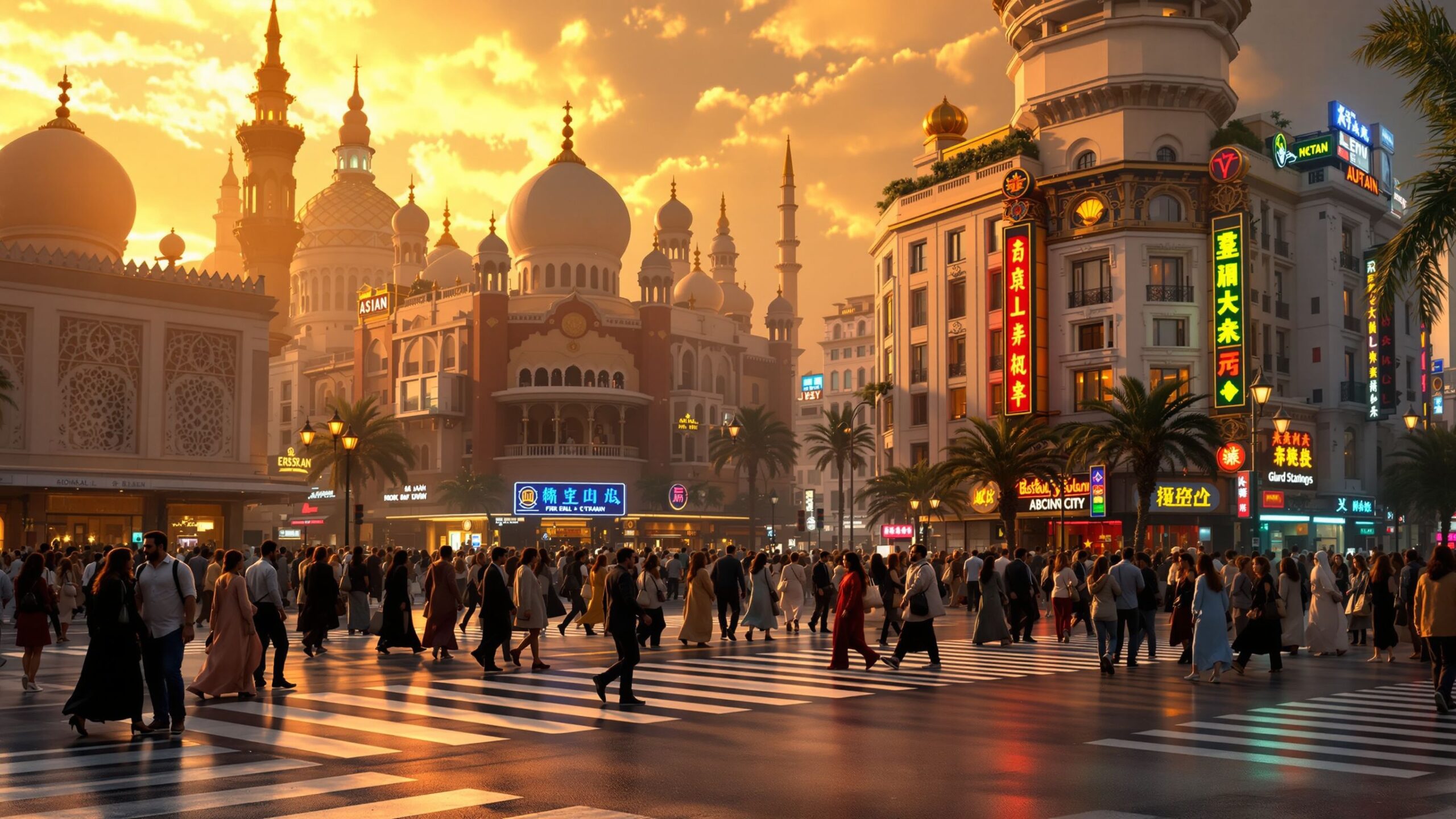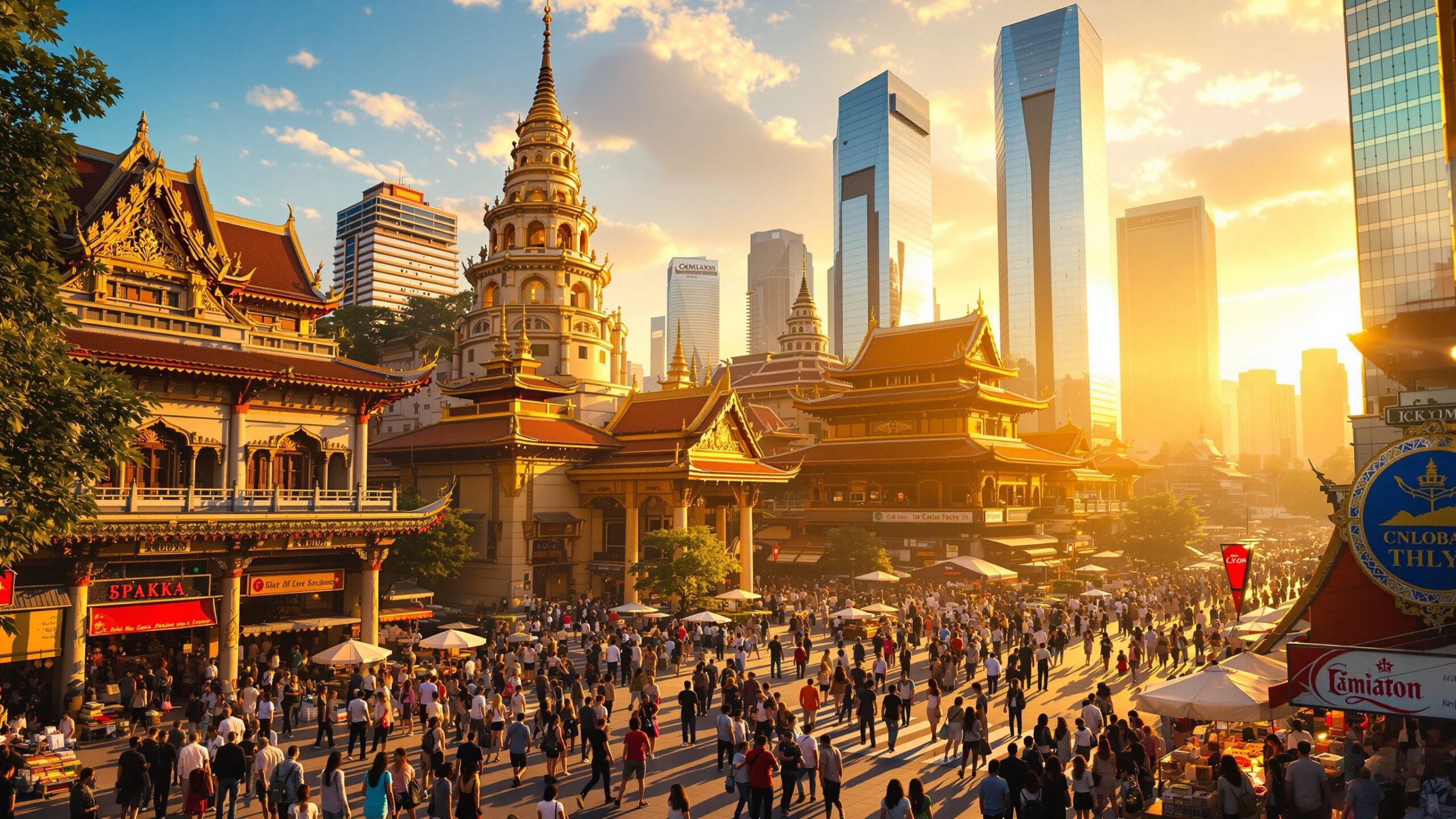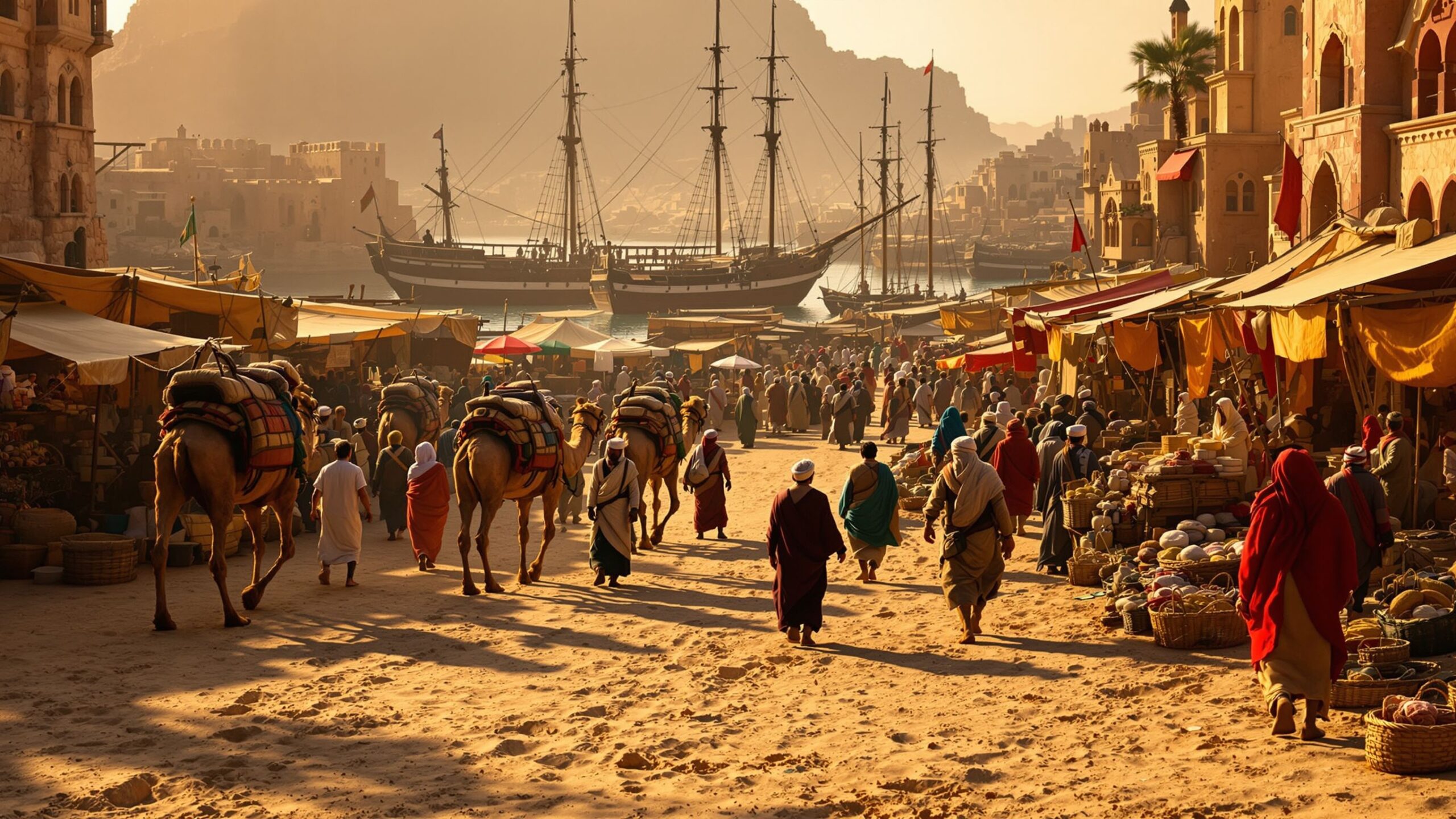
Long before airplanes and digital networks connected the world, trade routes served as the arteries of global interaction. These pathways—stretching across deserts, oceans, and continents—did far more than move goods from one place to another. They carried ideas, beliefs, languages, art, and traditions, weaving together distant civilizations into shared cultural landscapes. Today’s cultural crossroads cities are the direct descendants of these routes, shaped by centuries of exchange that transformed them into vibrant centers of diversity and innovation.
A: They brought merchants, migrants, goods, religions, languages, recipes, and ideas into shared urban spaces.
A: Spices, silk, tea, coffee, ceramics, textiles, metals, books, and luxury goods had major cultural impact.
A: The Silk Road is the best-known network, but maritime routes were just as important.
A: Ports received ships, travelers, languages, religions, ingredients, and styles from many regions at once.
A: Yes, many cuisines changed because of imported spices, crops, cooking tools, and migrant communities.
A: Yes, traders, monks, missionaries, scholars, and travelers helped religions move across regions.
A: Yes, cities like Singapore, Dubai, Hong Kong, New York, and London continue that pattern through finance, shipping, migration, and culture.
A: Look for old ports, markets, bazaars, merchant houses, warehouses, museums, and historic neighborhoods.
A: No, they also involved conflict, conquest, slavery, colonialism, disease, and unequal power.
A: It explains why cities look, sound, eat, worship, and celebrate the way they do now.
The Origins of Global Trade Networks
The earliest trade routes emerged out of necessity, as communities sought resources they could not produce themselves. Over time, these exchanges expanded into complex networks linking entire regions. One of the most influential of these was the Silk Road, a vast system of land routes connecting East Asia to Europe.
Along this network, silk, spices, and precious goods traveled thousands of miles, but so did philosophies, technologies, and cultural practices. Buddhism spread from India into East Asia, while artistic styles and scientific knowledge moved in both directions. Trade was never just economic; it was deeply cultural, creating connections that reshaped entire societies.
Maritime Routes and the Rise of Port Cities
While land routes like the Silk Road were transformative, maritime trade routes expanded global interaction even further. The development of advanced navigation allowed traders to cross vast oceans, linking continents in ways that had never been possible before.
Port cities became the beating hearts of these networks. Locations along the Mediterranean, the Indian Ocean, and later the Atlantic became hubs where goods and cultures converged. Cities such as Venice and Malacca thrived as centers of exchange, attracting merchants from across the world.
These ports were more than economic centers; they were places where languages blended, religions coexisted, and new cultural identities emerged. Markets became spaces of interaction, where traders not only exchanged goods but also stories, customs, and ideas.
Istanbul: A Strategic Gateway of Trade and Culture
Istanbul’s position at the crossroads of Europe and Asia made it one of the most important trade hubs in history. As a key link between land and sea routes, it connected the Silk Road with maritime networks, allowing goods and ideas to flow seamlessly between continents.
This constant movement shaped Istanbul into a city of remarkable cultural diversity. Influences from Byzantine, Ottoman, and countless other civilizations can be seen in its architecture, cuisine, and traditions. The city’s role as a trade hub ensured that it remained a center of cultural exchange for centuries, a legacy that continues to define it today.
Cairo: The Crossroads of Africa, Asia, and Europe
Cairo’s location near the Nile River and its proximity to key trade routes made it a vital link between continents. It served as a gateway connecting sub-Saharan Africa, the Middle East, and the Mediterranean world.
Through trade, Cairo became a melting pot of cultures, where African, Arab, and Mediterranean influences blended into a unique cultural identity. Its markets, known as souks, were filled with goods from across the world, while its intellectual centers attracted scholars and thinkers. Cairo’s history as a trade hub continues to shape its cultural richness today.
Singapore: A Modern Legacy of Maritime Trade
Singapore’s rise as a global city is deeply rooted in its strategic location along major shipping routes. Positioned at the crossroads of the Indian Ocean and the South China Sea, it became a key stop for traders traveling between East and West.
This role brought together people from diverse backgrounds, including Chinese, Malay, Indian, and European communities. Over time, these influences blended into a cohesive cultural identity that is both diverse and unified. Today, Singapore remains one of the world’s most important trade hubs, continuing the legacy of cultural exchange that began centuries ago.
Cultural Exchange Beyond Goods
Trade routes did not just move physical items; they facilitated the exchange of intangible cultural elements that shaped societies in profound ways. Language is one of the most visible examples. Trade often required communication between different groups, leading to the development of lingua francas and the blending of linguistic traditions.
Religion and philosophy also traveled along these routes. The spread of Islam across North Africa and parts of Asia, the expansion of Christianity into Europe and beyond, and the movement of Eastern philosophies all demonstrate how trade networks influenced belief systems. These exchanges created shared cultural frameworks that transcended geographic boundaries.
Zanzibar City: Where Ocean Trade Created Cultural Fusion
Zanzibar City, located off the coast of East Africa, is a powerful example of how maritime trade shaped cultural identity. As a major port in the Indian Ocean trade network, it attracted traders from Arabia, Persia, India, and beyond.
This interaction led to the development of Swahili culture, a blend of African and foreign influences that is still evident today. The city’s architecture, language, and traditions reflect this fusion, making it one of the most distinctive cultural crossroads in the world.
The Role of Trade in Shaping Cuisine
One of the most immediate and tangible effects of trade routes can be seen in food. Ingredients that were once limited to specific regions became globally available, transforming culinary traditions. Spices from Asia found their way into European kitchens, while crops from the Americas spread across the world.
Cities at the center of trade routes became culinary melting pots, where flavors and techniques from different cultures combined to create new dishes. This blending of cuisines is a hallmark of cultural crossroads cities, offering a taste of the world in a single location.
New York City: A Modern Trade Hub of Culture
While ancient trade routes have evolved, their influence continues in modern global cities like New York City. As a major center of commerce and immigration, it serves as a contemporary crossroads where cultures from around the world converge.
The city’s diversity reflects centuries of global exchange, with neighborhoods representing a wide range of cultural backgrounds. From its food to its art, New York embodies the ongoing impact of trade and migration, demonstrating how these forces continue to shape cultural landscapes.
Trade Routes and the Birth of Global Cities
The cities that emerged along trade routes often became powerful centers of influence, shaping not only regional economies but also global culture. These cities developed infrastructures that supported trade, including ports, markets, and financial systems, which in turn attracted more people and ideas.
Over time, they evolved into global cities—places that play a significant role in the world’s economic and cultural systems. Their origins as trade hubs continue to influence their identities, making them key players in the ongoing story of globalization.
The Lasting Impact on Modern Cultural Crossroads
Even though modern transportation and technology have transformed the way we connect, the legacy of historical trade routes remains deeply embedded in today’s cultural crossroads cities. The patterns of migration, cultural exchange, and economic activity established centuries ago continue to shape the world we live in.
These cities remind us that globalization is not a new phenomenon, but a continuation of processes that have been unfolding for thousands of years. The connections forged along ancient trade routes laid the foundation for the interconnected world we experience today.
A World Connected Through Exchange
Global trade routes did more than create wealth; they created understanding, interaction, and shared experiences. They brought people together, sometimes in conflict but often in collaboration, leading to the rich cultural diversity we see today.
To explore the world’s cultural crossroads cities is to trace the paths of these ancient routes, to see how history continues to influence the present. It is to recognize that every shared meal, every blended tradition, and every diverse community is part of a much larger story—a story of connection, exchange, and the enduring impact of global trade.