Choose a Landform, Not a Superlative
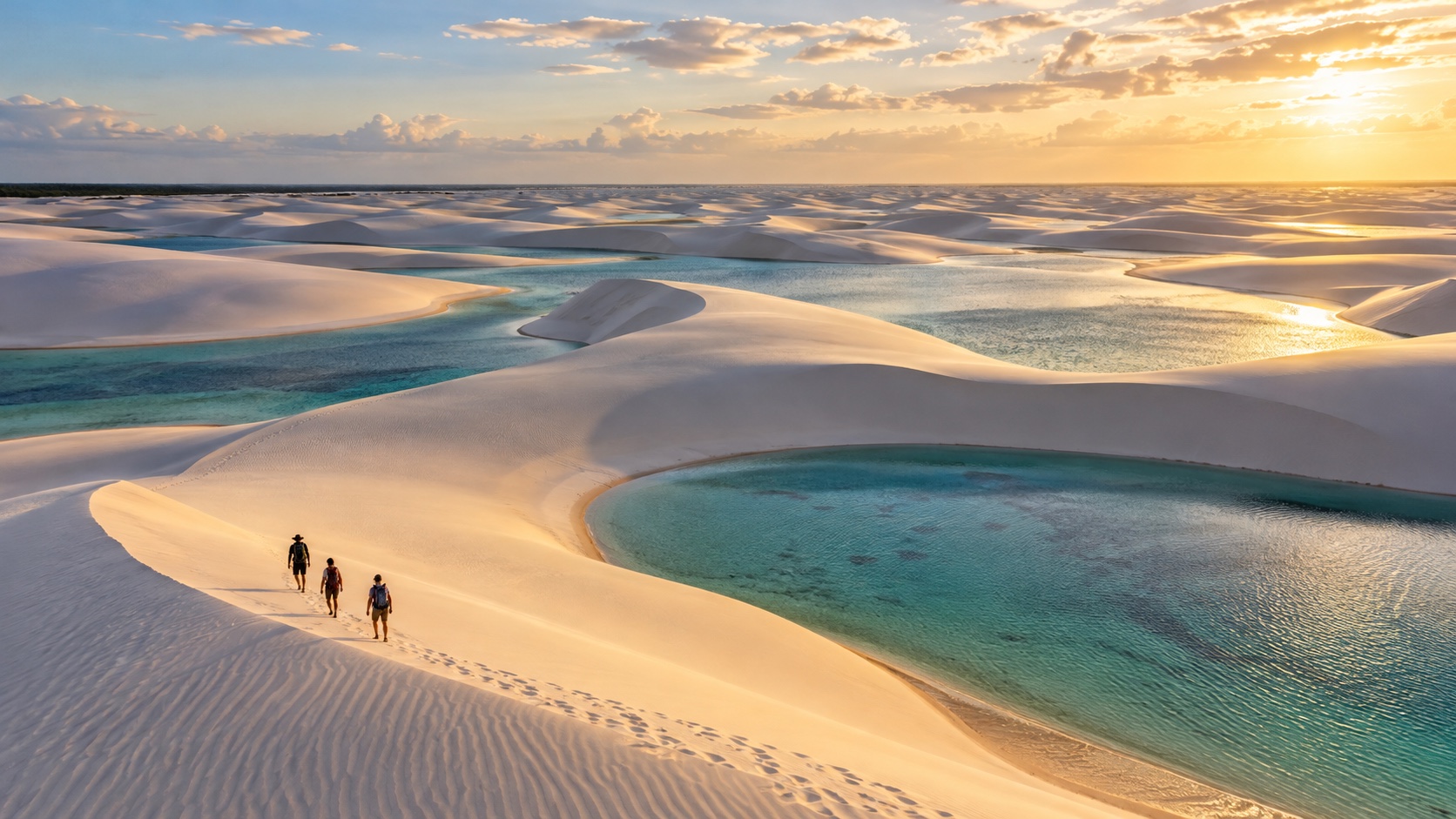
The best desert landscape depends on what you hope to see. Dunes reveal wind in motion, salt flats turn water into mirrors, sandstone records erosion, volcanic plateaus pair fire with aridity, and cold deserts replace heat with ice and permafrost. Each environment has a narrow margin for error and a distinct human history. Begin by choosing a landform and a season, then check altitude, road access, permits, temperature, and current official guidance. Photographs conceal wind, distance, fragile soils, and long transfers. A well-paced journey with a credible local operator or park plan is more likely to deliver meaningful scenery than a route built around collecting famous names.
A: Rankings depend on how individual dunes and dune fields are measured.
A: A thin calm water layer can cover the bright flat surface.
A: Some produce episodic flowers after suitable rainfall and temperatures.
A: Iron-bearing minerals commonly oxidize but geology varies.
A: Floods sand snow and maintenance can change them quickly.
A: It may bring severe cold snow or limited services.
A: Land ownership and protected-area rules determine legal sites.
A: Many avoid heat and are active at cooler times.
A: Crust can conceal mud or brine and access may be forbidden.
A: Compare geology access ecology and personal interests rather than one score.
Atacama Altiplano for Volcanoes and Salt Lagoons
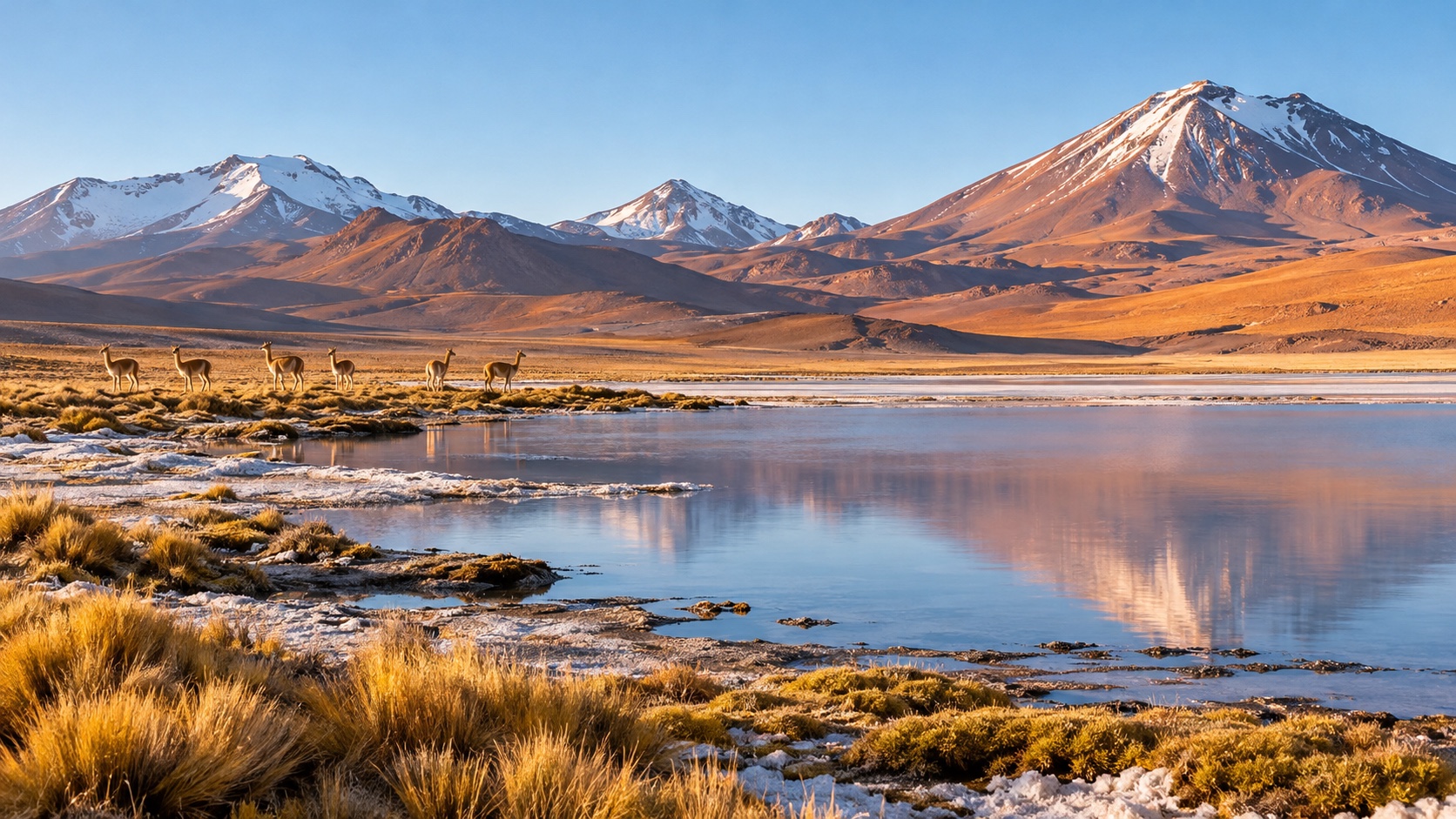
Above Chile’s better-known desert towns, the Altiplano combines broad volcanic cones, saline lagoons, wetlands, pumice, ochre slopes, and intensely clear air. The apparent calm masks cold, strong ultraviolet exposure, wind, and elevations where visitors can become unwell. Plan a gradual ascent and choose operators with oxygen protocols, maintained vehicles, and realistic itineraries.
Vicuñas and flamingos should be observed from marked areas with no attempt to alter their movement. Lagoon margins are easily damaged. Morning light gives volcanic forms definition, while afternoon cloud can change access. Learn which communities manage sites and pay required fees. The strongest image is often a small animal or road line revealing scale, not a saturated edit that misrepresents the high desert.
Salar de Uyuni for an Expansive Horizon
Bolivia’s Salar de Uyuni is a vast salt flat whose appearance changes dramatically. Dry conditions reveal polygonal crust and a nearly abstract white horizon; seasonal shallow water can produce reflections but also make routes unsafe or inaccessible.
Experienced local drivers determine legal tracks and avoid soft margins. Vehicle condition, seat belts, communications, and driver rest matter on multi-day circuits. Nearby lagoons and volcanic landscapes sit at elevation with cold nights and rough roads.
Choose a schedule that allows acclimatization rather than racing from lower cities. Never demand a reflective route when operators judge the crust unsafe. Salt is an industrial and ecological resource, not an infinite studio floor.
Namib for Fog, Dunes, and Pale Pans
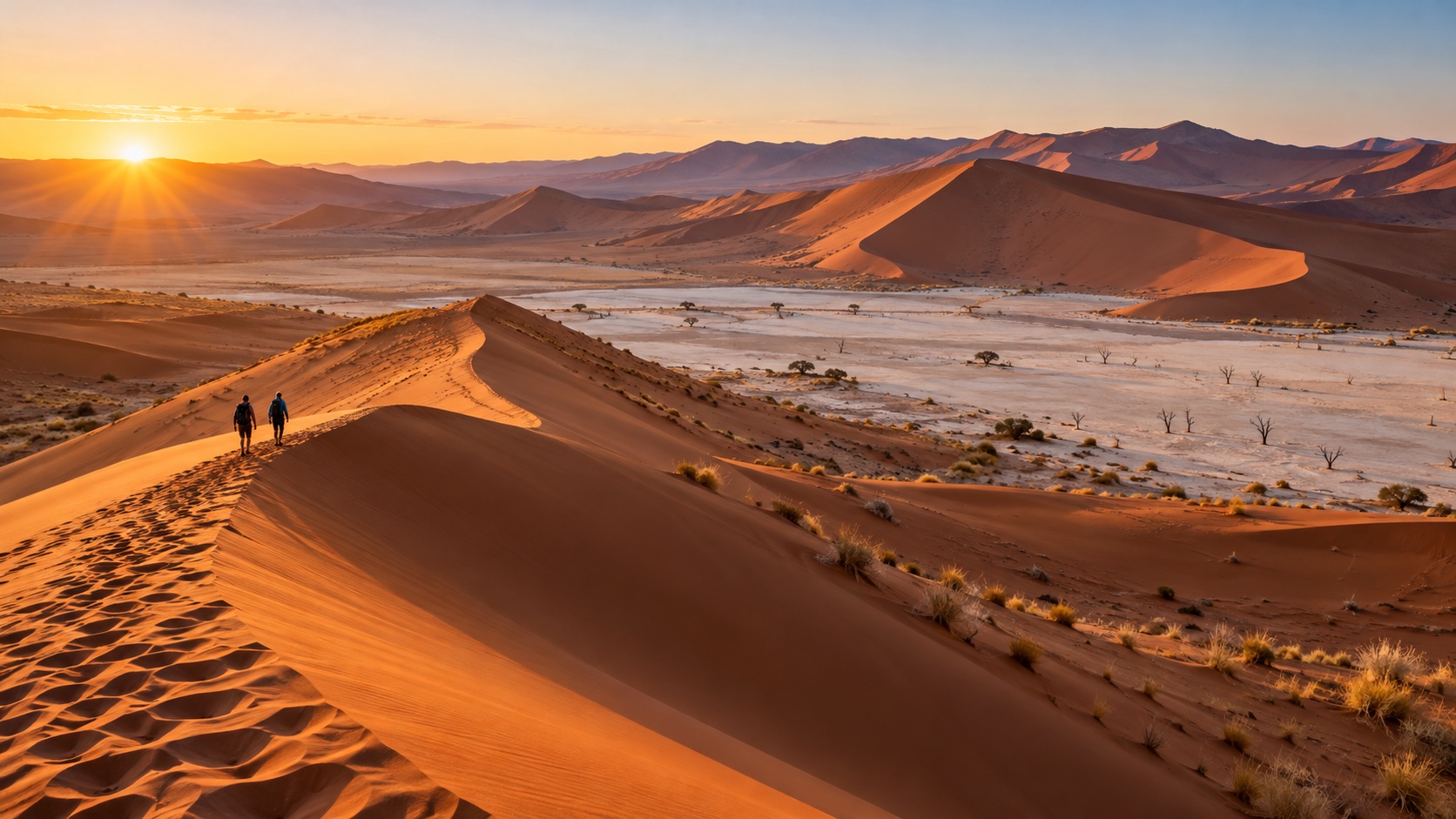
The Namib Sand Sea is exceptional because immense dunes meet a coastal desert strongly influenced by fog. Inland, Sossusvlei and Deadvlei create bold contrasts among red sand, white clay, dark tree skeletons, and blue sky. Farther west, fog, gravel, and coastal processes support specialized life. Enter through authorized gates and remain on legal roads. Sand recovery should be left to trained drivers rather than improvised spinning that cuts tracks. Early and late light reveals shape, but heat and park closing times control the day. A naturalist can identify beetle tracks, plants, and ephemeral drainage, turning the landscape from a color palette into an ecological system.
Wadi Rum for Sandstone Architecture
Wadi Rum’s drama comes from sandstone and granite massifs rising abruptly above broad valleys. Weather has cut arches, alcoves, cliffs, and narrow passages, while human routes and inscriptions record long use.
A responsible Bedouin-led visit connects the physical landscape with names and knowledge rather than presenting it as a film set. Check camp ownership, sanitation, group size, and vehicle practices. Walking between selected sites reduces dust and allows details to emerge.
Rock climbing requires qualified guidance and proper equipment; casual scrambling can damage surfaces and expose visitors to falls. Nights can be cold even after warm days, and wind may replace a planned sunset with low visibility.
Kalahari for Red Sand and Dryland Life
The Kalahari is a large semi-arid region spanning several southern African countries, with red sands, grasslands, thorn scrub, salt pans, and wildlife adapted to seasonal scarcity. It is not one continuous dune attraction. Protected areas in Botswana, Namibia, and South Africa offer different regulations, access standards, and community contexts.
Wildlife viewing works best with patient, low-impact driving and distance from waterholes. Never crowd predators or block an animal’s route. Summer heat and storms can be intense; winter nights cold. Community-run concessions and skilled local guides can connect tracks, plants, and San cultural knowledge without staging or appropriation. Verify border, park, and fuel logistics independently.
Simpson Desert for Parallel Dune Country
Australia’s Simpson Desert is known for long parallel dunes, red earth, salt pans, and remote tracks crossing Country with enduring Aboriginal significance. Seasonal closures, permit systems, extreme heat, and communications requirements make this a serious expedition. Crossings require suitable high-clearance vehicles, recovery equipment, fuel planning, water, navigation, and experience traveling in a coordinated group. Driving technique should minimize dune damage and prevent collisions at blind crests. Follow radio protocols and existing tracks. Do not attempt a crossing simply because an online itinerary gives coordinates. Check land-manager rules and local conditions, respect cultural sites, and postpone during unsafe seasons. A guided edge experience may be the more responsible choice.
Tabernas Desert for European Badlands
Southeastern Spain’s Tabernas region presents eroded badlands, dry channels, sparse scrub, and layered sediment beneath strong Andalusian light. Its scale is smaller than continental deserts, making designated walking routes and viewpoints approachable, though heat and flash floods remain real hazards. Film history adds a human layer, but themed attractions should not replace geological understanding.
Use signed trails and avoid crumbly slopes that erode underfoot. Carry water even on short outings. Pair the landscape with nearby villages and nature interpretation, spreading the visit beyond one overlook. Early or cooler-season walks reveal texture, while midday shade can be scarce. Check access because private land and protected zones overlap.
Painted Desert for Layered Color
Arizona’s Painted Desert and neighboring petrified wood landscapes expose bands of mudstone, sandstone, volcanic material, and erosional forms across broad mesas and badlands. Color changes with moisture, cloud, season, and sun angle.
Maintained park roads, overlooks, and trails make the geology visible without leaving legal access. Removing petrified wood or other natural material is prohibited and diminishes the shared resource.
Wind, heat, cold, and storms can affect short walks. Stop only in designated places, carry water, and follow closures. Indigenous homelands and archaeological sites require respect; use park interpretation to understand the landscape beyond its color names.
Namaqualand for Episodic Desert Flowers
Along the arid west of South Africa and Namibia, seasonal conditions can trigger remarkable displays of daisies and other flowers. The timing, density, and location vary with rain, temperature, wind, and local ecology, so no travel date guarantees a carpet of blooms. Seek current regional reports and plan a broader itinerary that remains worthwhile without peak flowers.
Stay on roads and paths because vehicles and feet can crush plants, seeds, and soils. Visit community gardens and reserves, drive slowly, and avoid picking blooms. Soft morning light and flowers turning toward the sun reward patience, while responsible tourism avoids creating new tracks through private farms.
Patagonian Desert for Steppe and Wind
East of the Andes, Patagonia contains extensive cold desert and steppe with gravel plains, volcanic plateaus, badlands, shrubs, and enormous skies. Wind is a defining force, and distances between towns are substantial. Scenic routes in Argentina connect fossil landscapes, wildlife coasts, canyons, and mountain rain shadows, but fuel and road surfaces require planning. Use designated pullouts rather than stopping on fast roads. Gravel driving demands reduced speed and a full spare. The open land includes ranches, protected areas, and Indigenous histories. Wildlife should be viewed without pursuit. Cloud, dust, and low sun constantly reshape the apparent scale, making the journey between sites as important as the landmark.
Polar Deserts for Ice and Rock
Antarctica and parts of the high Arctic receive so little precipitation that they qualify as deserts, despite storing immense water as ice. Exposed valleys, patterned ground, glaciers, sea ice, mountains, and months of unusual light create landscapes unlike hot deserts. Travel is highly regulated, expensive, weather-dependent, and environmentally sensitive.
Select operators with robust biosecurity, small-group practices, trained guides, and clear wildlife rules. In the Arctic, community consent and locally led tourism are essential; polar-bear safety requires professionals. Never treat ice as reliably stable. A cancelled landing or route is evidence of proper risk management, not a service failure.
Build a Landscape-Led Itinerary
Choose one main landform, then identify a complementary one nearby: dunes with a pan, badlands with a river corridor, salt with volcanoes, or steppe with mountains. This creates variety without excessive transfers. Compare weather records with current conditions and reserve enough time for wind, cloud, flood, or road delays. Follow official water and heat guidance rather than universal packing lists. Finally, make the journey serve the place. Pay access fees, hire local expertise, keep vehicles on legal routes, and leave geological and cultural material untouched. Great desert landscapes are not empty canvases. They are active systems whose beauty depends on restraint, preparation, and attention. Use maps to read how the landforms relate. A salt basin may sit below volcanic highlands; a dune sea may be supplied by sediment that rivers carried from distant mountains; a badland may expose lake beds from a wetter climate. Visitor centers, geological surveys, and trained guides can turn these connections into a story. Once you understand the process, a cloudy horizon or dry salt surface becomes informative rather than disappointing.
Match the method of travel to the ground. Walking works well around compact badlands and signed dune areas, rail can reveal steppe or mountain rain shadows, and a guided high-clearance vehicle may be essential in remote sand. No transport mode grants permission to leave a legal route. Tire tracks can damage crust, spread weeds, cut archaeological surfaces, and remain visible for years. Refuse shortcuts even when an operator says they save time. Think about scale when planning photography. Telephoto compression can make mountains seem close to salt flats, intense editing can falsify mineral colors, and a low camera angle can hide crowds or road damage. Accurate captions are part of responsible travel. State the season, general public location, and conditions without revealing sensitive sites. Do not ask people to stand on thin crust, cliff edges, or protected vegetation merely to demonstrate size. Finally, prepare for a landscape that cannot be controlled. Flower displays may fail, reflections may vanish in wind, volcanoes may hide behind cloud, and polar landings may be cancelled.
Keep a second activity that supports the region—an archaeology museum, community-run cultural program, local meal, or lower-risk walk. Flexibility reduces pressure on guides and prevents unsafe improvisation. The best desert landscape is not the one that perfectly matches an advertisement; it is the one you encounter with enough patience and knowledge to see how it works. Budgeting is part of that patience. Remote permits, trained drivers, safe vehicles, fair guide wages, communications, and emergency preparation cost more than a minimal transport quote. Compare inclusions line by line and avoid bargaining that transfers risk to workers. A slower shared departure or shorter legal route may deliver more value than an underpriced expedition with poor equipment. Before leaving, ask what pressures the area currently faces. Groundwater extraction, mining, grazing, uncontrolled driving, invasive plants, and rapid resort growth affect different deserts in different ways. One visit will not solve them, but informed spending and accurate storytelling can reinforce responsible management. Treat conservation claims as questions to verify, not slogans to repeat.