Follow the Wind’s Architecture
Sand dunes are moving records of wind, sediment supply, moisture, and obstacles. Crescent barchans migrate across firm ground, long linear dunes align with prevailing winds, star dunes grow around multidirectional airflow, and coastal dunes respond to waves, vegetation, and storms. Their smooth surfaces look durable but can conceal steep slip faces, fragile plants, cultural sites, and disorienting distances. Explore through authorized routes, check heat and wind, and use a guide when tracks are likely to vanish. The destinations below differ in geology and access, yet all reward the same approach: move conservatively, protect stabilized ground, and appreciate a living landform instead of treating it as an off-road playground.
A: Wind lifts and rolls grains up one side and deposits them beyond the crest.
A: No gypsum shell fragments volcanic grains and other materials can form dunes.
A: They can harm vegetation crust habitat and protected cultural surfaces.
A: No it belongs only in explicitly permitted zones.
A: Under specific dry grain conditions moving sand can produce resonant sound.
A: Many are seasonal and vary with rainfall and groundwater.
A: Vehicle access is restricted by law land ownership and safety.
A: Measurements depend on base definition and changing sand surfaces.
A: Specialized plants insects reptiles birds and mammals use them.
A: A legal route that shows shape without damaging the landform.
Lençóis Maranhenses, Brazil
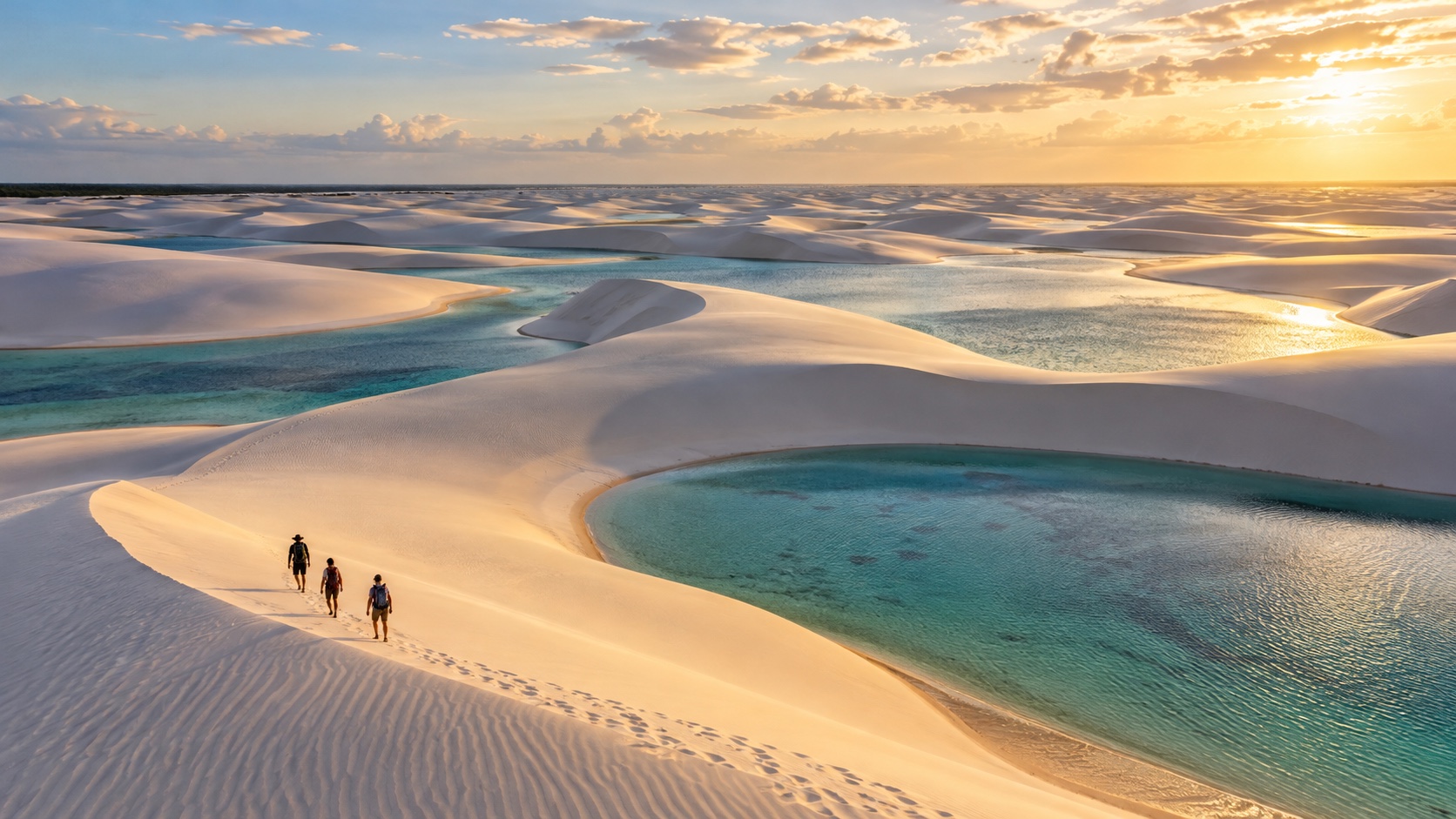
White dune ridges and seasonal rainwater lagoons create the extraordinary pattern of Lençóis Maranhenses. Water conditions change through the year, and dry-season photographs can differ completely from peak lagoon months. Use official park entry and authorized guides from an appropriate gateway.
Sand reflects intense sun, long walks are tiring, and routes can be difficult to read. A guide also explains communities living around and within the wider landscape. Avoid unauthorized vehicles, fragile margins, and promises of a specific lagoon based on an old post.
Late light reveals repeating curves, but allow enough time to return safely. The landscape works because wind moves sand while seasonal water occupies low spaces; both patterns are temporary.
Sossusvlei Dunes, Namibia
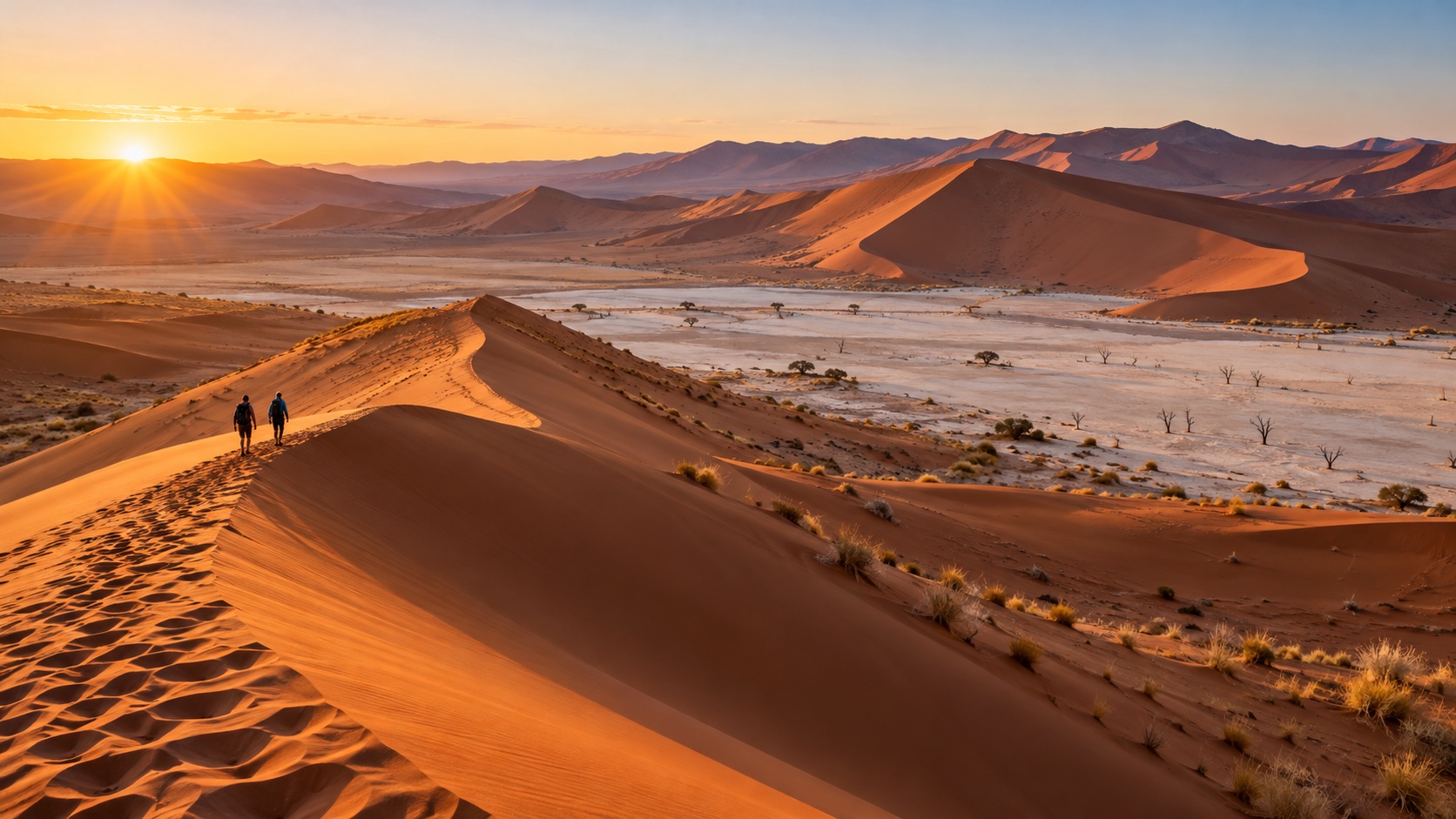
The Namib’s towering red dunes rise above pale pans and sparse dryland vegetation. Iron-coated grains, immense time, and shifting winds contribute to their color and form. Park gates, legal roads, heat, and soft sand govern access. Start early, carry water, and use a suitable transfer if your vehicle or experience cannot handle the final section. Climb only dunes open to visitors, follow closures, and do not trample vegetation. Deadvlei is fragile despite its hard-looking surface; trees and clay should remain untouched. A broader Namib itinerary adds fog ecology, gravel plains, and conservation context to the famous ridge lines.
White Sands, United States
New Mexico’s White Sands contains bright gypsum dunes whose mineral composition and water table create a distinctive landscape. Marked trails and a scenic drive provide access, but blowing sand can erase footprints and visibility quickly. Follow current park closures, which can include nearby military activity, weather, or road conditions.
Gypsum reflects strong sun while temperatures still vary sharply. Carry water and navigation even on short routes. Sledding is allowed only under park rules and demands a clear runout away from plants, roads, and people. Stay off restoration zones and learn how shallow groundwater helps stabilize parts of the dune field.
Erg Chebbi, Morocco
Erg Chebbi’s golden dunes near Merzouga offer approachable Sahara scenery, but the experience varies from quiet walking to busy camp corridors. Choose locally owned operators who disclose group size, camp sanitation, water use, guide pay, and vehicle practices.
Camel rides are optional; examine animal condition and handling before participating. A walk at a safe hour can be equally memorable. Wind may erase tracks or cancel plans.
Carry layers for cold nights and protection from blowing sand. Remain within established access and avoid assuming the erg represents the entire Sahara. Nearby oases, villages, stone desert, music, and food provide essential regional context.
Khongoryn Els, Mongolia
Khongoryn Els forms a long dune belt in Mongolia’s Gobi, contrasting with mountain slopes, gravel plains, and seasonal grass. Some sections can produce resonant “singing” sounds when dry sand moves under suitable conditions. Reaching the dunes usually requires long overland travel with an experienced driver, reliable vehicle, communications, and flexible timing. Weather shifts from heat to cold and strong wind. Stay on existing tracks and arrange any household visit respectfully. Climbing sand is slow; choose a modest ridge and return before darkness rather than chasing the highest point. The surrounding steppe and pastoral life are part of the landscape, not empty space between photographs.
Rub al Khali, Arabian Peninsula
The Empty Quarter contains vast dune systems extending across several countries, with complex borders, protected areas, oil infrastructure, and extremely remote terrain. Independent driving without expert preparation is unsafe. Legal guided access, communications, recovery equipment, water, fuel, and current official guidance are fundamental. Food and waste deserve desert-level discipline. Wind scatters light packaging immediately, scraps attract animals to camps, and buried waste can reappear as dunes migrate. Carry a secure waste bag and use established toilets or approved backcountry systems.
Never burn plastic or leave fruit peels. A clean camp protects wildlife and the next visitor’s experience. Temperatures can be severe and sand conditions change. Convoys should follow established practice instead of spreading new tracks. Local knowledge determines routes and camps. Respect border and cultural restrictions, never remove archaeological material, and avoid language that erases long histories of travel through the region. A short authorized edge experience may be wiser than a deep crossing.
Great Sand Dunes, United States
Colorado’s Great Sand Dunes rise below the Sangre de Cristo Mountains, creating dramatic combinations of sand, snow, seasonal creek water, grassland, and storm light. Elevation makes sun intense and nights cold. Lightning, wind, and hot sand can change conditions quickly, so consult park forecasts and begin early. There are no fixed trails on the main dune mass; navigation and turnaround judgment matter. Sandboarding uses equipment designed for sand and must follow park rules. Protect surrounding wetlands and grasslands, store food properly, and keep distance from wildlife. Seasonal Medano Creek can be shallow or absent depending on runoff.
Simpson Desert Dunes, Australia
The Simpson’s parallel red dunes form one of Australia’s great remote-driving landscapes. Access crosses multiple jurisdictions and culturally significant Country, with permits, seasonal closures, and route rules. A crossing requires serious four-wheel-drive skill, communications, recovery equipment, fuel, water, and a convoy plan. Finally, recognize whose landscape you are crossing.
Many dune systems contain burial places, trade routes, seasonal grazing, sacred areas, and archaeological evidence. Follow community rules even when boundaries are not visually obvious. Local guides do more than prevent people from getting lost; they help visitors understand where recreation must yield to living culture and long-term care.
Approach dune crests slowly and use required radio protocols because oncoming vehicles may be invisible. Remain on one established track rather than widening it. Extreme summer conditions close routes for good reason. Consult land managers and Traditional Owner information, and consider a guided tour if remote experience is limited. Preparation, not bravado, is the defining skill.
Dune du Pilat, France
Dune du Pilat rises beside forest and the Arcachon Basin on France’s Atlantic coast. Its shifting crest offers broad views of ocean, sandbank, water, and woodland, but wind and erosion continually change access. Use official entrances, parking, stairs when installed, and current safety notices. Do not descend toward closed or unstable areas, and keep away from cliff-like slip faces. Summer congestion makes cycling, shuttle options, or off-peak timing attractive. Coastal dunes are active defenses and habitats, not fixed monuments. Respect fencing and vegetation, carry litter out, and allow time for a careful return after sunset rather than assuming the route remains obvious.
Tottori Sand Dunes, Japan
The Tottori dunes form a compact coastal landscape beside the Sea of Japan, with wind ripples, steep slopes, and changing views toward the water. A visitor center and designated access make the geology understandable without a remote expedition.
Weather can bring strong wind, heat, rain, or winter snow, so dress for more than the city forecast. Keep to permitted areas, protect restored vegetation, and avoid disturbing research or management zones.
Commercial activities operate under specific boundaries; confirm current rules before riding or boarding. Pair the dunes with museums and local businesses so the visit supports the region beyond a brief climb.
Maspalomas Dunes, Spain
On Gran Canaria, the Maspalomas dune field lies beside intensive resort development, a lagoon, and protected habitat. Its accessibility creates heavy pressure. Use designated paths and observation areas, obey closures, and do not cross fenced vegetation for a shortcut to the beach. Wind and hot sand still require footwear, water, and sun protection.
The coast can have strong currents unrelated to calm-looking dunes. Visit early, travel by public transport, and read reserve interpretation to understand how sand, wind, development, and vegetation interact. Responsible access means accepting that some photogenic ridges are not open to foot traffic.
Explore Moving Sand Without Leaving a Mark
First match the dune to your skill and access needs. A boardwalk or marked loop can reveal form just as effectively as a remote crossing. Check land ownership, permits, heat, wind, storms, and the final return route. Use a local guide when navigation, culture, wildlife, or vehicles add complexity. Keep sand sports within explicit zones and reject operators that create new tracks. Finally, observe movement without accelerating damage. Step around plants and crust, leave artifacts and rocks, and avoid geotagging sensitive sites. Wind may erase footprints, but ecological and cultural impacts last much longer. The best dune visit follows the landscape’s rules and leaves its next pattern for the wind to draw. Plan the approach as carefully as the climb. Sand makes distance deceptive, slows every uphill step, and raises effort in heat. Identify the legal parking or drop-off point, reliable landmarks, the prevailing wind, and a conservative turnaround time. Carry navigation even when other footprints are present, because a gust can erase them and create a featureless return.
If fog, dust, thunder, darkness, or exhaustion reduces certainty, descend by the known route rather than searching for a more dramatic crest. Different dune fields call for different footwear and equipment. Hot sand, hidden vegetation, coarse volcanic grains, or cold wet coastal sand may change the choice. Sandboards and sleds should be used only where expressly permitted and with a clear runout. Motorized recreation belongs only on authorized routes; high-speed driving near walkers, camps, wildlife, or blind crests is unacceptable. Experienced local operators should explain vehicle spacing and recovery before departure. Give stabilized edges particular care. Grasses, shrubs, fungi, and biological crust can hold sand, shelter wildlife, and help a dune resist erosion. A tempting shortcut through plants may widen into a permanent access scar. Coastal fencing and brush placed by restoration crews are working infrastructure, not obstacles. Walk through designated openings, keep dogs within rules, and avoid nesting areas even when the central sand looks open. Learn where the grains came from.
Quartz may arrive from weathered rock and rivers, gypsum can crystallize from mineral-rich water, shell fragments can build pale coastal dunes, and volcanic material can produce dark sand. Wind sorts grain sizes and pushes them across obstacles, while moisture and vegetation alter movement. A ranger walk or small geological display can make ripple marks and slip faces as memorable as a summit. When sharing the journey, credit the guide or land manager and describe restrictions alongside beauty. Do not publish unofficial driving tracks, secret camps, or culturally sensitive locations. Mention that seasonal water, wind, and access change. That honesty helps travelers choose legal experiences and keeps spectacular dunes dynamic, protected, and open to those who follow. Allow time to see a dune field from more than one angle. Low morning light emphasizes ripples, a public overlook reveals alignment across the landscape, and a ground-level trail shows how plants trap grains. Returning by the same route can be safer and more instructive than crossing toward an unknown road. Keep the group within voice range and count everyone before leaving a rest stop.