Look Beyond Empty Sand
Deserts are defined by limited precipitation, not by one color or landform. They include coastal fog belts, high plateaus, gravel plains, salt basins, cold steppes, sandstone valleys, and dune seas. Their apparent openness can hide biological soil crusts, rare plants, archaeological sites, private pastoral land, and dangerous distances between reliable water sources. A rewarding visit begins with the right season, a conservative route, and respect for people who know the terrain. Use official access, experienced local guides where appropriate, and realistic heat or cold precautions. The world’s most beautiful deserts reveal themselves through changing light, geology, adapted life, and cultural landscapes—not through reckless claims of conquering an empty wilderness.
A: No many high-latitude and high-elevation deserts are cold.
A: Many deserts contain more rock gravel salt or soil than dunes.
A: Follow local seasonal guidance and avoid dangerous heat.
A: Only on routes where land managers explicitly permit it.
A: No distant storms can produce sudden flash floods.
A: Never assume a spring or pool is potable.
A: Wind continually reshapes slopes and can erase tracks.
A: Protected areas and cultural sites commonly prohibit removal.
A: Remote complex or culturally sensitive routes often warrant one.
A: Geology light life and human history working together.
Namib Sand Sea, Namibia
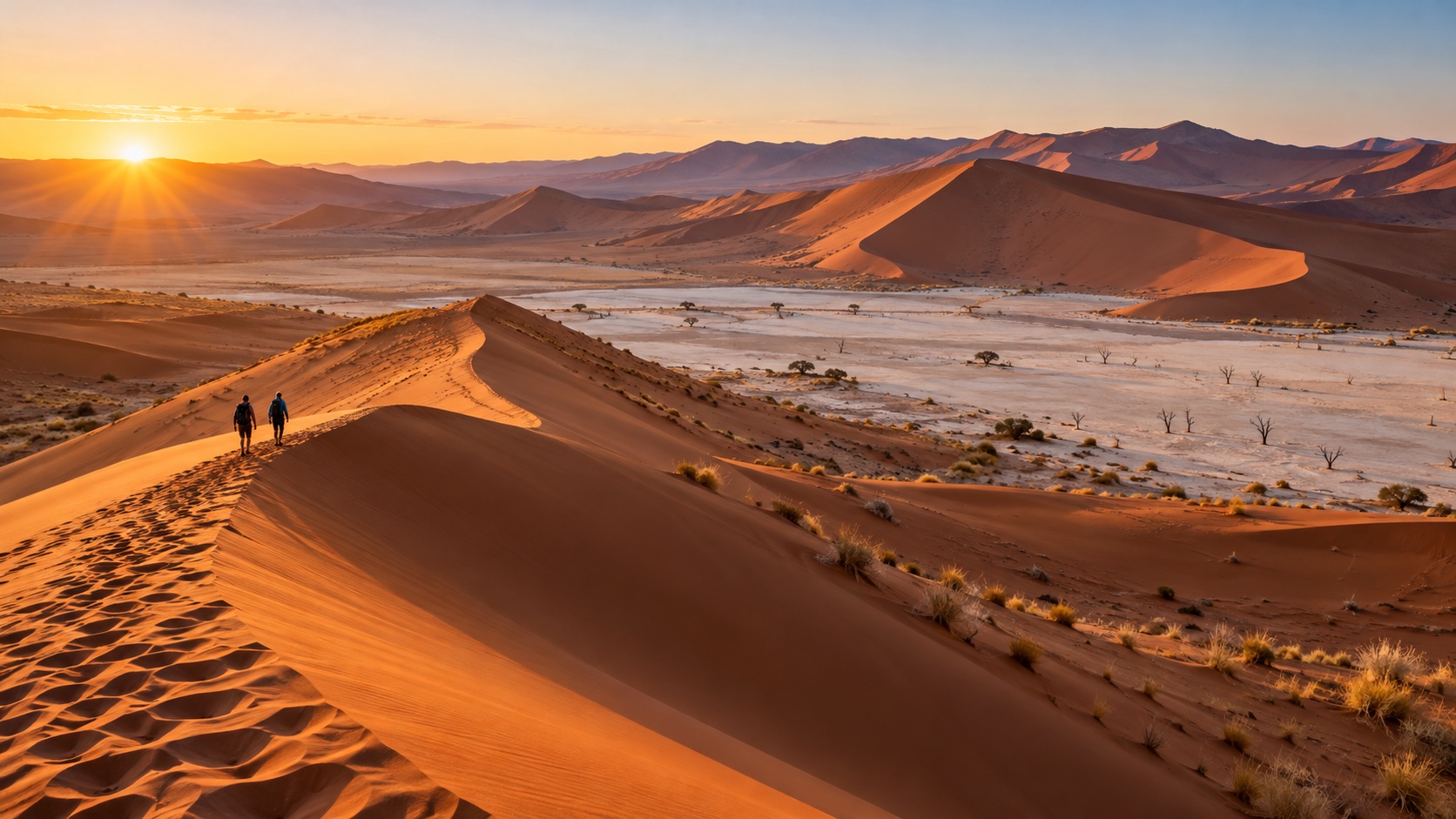
The Namib combines immense red dunes, pale pans, gravel plains, inselbergs, ephemeral rivers, and a coast influenced by fog. At Sossusvlei, early light draws long curves across the sand while ancient camel-thorn skeletons punctuate Deadvlei’s clay surface. The scene is powerful, but the wider fog desert and its specialized life make it more than a famous photograph. Enter through regulated park access, carry ample water, protect cameras from sand, and use only signed roads or approved transfers. Soft sand can immobilize vehicles, and midday heat can be severe. Staying nearby makes an early entrance possible without speeding, while a qualified guide can explain dune movement, fog, tracks, and plants that casual visitors miss.
Atacama Desert, Chile
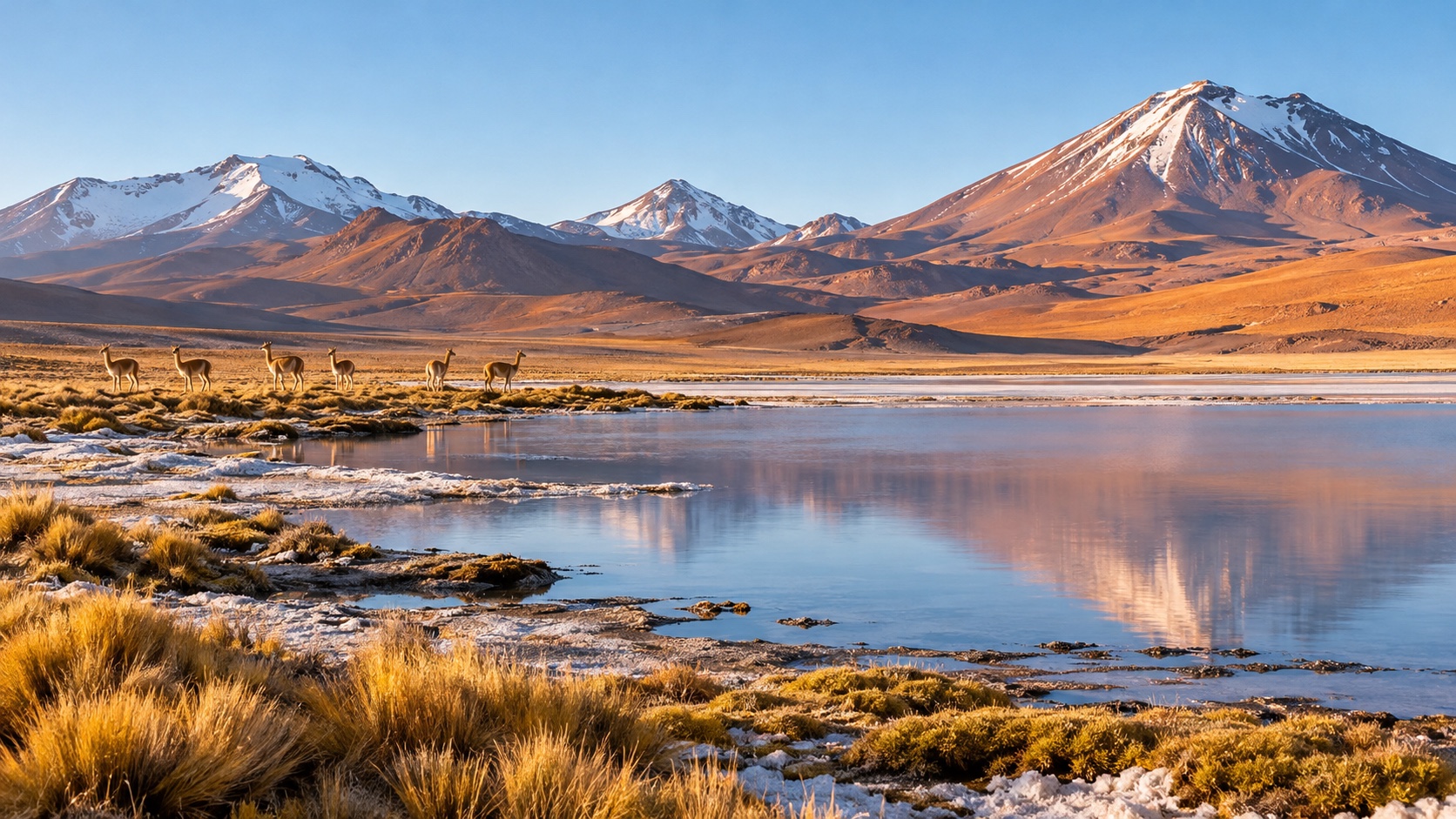
Northern Chile’s Atacama shifts from salt flats and volcanic horizons to high-altitude lagoons, geyser fields, rock valleys, and exceptionally dry plains. San Pedro de Atacama is a common base, but many excursions rise quickly above 4,000 meters. Select operators who plan gradual schedules, maintain vehicles, and explain altitude limitations honestly. Wildlife around saline wetlands needs generous distance.
Remain on boardwalks and marked viewpoints because apparently bare ground may be fragile, hot, or chemically sensitive. Dawn departures bring deep cold before strong sun. The region also supports towns, mining, astronomy, and Indigenous communities. Ask who manages each site and where fees go. Clear skies are never guaranteed, so let geology and cultural interpretation carry the trip when wind or cloud interrupts stargazing.
Wadi Rum, Jordan
Wadi Rum’s sandstone massifs, natural arches, narrow canyons, and broad sandy valleys create a monumental desert landscape. Licensed local camps and Bedouin guides can connect viewpoints with place names, routes, rock inscriptions, and living knowledge that a self-directed photo circuit cannot provide.
Vehicle standards, camp density, sanitation, and wages vary, so compare operators carefully. Choose smaller groups, avoid chasing wildlife, and keep vehicles on established tracks. Winter nights can be extremely cold, while summer heat requires earlier and later activity.
Climbing and scrambling demand qualified instruction; weathered sandstone can break unexpectedly. Quiet time on foot often communicates the valley’s scale better than a fast sequence of stops.
Sahara Landscapes of Morocco
At Morocco’s southeastern edge, the ergs near Merzouga and M’Hamid provide accessible dune experiences, while stone plateaus, oases, and mountain approaches reveal the Sahara’s greater variety. The long road from major cities is part of the itinerary and should not be compressed into an exhausting overnight dash. Compare camp ownership, guide employment, animal welfare, waste handling, and water use. If riding a camel, select an operator that limits loads, provides rest and shade, and allows travelers to decline. Wind can reshape plans and reduce visibility. Current travel guidance and border restrictions must inform routes. Spend time in gateway communities so the desert is not reduced to one sunset.
Gobi Desert, Mongolia
The Gobi is a vast cold desert and steppe mosaic of gravel, cliffs, dry valleys, dunes, and grazing lands rather than a continuous sand sea. Multi-day travel commonly involves long rough roads, variable weather, simple camps, and substantial distances between services.
Use an experienced local driver and guide with reliable communications and emergency preparation. Pastoral families are not tourist exhibits. Visits to homes or camps should be arranged with consent and fair payment. Keep vehicles on existing tracks to limit damage.
Spring winds can be intense, summers hot, and nights cold. At fossil localities, never remove or touch specimens. The Gobi rewards patient observation: changing grass, distant livestock, raptor silhouettes, and exposed geology convey scale more honestly than a checklist of landmarks.
Sonoran Desert, United States and Mexico
The Sonoran Desert supports towering saguaros, organ-pipe cacti, spring flowers, rugged mountains, washes, and a remarkable diversity of adapted plants and animals. Protected areas near Tucson and along the international border offer maintained trails, but conditions and regulations vary. Cacti grow slowly and their shallow roots are easily damaged.
Stay on paths, never carve plants, and avoid touching wildlife. Summer heat can be lethal; official park guidance, early turnarounds, ample water, and conservative distances are essential. Monsoon storms can flood washes rapidly. Border landscapes may include checkpoints or restricted areas, so use current information. Desert beauty here comes from abundance and seasonal change, not barrenness.
Thar Desert, India
The Thar spans northwestern India and Pakistan, combining dunes, scrub, farms, villages, forts, livestock routes, and densely inhabited dryland. Around Jaisalmer, excursions range from crowded entertainment camps to quieter community-based stays.
Ask how land is accessed, who owns the business, how performers are paid, and how water and waste are managed. Animal rides require scrutiny; decline any activity involving poor condition, heavy loads, or rough handling. Heat, dust, and long transfers shape the experience.
Dress respectfully, request permission for portraits, and remember that wells and grazing areas are working resources. Current border guidance is crucial. A thoughtful itinerary pairs dune light with architecture, music, food, and dryland livelihoods rather than selling the landscape as empty.
White Desert, Egypt
Egypt’s White Desert is known for chalk formations sculpted into towers, mushrooms, and other improbable silhouettes above pale ground. Light changes the formations from bright white to cream and rose, while dark desert sky can make an authorized overnight memorable. Travel only with permitted, experienced operators who understand protected-area routes, waste, water, communications, and current security requirements. Chalk is soft and easily damaged, so do not climb, carve, or collect it. Wind and cold can be significant after sunset. The formations are scattered through a larger western desert landscape; allowing time to observe geology and camp responsibly creates more value than racing among named shapes.
Lençóis Maranhenses Dune Lagoons
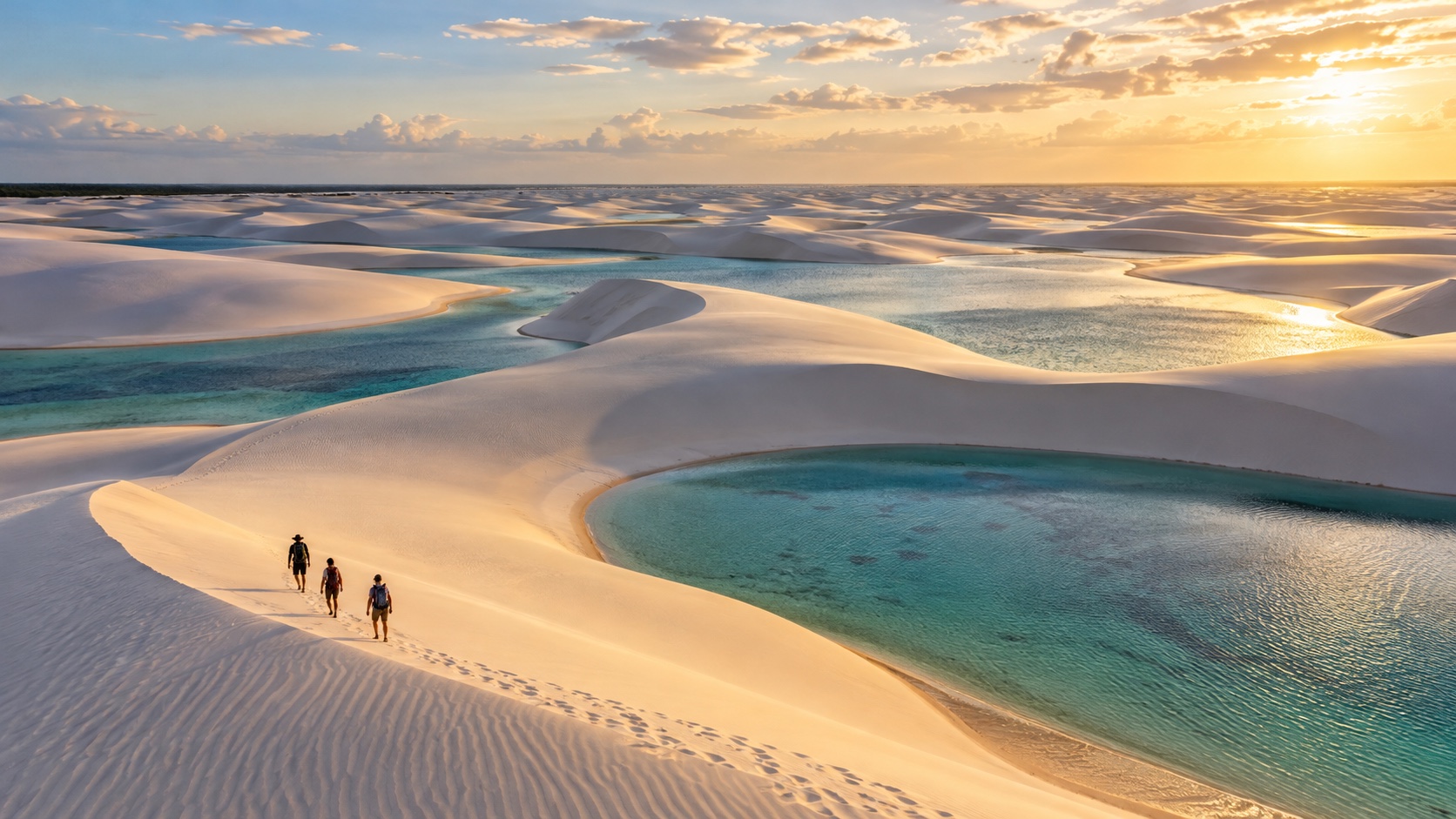
Lençóis Maranhenses looks unlike a conventional desert because seasonal rainwater collects between sweeping white dunes. Lagoon depth and color vary through the year, so timing should follow current park and local guidance rather than old photographs. Authorized community-based transport and guides help visitors navigate legal routes and understand the region’s seasonal livelihoods.
The reflective sand intensifies sun exposure, while long dune walks demand water, footwear judgment, and realistic fitness. Swimming is appropriate only where local rules and conditions allow. Stay in a gateway such as Barreirinhas, Santo Amaro, or Atins according to the route you want. Avoid unauthorized vehicles and leave lagoon edges undisturbed. The meeting of rainfall, groundwater, wind, and sand is the real spectacle.
Mojave Desert, United States
The Mojave includes Joshua tree woodlands, volcanic fields, salt flats, dunes, granite outcrops, and broad basins across parts of California, Nevada, Arizona, and Utah. Elevation creates sharp differences in temperature and vegetation. National parks and preserves provide varied access, but distances between fuel, water, and shade remain serious. Check current road, fire, and closure notices before leaving pavement. Summer hiking should be minimized or avoided according to official guidance. Carry emergency water and never rely on cell service. Old mines, military debris, and abandoned structures are hazardous and often protected. Stay outside shafts and buildings. A short marked trail at a safe hour can reveal more than an ambitious crossing in dangerous conditions.
Antarctic Polar Desert
Antarctica is the world’s largest desert by precipitation, with ice sheets, exposed rock, dry valleys, sea ice, and immense weather-driven horizons. Visiting is expensive, highly regulated, and environmentally consequential. Choose an operator following recognized Antarctic tourism and treaty-system requirements, and examine group size, landing practices, biosecurity, wildlife distances, waste, and educational staffing. Conditions can cancel landings without warning; flexibility is essential.
Clean all clothing and equipment as instructed to avoid transporting seeds or organisms. Wildlife must control every encounter. Never block routes between animals and water, and never seek a closer photograph. The goal is not to claim a last frontier but to understand a sensitive polar system while leaving no trace of the visit.
Plan a Desert Journey That Respects Limits
Choose one desert region and one realistic base. Compare daily temperatures, elevation, road surfaces, permits, emergency response, and the availability of water and shade. Plan strenuous activity for safer hours and let a ranger or guide shorten the route when conditions change. Build cultural and geological context into the trip. Museums, local guides, community stays, and conservation programs reveal why people live where they do and how deserts function. Finally, treat limits as part of the landscape. Do not drive around closures, create new tracks, climb fragile formations, or demand an excursion during unsafe weather. Carry waste out, use water sparingly, and share precise locations cautiously. The desert’s beauty survives when visitors accept that access is a privilege rather than a conquest. Before choosing flights, calculate the ground journey honestly. Many celebrated deserts require a full day of driving each way, and combining several distant regions can turn the trip into a sequence of fuel stops.
A closer protected landscape reached slowly may offer better walking, guiding, and community benefit. Compare public transport, shared transfers, and smaller locally run tours. If driving, know the surface, carry a real spare, refuel early, and never count on a map icon as proof that water or assistance will be available. Build each day around a primary activity and a clear fallback. A sunrise walk might be followed by shade, a museum, or a short village visit rather than another exposed hike. Strong wind can make a dune unsafe, rain can close an unpaved road, and extreme heat can eliminate the day’s plan. Paying a guide even when conditions force a change recognizes the preparation and local judgment that keep visitors safe. Consider what a photograph leaves outside its frame. Desert towns manage scarce water, pastoralists need access to grazing and wells, and protected areas balance tourism with habitat.
Choose accommodation that explains resource use, minimizes disposable waste, and employs locally. Ask before photographing workers, homes, animals, or ceremonies. Never offer money to children for poses or distribute gifts without community guidance. After the trip, describe the place accurately. Avoid calling inhabited country empty, claiming a first discovery, or sharing unsafe off-road directions. Credit guides and traditional names when permission allows. Recommend legal access and realistic seasons, and mention that weather changed what you saw. Honest stories help future travelers prepare while protecting the silence, scale, and intricate life that made the desert memorable. Keep the same care when buying souvenirs. Fossils, archaeological fragments, wildlife products, and collected stones may be illegal or damaging even when offered casually. Choose work made and sold transparently by local artisans, ask about materials, and keep receipts when export rules apply. A useful purchase should support living skill without removing the landscape itself.