Meaning Comes From Practice Not Access
Faith-based travel can deepen worship, connect families with heritage, support study, or create encounters across traditions. It can also become intrusive when visitors treat sacred communities as attractions or assume every ritual welcomes observation. The destinations below represent multiple faiths and different types of journey, including pilgrimage, service, architecture, music, archives, and communal meals. Some places are open broadly; others restrict entry by religion, gender, schedule, or security conditions. Travelers should use current official guidance, choose community-rooted interpretation, and distinguish participation from spectatorship. A meaningful experience does not require private access. It grows from preparation, humility, and behavior consistent with the values the traveler says the journey serves.
A: Many sites welcome respectful guests while others restrict entry.
A: Attend public services only when visitor presence is appropriate.
A: Follow current site-specific rules rather than general assumptions.
A: They may be welcomed but never purchase ritual access.
A: Permission changes by place service and subject.
A: Only through programs based on local need and suitable skills.
A: Explain behavior dress duration and the meaning of the place.
A: Yes when qualified facilitators preserve difference and context.
A: Respect the closure and choose public interpretation elsewhere.
A: Worship learning service or reflection carried out with humility.
Amritsar for Sikh Faith and Service
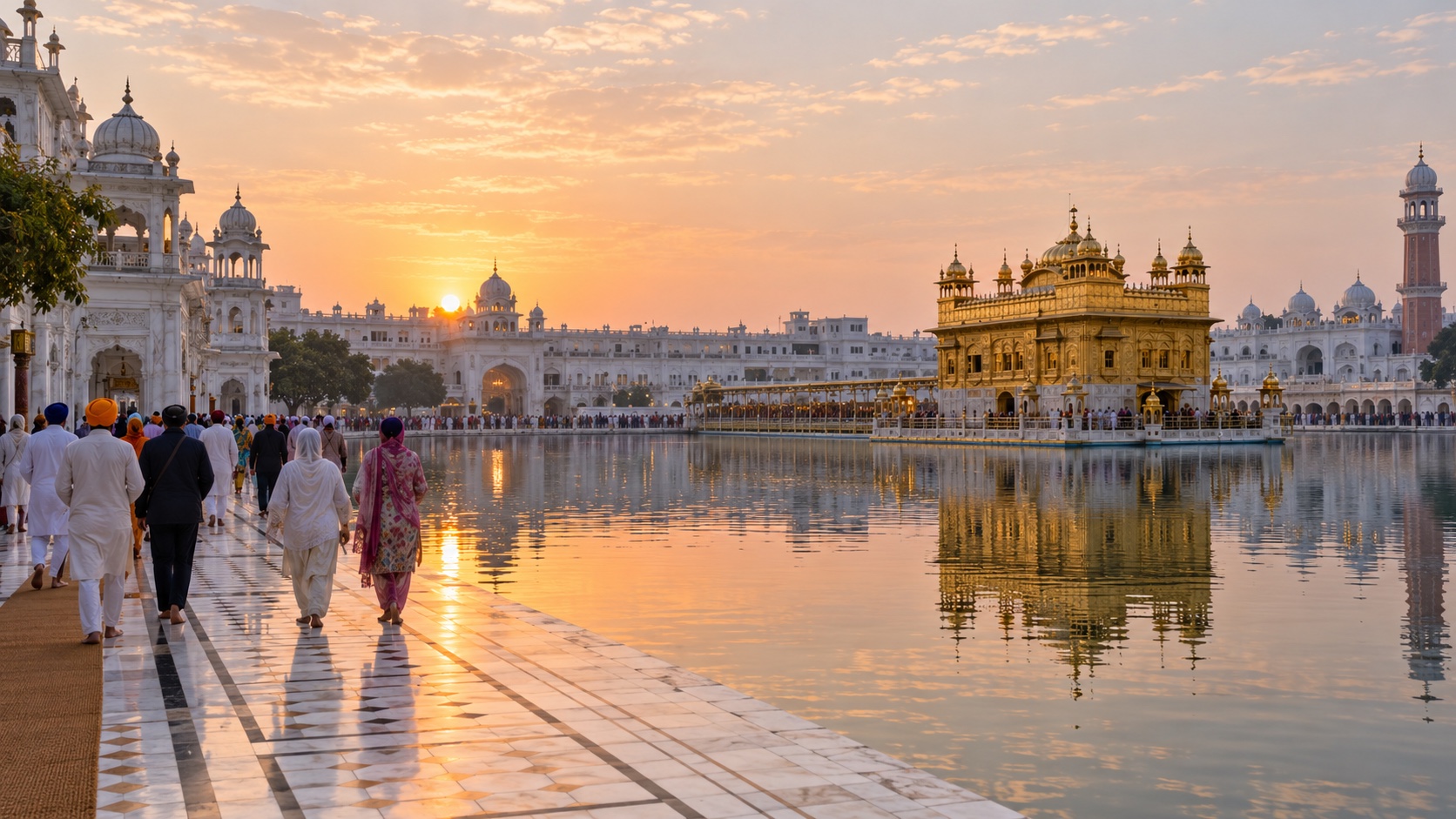
The Golden Temple complex centers worship, scripture, music, pilgrimage, equality, and service. Visitors of many backgrounds may enter when they cover their heads, remove shoes, wash their feet, dress modestly, and follow the flow around the sacred pool. The langar serves free meals through coordinated volunteer labor.
Observe instructions before offering to help. Kitchen service is not a photo opportunity, and worshippers should never be approached for portraits. Listen to kirtan quietly and learn about Sikh history through qualified interpretation. Amritsar’s Partition Museum adds difficult but important regional context. Visitors should read about Sikh belief and the history of the complex before arriving, because the experience is shaped as much by service and equality as by gold-covered architecture. Head coverings are available, yet bringing a clean scarf can simplify entry. Walk clockwise where directed, keep the edge of the sacred pool clear, and avoid photographing people bathing or praying. The langar welcomes everyone to sit and eat together. If volunteering, request instructions and accept humble tasks rather than seeking a photogenic role.
Rome and Vatican City for Catholic Heritage
Rome offers churches, catacombs, art, relics, liturgy, pilgrimage routes, and the Vatican within a living city. Catholic pilgrims may plan Mass, audiences, holy-year activities, or visits connected to saints, while other travelers approach history and architecture.
Official tickets and schedules reduce fraud and confusion. Dress rules apply even in heat. Never move through a service merely to photograph art, and keep confession and private prayer areas free. Balance major basilicas with quieter parish life and enough rest for long walking days.
Rome rewards a paced itinerary that distinguishes active worship from museum visiting. Papal events, major feast days, security screening, and Jubilee periods can change crowd patterns dramatically. Use official sources for tickets and audiences, and beware of sellers implying that ordinary church entry requires payment. Shoulders and knees should be covered where required. During Mass, remain unobtrusive if not participating. Beyond the Vatican, parish churches, catacombs, pilgrimage routes, and charitable institutions provide context, but each has its own access rules and community life.
Jerusalem for Abrahamic Faiths
Jerusalem holds profound significance in Judaism, Christianity, and Islam. Sacred sites exist within living communities and a high-stakes political environment. Access, security, services, and local conditions change, making current official advice essential. Travel with informed guides, dress modestly, and follow every restriction. Do not collapse different traditions into a harmony narrative or use conflict as dramatic scenery. Listen to multiple perspectives without demanding that residents explain trauma. Sometimes the responsible decision is to postpone travel. Jerusalem asks travelers to hold multiple sacred histories at once without pretending that the city’s conflicts are simple. Site access can change according to religious calendars, security conditions, and decisions by local authorities. Learn the names communities use for important places and listen for why those names matter. Dress modestly, keep voices low, and never photograph worshippers at close range without permission. A guide experienced in interfaith history can broaden understanding, but travelers should still seek perspectives from more than one community and avoid debating residents about their identity.
Mecca and Medina for Muslim Pilgrims
Mecca is restricted to Muslims and central to Hajj and Umrah. Medina also holds profound religious importance, with its own access and conduct requirements. Pilgrims should use official authorization, current health guidance, approved providers, and detailed crowd-safety preparation.
Non-Muslims must respect access restrictions and learn from public educational resources elsewhere. Muslim travelers should protect fellow pilgrims’ privacy, follow ritual guidance from trusted scholars, and avoid turning worship into prestige content. Physical ability and financial planning are part of responsible preparation. Access to Islam’s holiest cities is reserved for Muslims, and pilgrimage has religious requirements that cannot be replaced by a commercial sightseeing package. Prospective pilgrims should use official channels for visas and permits, consult trusted religious guidance, and prepare for intense crowds, heat, walking, and shared accommodation. Health requirements and administrative systems may change between seasons. Travelers must follow crowd-control instructions even when separated from companions. A written meeting plan, emergency contacts, appropriate footwear, and patience with people from many countries are practical parts of preparation.
Bodh Gaya for Buddhist Pilgrimage
Bodh Gaya draws Buddhist pilgrims from around the world to the Mahabodhi Temple and surrounding monasteries. Meditation, chanting, offerings, teaching, and varied traditions coexist in a compact sacred area. Festival periods can be crowded and highly structured. Follow security, footwear, dress, and camera rules. Keep meditation zones quiet and never position yourself beside practitioners for an image. Learn how different Buddhist communities interpret the site while avoiding claims that one visit conveys mastery of Buddhism. The Mahabodhi Temple marks the place associated with the Buddha’s awakening and draws practitioners from many Buddhist traditions. Visitors should pass through security calmly, follow circulation rules, and keep devotional areas clear. Robes, chanting styles, and rituals vary; observe without ranking one practice as more authentic than another. Photography restrictions deserve strict attention, especially around meditation. Early mornings may be quieter, but no hour guarantees solitude. Nearby monasteries represent international communities, and entry to teachings or ceremonies should occur only when explicit visitor guidance permits it.
Salt Lake City for Latter day Saint History
Salt Lake City contains sites connected to the history, worship, migration, and institutional life of The Church of Jesus Christ of Latter-day Saints, alongside a broader contemporary city. Temple Square access changes with construction and religious use, while public visitor and genealogy resources offer structured learning.
Use official schedules and distinguish spaces open to all from temple interiors restricted to eligible members. Ask guides respectful questions without demanding personal testimony. Museums and regional sites can add context about settlement, Indigenous history, and religious diversity beyond a single institutional narrative.
Temple Square and nearby historic sites can be meaningful for church members, family historians, architecture enthusiasts, and visitors learning about a faith tradition. Some buildings may be closed for renovation or reserved for particular religious use, so verify access before planning a short stop. Missionaries and guides may offer interpretation; courteous questions are welcome, but no traveler is obligated to accept a religious discussion. Explore the wider city as well, including museums and community institutions, and represent beliefs accurately when sharing the visit afterward.
Lalibela for Ethiopian Orthodox Christianity
Lalibela’s rock-hewn churches remain active places of prayer, pilgrimage, clergy life, and feast-day observance. Architecture and worship cannot be separated cleanly. Authorized guides explain passages, symbolism, conservation, and the ongoing religious community. Remove shoes where directed, dress modestly, and seek permission before photographing clergy or manuscripts. Check regional security conditions before travel. Avoid treating poverty or devotion as visual material. Fees and legitimate guiding can support stewardship when managed transparently. Lalibela requires current, locally grounded planning because regional access and security can change. The churches are connected through trenches and passages with uneven stone, so footwear and mobility preparation matter. Services may fill the spaces with prayer, music, and processions; visitors should stand where directed and keep cameras lowered unless permission is clear. An authorized guide can explain how architecture, biblical symbolism, and living Orthodox practice relate. Paying site and guide fees through legitimate channels helps sustain local work, while patient stays support businesses beyond a brief photo stop.
Canterbury England for Christian Pilgrimage History
Canterbury Cathedral and routes leading toward it connect medieval pilgrimage, Anglican worship, literature, architecture, and contemporary church life. Visitors may arrive as walkers, worshippers, students, or tourists, and each role carries different expectations.
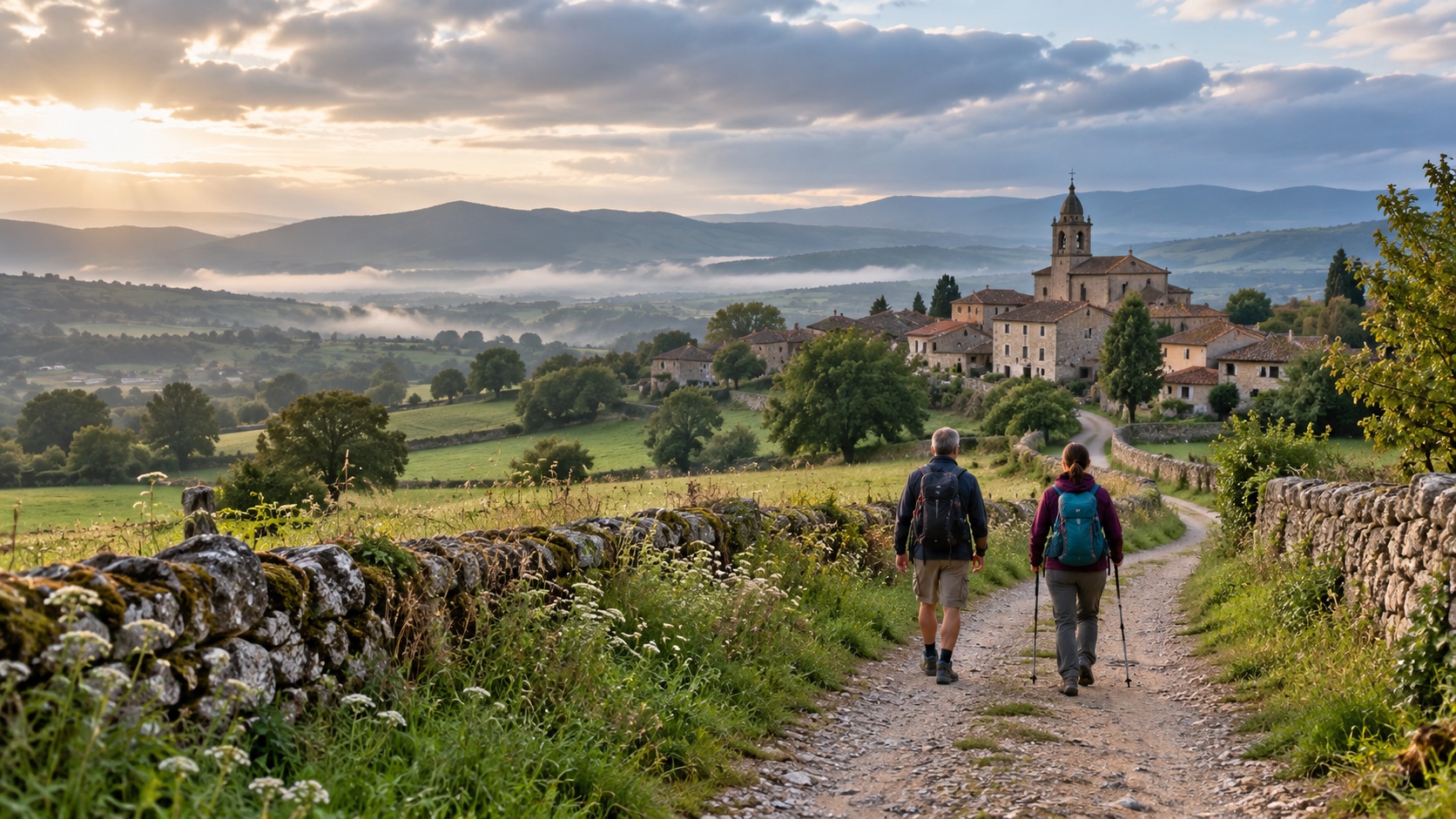
Check service and visitor hours, because parts of the cathedral may close for worship. Photography and group commentary should stop where directed. Walking a section of the Pilgrims’ Way adds landscape and repetition without pretending to reproduce a medieval experience. Canterbury’s cathedral is an active church, a historic institution, and the destination of several modern walking routes. Check service times and visitor closures before arrival, then distinguish sightseeing hours from worship. Pilgrims approaching on foot should plan accommodations and road-safe stages rather than assuming a continuous off-road trail. Inside the cathedral, follow restrictions around chapels and services. The city can also introduce medieval pilgrimage culture, but visitors should not confuse literary characters with the experiences of contemporary Christians who arrive for prayer.
Najaf and Karbala Iraq for Shia Pilgrimage
Najaf and Karbala are major centers of Shia scholarship, shrine visitation, remembrance, and pilgrimage. Events such as Arbaeen involve immense movements of pilgrims and extensive hospitality. These journeys require specific religious, logistical, health, security, and visa preparation.
Use current official guidance and experienced authorized arrangements. Visitors should never treat crowds or mourning practices as spectacle. Photography, dress, gender arrangements, and shrine etiquette need careful compliance. Conditions may make postponement necessary.
Najaf and Karbala are central to Shia Muslim history and receive vast numbers of pilgrims, especially during Arbaeen. Travel requires careful attention to visas, security guidance, transport, health, clothing, and shrine etiquette. Crowd conditions during major observances are not comparable to ordinary tourism. Use experienced local arrangements and follow official instructions without exception. Non-Muslim access and expectations should be researched honestly rather than assumed. Photographs must never interfere with mourning, prayer, or family privacy. Learning the history of Imam Ali and Imam Husayn is essential context.
Assisi for Franciscan Spirituality
Assisi connects the lives of Saint Francis and Saint Clare with basilicas, convents, art, prayer, and the Umbrian landscape. Pilgrims may attend services, walk local routes, or spend time in retreat, while art-focused visitors share many spaces. Keep silence where requested and allow worshippers priority. Dress appropriately, follow photography rules, and stay overnight to experience the town outside day-trip hours. Franciscan themes of simplicity and care are better approached through conduct than souvenir accumulation.
Varanasi for Hindu Sacred Geography
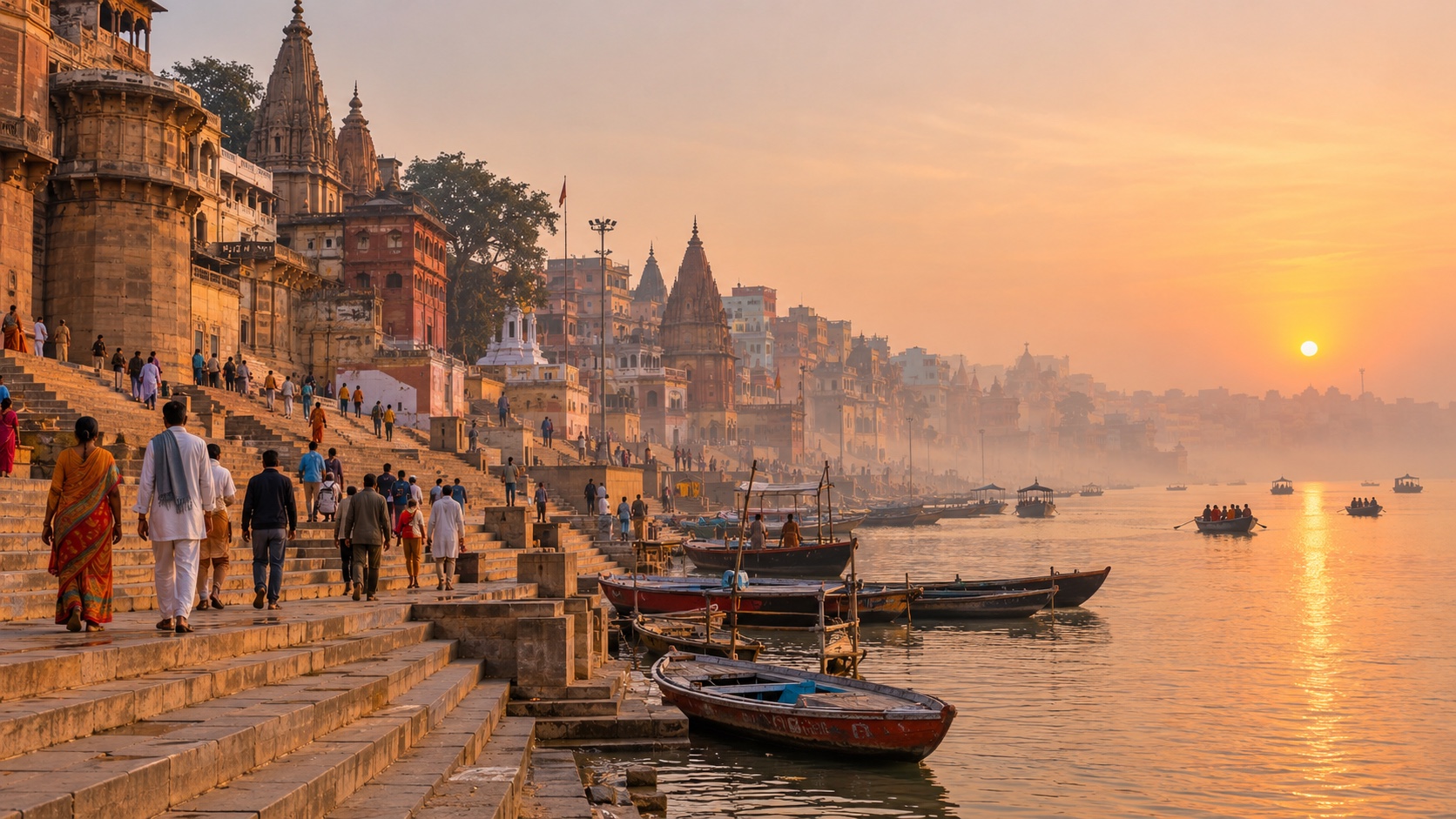
Varanasi’s ghats, temples, river, learning, music, and rites form one of Hinduism’s most significant sacred landscapes. Visitors need local interpretation to understand public worship, pilgrimage, death rituals, and the boundaries around private grief.
Never photograph cremations or mourners. Use ethical boat operators, dress conservatively, and follow temple entry restrictions.
Do not market a brief encounter as spiritual initiation. The city deserves patience and humility beyond its sunrise imagery.
Build an Interfaith Journey Carefully
An interfaith itinerary should preserve real theological and historical differences rather than blending every tradition into generic spirituality. Use trained facilitators, visit public educational spaces, and let each community define its own practice. Dialogue requires consent, time, and freedom from pressure.
Schedule fewer visits and allow reflection between them. Ask what behavior honors the place, not what access can be obtained. Meaningful faith travel leaves travelers more precise, more responsible, and less willing to turn another person’s devotion into a backdrop.