Where the View Is Part of the Freefall
Skydiving is often described as an adrenaline experience, but the best places to go skydiving are also scenic travel moments. The first seconds out of the aircraft may be pure sensation, yet the memory often settles around what was below you: a coastline, island chain, desert plain, glacier valley, reef, or mountain range that looked impossibly wide from altitude. A great skydiving destination combines professional operators, reliable weather, clear landing areas, and a view that gives the jump a real sense of place.
A: It depends on your taste, but alpine, island, reef, desert, and dramatic coastal drop zones usually stand out.
A: Yes, most first-time travelers choose tandem because the instructor manages the technical jump systems.
A: Yes, early scheduling gives you room to move the jump if weather delays it.
A: They are not necessarily harder for tandem guests, but weather and visibility can be more variable.
A: Often, but choose it after judging the operator, not before.
A: Many drop zones allow spectators in designated areas, but rules vary.
A: Secure shoes and fitted comfortable clothing are usually best.
A: Tell the instructor; they are used to nerves and will keep instructions simple.
A: Several hours is common once check-in, briefing, aircraft loading, weather, and landing are included.
A: A good operator, clear weather, a landscape you care about, and enough time afterward to absorb it.
Choosing a View-First Drop Zone
A beautiful skydiving location should still be judged first by safety culture. Look for licensed operators, clear tandem procedures, modern gear, realistic weather calls, and staff who explain the jump without turning concerns into jokes. The view matters most when you can relax enough to notice it.
The best scenic drop zones also have a clean visual story. Coastal jumps deliver color and scale, mountain jumps add drama, island jumps feel almost unreal, and desert jumps emphasize open space. Choose the landscape that excites you before comparing souvenir video packages.
First-time tandem jumpers should ask about altitude, expected freefall time, aircraft style, landing zone conditions, and what happens if wind delays the schedule. A patient operator is a good sign.
Coastal Jumps With Big Blue Payoff
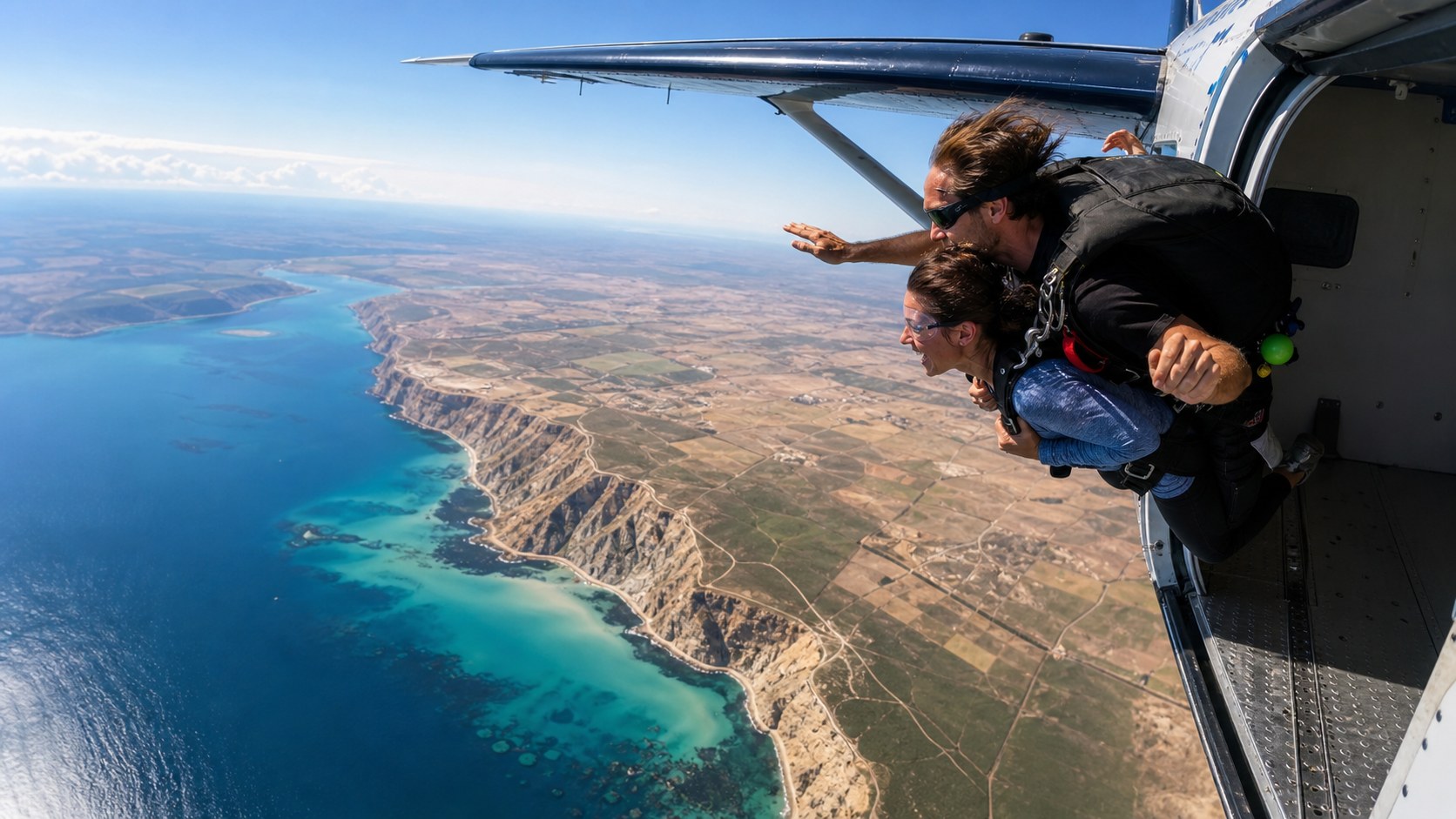
Coastal skydiving is popular because the contrast is instantly readable from the air. Blue water, pale beaches, cliffs, reefs, and towns create a map-like scene that even nervous jumpers can understand in a glance. Hawaii, parts of Australia, New Zealand, Portugal, and California all offer coastal settings where the view becomes part of the reason to jump.
The strongest coastal jumps are not always the busiest ones. A slightly quieter drop zone with excellent weather judgment may produce a better day than a famous location rushing large groups. Read recent reviews for organization, not only excitement.
Mountains, Glaciers, and Alpine Drama
Mountain skydiving can feel more cinematic because the aircraft climbs through a landscape already filled with scale. Swiss, New Zealand, and Canadian alpine regions are especially memorable when snow, lakes, and ridgelines sit below the canopy ride. These settings reward clear weather and patience.
Alpine conditions can also be more variable. Clouds, winds, valley turbulence, and seasonal weather may delay or cancel jumps. Travelers should build flexibility into the itinerary rather than treating a jump time as guaranteed. Waiting can be frustrating, but conservative weather calls are part of responsible skydiving.
For many travelers, the canopy descent is where mountain jumps truly become scenic. Freefall is fast and sensory, while the parachute ride gives your mind time to catch up with the view.
Islands, Deserts, and Unusual Landscapes
Island jumps can be spectacular because water surrounds the entire frame. Places with reef shelves, volcanic slopes, lagoons, or scattered islands offer an aerial geography that feels different from ordinary sightseeing. Desert jumps create another mood entirely, with vast openness, shadowed dunes, and a clean horizon.
Unusual landscapes should still be convenient enough for the traveler. If the drop zone requires complex transfers, limited operating days, or a long drive after the jump, plan accordingly. Skydiving is intense, and the day feels better when logistics around it are gentle.
What First-Time Jumpers Should Expect
Most travelers begin with a tandem skydive, where an instructor manages the technical systems while the guest follows body-position instructions. The briefing is usually short but important: how to exit, where to place arms, how to lift legs for landing, and what the canopy ride may feel like.
Nerves are normal. Many people feel most anxious in the aircraft and calmer after the exit because there is no longer a decision to make. Breathing, listening, and trusting the sequence can help. Choose clothing that fits securely, avoid loose accessories, and follow the operator's rules exactly.
Photos and videos are worth considering, but they should not dominate the day. Some travelers remember the view more clearly when they are not trying to perform for the camera.
Planning the Jump Inside a Larger Trip
Schedule the skydive early enough in the trip that a weather delay does not erase the opportunity. Avoid placing it on the final morning before a flight or a long transfer. A scenic jump is a weather-dependent outdoor activity, not a fixed appointment with the sky.
Afterward, leave space for a simple meal, a walk, or quiet time to let the experience land emotionally. Skydiving can feel strangely quick once it is over. The best travel days give the jump enough room to become a memory rather than just a receipt and a video file.
Destination choice should also consider the people traveling with you. Some companions may want to watch from the ground, take photos, or join a gentler activity nearby. A good drop zone has clear spectator areas, reasonable waiting conditions, and nearby food or scenery. That makes the day easier for everyone, not only the person jumping.
Price differences can reflect altitude, aircraft type, included media, destination demand, or local operating costs. Do not automatically choose the cheapest jump in a scenic area. Compare what is included, how safety information is presented, and whether reviews mention rushed briefings or confusing waits.
If the view is the priority, ask what time of day tends to be clearest. Morning may bring calmer air in some places, while late afternoon may create richer light where winds allow it. Local staff will know patterns that generic travel advice misses.
Coastal jumpers should think about visibility in layers. A beach directly below the plane is attractive, but the most memorable jumps often include several visual elements at once: cliffs, reefs, islands, farmland, mountains, or a curve of coast that helps the eye understand distance. That layered view gives the canopy ride more to reveal after the rush of freefall.
Mountain drop zones reward travelers who are willing to wait for the right window. A jump in partial cloud may still be safe, but it can hide the very ridges and lakes you traveled to see. If the scenery is the point, build a loose itinerary around the jump rather than squeezing it between two fixed reservations. A flexible day can turn an average view into a remarkable one.
The aircraft ride is part of the experience too. On scenic jumps, the climb can feel like a private aerial tour as the land slowly widens beneath you. Try not to spend the whole ascent trapped inside fear. Listen to the instructor, review the simple body-position cues, and then look outside. The view begins before the door opens.
Landing zones deserve attention because they shape the final emotional note of the jump. A wide grassy landing area, beachside field, or open desert zone feels different from a cramped or heavily trafficked site. Tandem guests do not need to manage the landing alone, but they should still understand where the landing will happen and what posture is expected.
Skydiving can also fit beautifully into a destination with other high-view experiences. A coastal jump may pair with a boat trip, cliff walk, or lighthouse drive. An alpine jump can sit beside a lake cruise or gondola day. A desert jump can be followed by stargazing. Pairing the jump with slower viewpoints helps the brain revisit what it saw at speed.
Travelers who are nervous should choose a setting that feels emotionally worth the leap. If you love oceans, jump over water. If mountains make you feel alive, choose a valley or alpine region. Fear is easier to move through when the reward is personally meaningful, not just impressive to other people.
It is also smart to ask how many tandem jumps the operator runs in a typical day. High volume is not automatically bad, but the experience should still feel organized, personal, and unrushed. You want enough time for gear checks, questions, and a clear mental sequence before boarding. Scenic skydiving is intense; the process around it should feel steady.
Seasonal light can change the entire character of a view. In some places, dry season brings clearer horizons and brighter water; in others, winter snow makes mountains more dramatic. If your travel dates are fixed, choose a location that is known to operate well during that period rather than forcing a famous view into the wrong season.
Health and comfort questions should be answered before payment. Back, neck, shoulder, heart, sinus, and recent surgery concerns may affect whether a jump is appropriate. Reputable operators would rather discuss limits early than surprise you at check-in. Being transparent keeps the day safer and less awkward.
The best scenic skydives are not only for fearless travelers. They are for travelers who can respect fear without letting it make every decision. A good instructor, a clear view, and a well-run drop zone create a container strong enough for the experience to feel thrilling rather than chaotic.
Once the parachute opens, pay attention to the slower details: the curve of the coastline, shadows on fields, boats on water, or the way mountains line up in the distance. Many guests are so relieved after freefall that they forget to look. The canopy ride is the scenic chapter of the jump.
After landing, avoid rushing immediately into a car or another timed activity. Your body may still be full of adrenaline, and your mind may need a few minutes to assemble the experience. A simple pause, water, and a look back at the sky can make the memory feel more complete.
If you are comparing several famous places, choose by the view you cannot get any other way. Helicopter tours, gondolas, and viewpoints may already show certain landscapes beautifully from above. Skydiving is most special when freefall and canopy descent reveal a perspective that feels otherwise inaccessible. That might be a reef shelf, a glacier valley, a volcanic island, or a coastline where land and sea meet sharply.
For repeat jumpers, scenery can become the main reason to travel. The body understands the sequence better, so the mind has more room to notice place. A second or third tandem in a completely different landscape can feel less like repeating an activity and more like learning how varied the sky can be.
For first-timers, however, comfort with the operator should win every tie. If two locations both look beautiful, pick the one that communicates more clearly, answers questions patiently, and gives you confidence in the process. A slightly less famous view with a calmer team can produce the better travel memory.
Scenic skydiving is also a reminder to respect weather as part of the destination. A postponed jump is not wasted time if it preserves the view and the margin of safety. Use delays to explore nearby overlooks, beaches, cafes, or trails, then return when the sky is ready.
A scenic skydive is one of the rare travel experiences where fear and beauty arrive together. Choose the place carefully, listen closely, and give yourself enough margin to enjoy both the rush of the exit and the quiet surprise of floating under canopy above a landscape you came all that way to see.