What First-Time Rafters Should Know Before the River
White water rafting can look intimidating from the shore, but a well-run beginner trip is designed to turn uncertainty into teamwork. You do not need to arrive as an expert paddler, and you do not need to know every river term before you put on a helmet. What helps most is understanding how trips are graded, what the guide is asking you to do, how safety gear works, and how to choose a river that fits your comfort level. Once those basics are clear, rafting becomes less about bracing for chaos and more about listening, paddling, laughing, and reading the river one wave at a time.
A: Yes, beginner trips teach basic strokes and rely on guide instruction.
A: Possibly, especially in shoulders and core, but beginner trips are usually manageable.
A: Many can, but age and weight rules depend on river level and outfitter policy.
A: Only if the outfitter provides secure dry storage or approves a safe waterproof setup.
A: Tell the guide early so they can place you well and explain what to expect.
A: Not commonly on appropriate beginner trips, but guides still prepare everyone for the possibility.
A: Guided beginner rafting has managed risks, and choosing a reputable outfitter matters.
A: It is wise for travel disruptions, medical concerns, and adventure activity coverage.
A: Eat a normal, not overly heavy meal and bring water for before and after.
A: Move up when you enjoyed the last trip, followed commands well, and want more active water.
Understanding Rapid Classes Without Panic
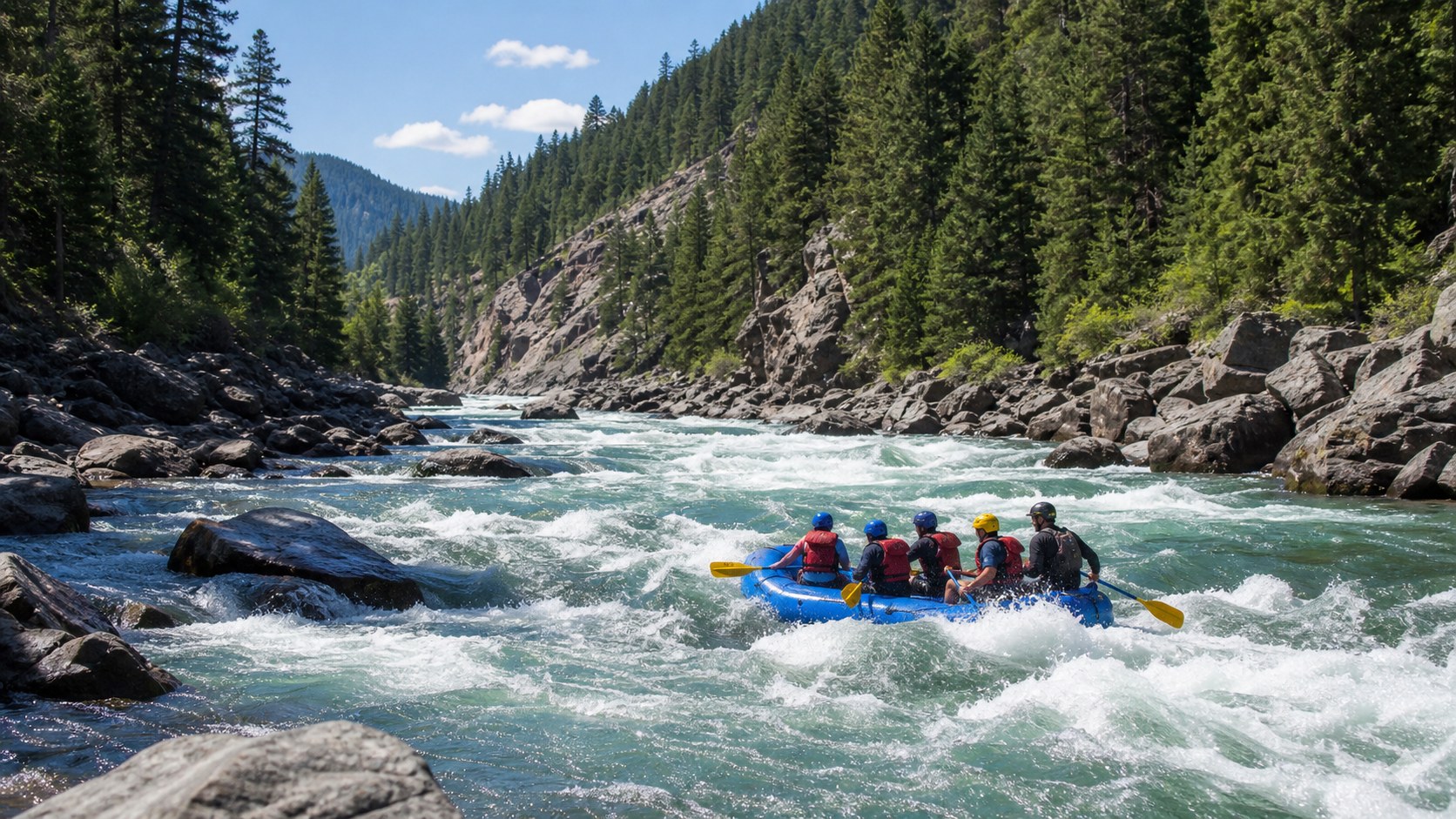
Rapids are rated from Class I to Class VI, but beginners usually spend their first trip on Class II or Class III water. Class I is moving water with small ripples, while Class II brings straightforward waves and simple maneuvers. Class III adds more splash, stronger current, and a need to follow guide commands quickly. The rating tells you something important, but it does not describe everything about the day.
Water temperature, weather, river flow, distance from roads, and the age or fitness of your group all matter. A friendly Class III run with warm water and experienced guides may feel playful, while cold high water can make the same label feel more serious. When in doubt, call the outfitter and describe your group honestly. Good companies would rather match you well than push you into the wrong trip.
What Happens Before You Launch
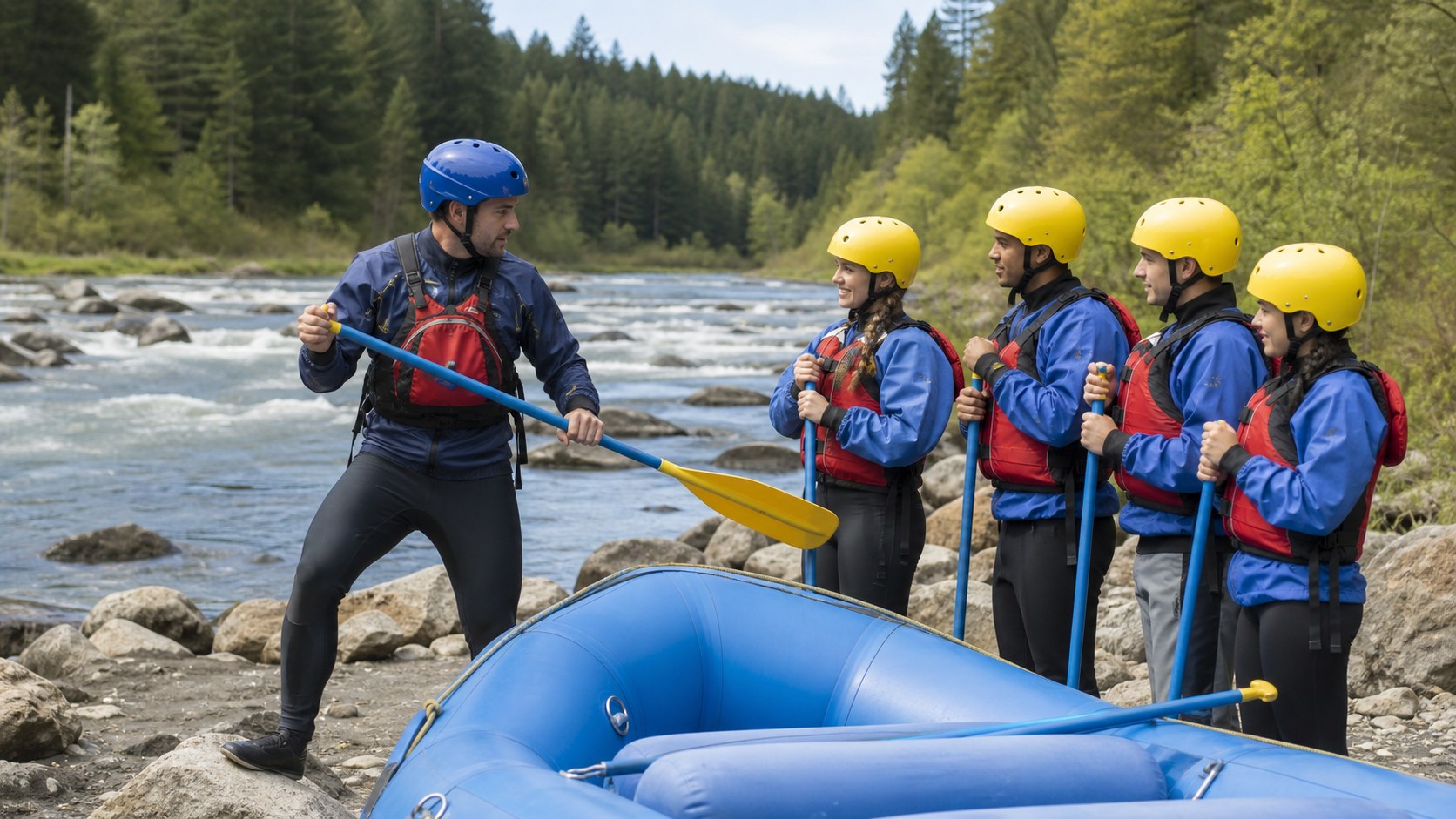
Most beginner trips begin with paperwork, gear fitting, and a safety talk. You will usually receive a personal flotation device, helmet, paddle, and sometimes a wetsuit, splash jacket, or booties depending on temperature. Pay close attention during the safety briefing even if the mood is light. The guide will explain how to sit in the raft, how to hold the paddle, what to do if you fall out, and how to respond to commands.
This is also the moment to ask practical questions. If your helmet feels loose, your flotation device rides up, or your shoes feel insecure, speak up before launch. Guides adjust gear constantly and would much rather fix a small problem at the put-in than manage discomfort on the water.
Basic Paddle Commands and Body Position
Beginner rafting is built around simple commands. Forward paddle means the crew paddles ahead together; back paddle slows or reverses the raft; stop means paddles out of the water; hold on means brace for a bump or wave. Some guides use left back, right forward, or get down commands for specific moves. You do not have to be perfect, but you do need to listen and react.
Your body position matters more than brute strength. Sit on the outer tube or designated seat, keep your feet braced where the guide tells you, and avoid standing unless instructed. Hold the paddle with one hand on the T-grip and one on the shaft; that top grip matters because loose T-grips can hit other paddlers. Short, steady strokes are usually better than dramatic splashing.
What to Wear and What to Leave Behind
Dress for the water, not only the air. On warm rivers, swimwear or quick-dry clothing can be enough, paired with secure sandals or water shoes. On cold rivers, avoid cotton and use the wetsuit or splash layers the outfitter recommends. Sunscreen, a glasses retainer, and a dry change of clothes can make the day much more comfortable.
Leave loose valuables behind. Phones, jewelry, wallets, car keys, and expensive sunglasses do not belong unsecured in a raft. If you need medication, tell the guide and ask how it should be carried. Most outfitters have dry storage for essentials, but space is limited and the river does not care how new your device is.
What If You Fall Out?
Falling out is possible, and beginner briefings cover it for a reason. The standard advice is to stay calm, keep your feet up near the surface, point them downstream, and look for instructions from the guide. Do not try to stand in moving current because a foot can become trapped between rocks. Your flotation device is designed to help, and guides train for swimmer recovery.
Many first-timers are surprised by how quickly a swim is handled on appropriate beginner water. That does not mean it should be treated casually, but it does mean the scenario is part of the system. Listening during the safety talk gives you a mental path to follow if the surprise happens.
Choosing Your First Rafting Trip
For a first outing, choose an established outfitter, a well-known beginner section, and a trip length that matches your energy. A half-day trip can be perfect if you are unsure, traveling with kids, or fitting rafting into a larger vacation. A full-day trip works well if your group is excited and comfortable being outdoors for several hours.
Read recent reviews for safety tone and organization rather than only excitement. Look for clear difficulty descriptions, included gear, transportation details, minimum age rules, and cancellation policies. The best first rafting trip should make you want to go again. It should challenge you just enough that the river feels alive, while still leaving space to enjoy the scenery and trust the guide.
It helps to arrive with a beginner's mindset instead of trying to look fearless. Guides are used to nervous guests, and a clear question is much more useful than quiet confusion. Ask where to put your feet, how tightly the jacket should fit, and what a command means if you miss it. The more clearly you understand the system, the more natural the day feels once the raft starts moving.
Your first trip is also a good time to notice what kind of water you enjoy. Some people love bouncy wave trains and laughing through splashy sections. Others prefer scenic floats with only a few rapids. A few discover that they want steeper, faster water next time. None of those reactions is wrong. The first outing gives you information, not a permanent identity as a cautious or bold traveler.
After the trip, write down the river section, approximate flow if the outfitter mentions it, what you wore, and what you would change. Those notes are surprisingly helpful when planning a second trip months later. They also keep memory honest, because excitement can make a river sound easier or harder than it actually felt in the moment.
If the day does not go perfectly, separate discomfort from danger. Being cold, tired, or awkward with a paddle is different from being poorly guided or mismatched to a river. Good outfitters debrief, answer questions, and help guests understand what happened. That conversation can turn a rattling moment into useful confidence.
Your first rafting trip does not need to prove anything. It only needs to be chosen wisely, guided well, and approached with enough humility to listen. Once you understand the basics, the river becomes less mysterious and much more fun.
The most useful mental shift is to think of the raft as a team craft rather than a passenger ride. Even on an easy river, the guide depends on people responding together. You are not expected to read every wave, but you are expected to listen, paddle when asked, stop when asked, and keep your body positioned for stability. That teamwork is part of why rafting feels so satisfying after the first nervous minutes pass.
Different outfitters use slightly different language, so do not worry if the commands on one river do not match a video you watched beforehand. The safety talk on your actual trip is the source that matters. Repeat key commands quietly if that helps them stick. Many beginners relax once they realize the instruction set is short, practical, and repeated often on the water.
Cold water deserves special respect because it changes how people react. A warm sunny day can hide the shock of snowmelt, and a quick swim may feel more intense than expected. If the outfitter recommends a wetsuit or splash layer, use it. Comfort is not vanity on a river; it helps you stay calm, responsive, and able to enjoy the scenery between rapids.
People often ask whether they need upper-body strength. Strength helps, but timing and attention matter more on beginner trips. A smaller paddler who listens well can be more useful than a stronger paddler who swings out of rhythm. Keep strokes compact, match the pace of the raft, and let the guide's calls organize the effort.
Before launch, notice where rescue gear, first aid supplies, and guides are located. You do not need to manage those systems, but awareness builds confidence. Good outfitters make safety visible without turning the day grim. The goal is a relaxed group that understands the plan if something unexpected happens.
During calm stretches, look around. Beginners sometimes stare only at the next rapid and miss the canyon, trees, birds, bridges, or mountain views that make the river worth traveling. Rafting is unusual because it lets you enter a landscape that roads and overlooks cannot fully show. Let the quiet water be part of the day too.
After the takeout, hydrate and warm up before judging how tired you feel. Adrenaline can hide fatigue until the gear comes off. Stretching, dry clothes, and a real meal make the end of the trip feel celebratory instead of draining. If you plan another activity that evening, keep it gentle.
A first rafting trip becomes easier to repeat when you know what you would change. Maybe you want warmer layers, a shorter section, bigger waves, or a river with more scenery. Those preferences are useful. They help the next booking feel less like a gamble and more like a choice made from experience.
If you are booking for a group, collect honest comfort levels before choosing the river. One person's excitement can easily drown out another person's hesitation during planning. Ask about swimming ability, fear of water, medical concerns, and appetite for rougher motion. A good beginner trip should let the least confident person feel included rather than dragged along.
Safety also includes the tone of the company. You want guides who can be funny without being careless, direct without being dismissive, and organized without making the day feel stiff. The way staff answer beginner questions before booking often predicts how they will handle guests on the river. Clear answers are a very good sign.
Transportation and timing matter more than new rafters expect. Shuttle rides, gear fitting, waiting for other groups, and post-trip returns can make a half-day trip take several hours. Read the full schedule before building the rest of the day. A relaxed timeline keeps the first rafting experience from feeling rushed at both ends.
Finally, give yourself permission to enjoy the small wins. Sitting securely through the first wave, matching a forward paddle command, helping a teammate back into position, or simply laughing after a splash are all part of learning. Confidence on the river is built from those moments long before anyone starts thinking about harder rapids.