Trails That Stay With You Long After the Walk
The world's top hiking trails are not all difficult in the same way. Some test altitude, some test distance, some test weather patience, and some simply ask you to slow down enough to notice a landscape changing under your feet. A memorable trail has more than a famous viewpoint. It has rhythm, approach, texture, and a sense that the journey matters as much as the photograph at the end. Whether you want a hut-to-hut classic, a remote wilderness trek, or a single day that feels larger than ordinary travel, the right hike should match your fitness, season, curiosity, and tolerance for uncertainty.
A: There is no single best trail; the right answer depends on scenery, difficulty, season, and personal goals.
A: Gentler hut routes, coastal paths, and guided day hikes are better starts than remote high-altitude treks.
A: Guides are wise for altitude, remote navigation, glacier terrain, cultural interpretation, or permit systems.
A: Choose mileage that leaves energy for weather, photos, meals, and the next morning.
A: On regulated trails, yes; permits protect capacity and can be checked strictly.
A: Travel in shoulder season, start early, choose lesser-known variants, and avoid holiday peaks.
A: Elevation gain and terrain often matter more than distance alone.
A: It is better to sleep, hydrate, and save serious hiking for a clearer day.
A: Water, layers, navigation, sun protection, food, first aid basics, and emergency communication appropriate to the route.
A: A fitting level of challenge, changing scenery, and enough time to notice where you are.
What Makes a Trail Truly World-Class
A world-class trail combines scenery, movement, and meaning. The route should reveal itself in stages: forest to ridge, valley to pass, village to high meadow, coast to headland, or desert floor to hidden canyon. The best trails also have enough infrastructure for the intended audience, whether that means huts, guides, campsites, water sources, or clear navigation.
Fame alone is not enough. Some famous trails are overcrowded in peak season, damaged by careless use, or poorly matched to travelers who underestimate climate and elevation. A better way to choose is to ask what kind of day you want to remember: solitude, culture, endurance, wildlife, geology, or a big arrival after sustained effort.
Classic Multi-Day Trails
The Inca Trail to Machu Picchu remains iconic because it combines mountain passes, cloud forest, stone paths, and archaeological sites into a carefully paced approach. Permits are limited, which protects the route but requires planning. The Tour du Mont Blanc circles through France, Italy, and Switzerland with alpine views, villages, food, and hut culture that make the walking feel richly layered.
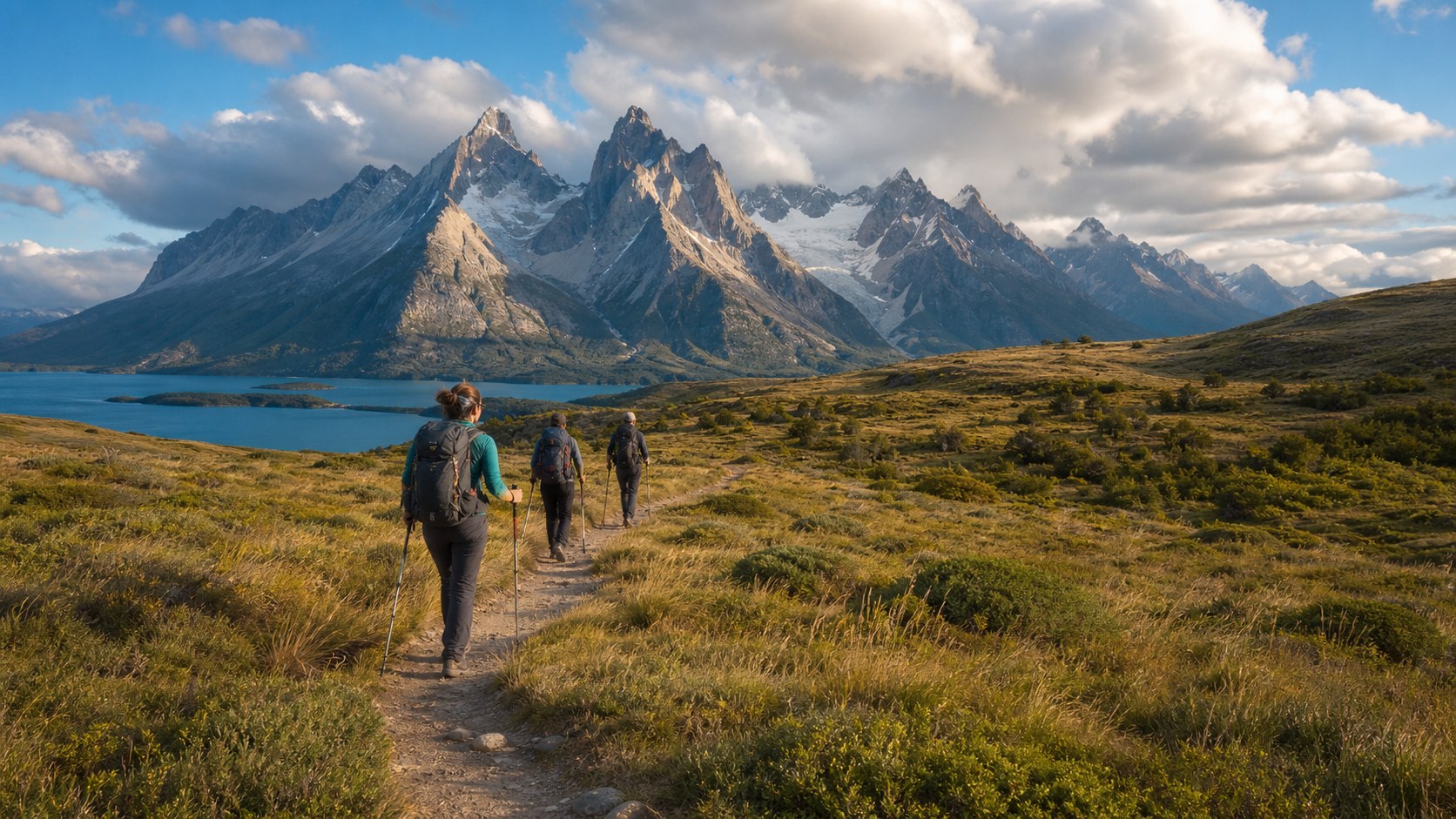
New Zealand's Milford Track offers rainforest, waterfalls, alpine pass drama, and a strong sense of progression. Patagonia's W Trek in Torres del Paine is another classic, with granite towers, lakes, wind, and weather that can make even ordinary mileage feel dramatic. These hikes reward travelers who enjoy waking up inside the route rather than dipping in for a single viewpoint.
High-Impact Day Hikes
Not every unforgettable trail requires a week. The Tongariro Alpine Crossing in New Zealand can deliver volcanic terrain, colored lakes, steam vents, and wide views in one demanding day. In Norway, hikes such as Besseggen Ridge or segments near the Lofoten Islands bring sharp profiles and big water views when weather allows. Madeira's levada and peak routes can turn a single day into a corridor of cliffs, tunnels, forest, and cloud.
Day hikes still deserve serious planning. Weather windows, return transport, daylight, water, and exposure matter even when you sleep in a hotel afterward. The danger of a famous day hike is that travelers treat it like a tourist stop. The better approach is to respect it as a compact mountain day.
Remote Treks for Stronger Travelers
Everest Base Camp is famous for altitude, villages, suspension bridges, and the gradual reveal of Himalayan scale. It is not technically difficult for most trekkers, but altitude changes everything. Good acclimatization, conservative pacing, and honest health monitoring matter more than speed. In Pakistan, the trek toward K2 Base Camp is more remote and demanding, with glacier travel and expedition atmosphere that require serious support.
Other remote routes, such as sections of Greenland, the Arctic Circle Trail, or wilderness traverses in Tasmania, ask hikers to manage weather, navigation, and isolation. These trips can be deeply rewarding, but they are poor choices for ego-driven planning. The more remote the trail, the more your systems matter: layers, food, shelter, communication, and judgment.
Coastal, Desert, and Cultural Routes
Some of the most memorable hikes trade high peaks for coastlines, deserts, or lived-in landscapes. The Fisherman's Trail in Portugal follows Atlantic cliffs, fishing villages, sand, and sea wind. Jordan's routes near Petra and Wadi Rum mix sandstone, desert camps, and cultural history. Japan's Kumano Kodo uses forest paths, shrines, small inns, and hot springs to create a quieter kind of pilgrimage.
These routes are ideal for travelers who want the walk to connect with meals, villages, stories, and local hospitality. They may not have the raw altitude drama of the Himalaya, but they often linger because the trail feels woven into daily life. A hiking adventure does not need to be remote to be transformative.
Choosing the Right Trail for Your Season and Body
The best trail for you is the one you can prepare for well. Consider elevation gain, surface, pack weight, altitude, heat, cold, and how many consecutive days you can walk without turning the trip into a sufferfest. A route that is perfect for a fit mountain hiker may be miserable for someone who loves scenery but needs gentler footing.
Research permit systems and crowd patterns before booking flights. Some trails require reservations months in advance, while others are best handled with local flexibility. Train with the footwear and pack you will use, test layers in bad weather, and choose a route that leaves room for delight. A hike becomes unforgettable when challenge and attention stay in balance.
A practical hiking plan starts with the least glamorous details: where water comes from, how weather changes through the day, what happens if transport is missed, and whether the route is obvious in fog. These questions do not shrink the adventure. They create the confidence that lets you look up from the map and actually enjoy the place you came to see.
Training should resemble the trail. Long flat walks help, but they do not fully prepare a traveler for steep descents, uneven stone, heat, altitude, or carrying a pack on consecutive days. Add stairs, hills, loaded walks, and back-to-back outings before a major trip. Small discomforts discovered at home are much easier to solve than surprises halfway through a mountain itinerary.
Trail culture matters too. Some routes pass through villages, farms, sacred places, or fragile habitats where visitors are guests rather than conquerors. Learning a few local phrases, staying on marked paths, closing gates, and buying from local services can change the tone of the trip. The walk becomes a relationship with a place, not only a route across it.
Photography can be a reward, but it should not control the day. The best light may arrive before crowds, after weather shifts, or during a quiet moment that never becomes the famous viewpoint. Hikers who pause for sound, smell, wind, and small details often come home with a richer memory than those who hurry from landmark to landmark.
The trail that changes you may be famous, but it may also be quieter than expected. What matters is the fit between route and traveler. Choose well, walk attentively, and give the landscape enough time to become more than a backdrop.
Permit systems are often the first real planning hurdle for top trails. The Inca Trail, popular national park routes, hut networks, and protected wilderness areas may sell out long before the weather looks predictable. Do not treat permits as a final detail. For famous routes, they are often the framework around which flights, guides, and lodging must be built.
Altitude is the second issue many travelers underestimate. A moderate day at sea level can feel completely different above 10,000 feet, where appetite, sleep, and pace may change. Routes in Nepal, Peru, Bolivia, and parts of the Rockies reward slow acclimatization more than aggressive ambition. The best summit or pass is the one you reach while still thinking clearly.
Footing matters as much as scenery. A trail with stone steps, scree, roots, mud, snow patches, or long descents can feel much harder than its mileage suggests. Read recent trail reports and look for surface descriptions, not only elevation profiles. Your footwear choice should match the ground underfoot rather than the style of trip photo you prefer.
Hut-to-hut hiking can be a wonderful middle ground between wilderness and comfort. Routes in the Alps, Dolomites, Japan, and New Zealand let travelers carry less while still waking up inside the landscape. The tradeoff is that reservations, arrival times, shared rooms, and hut etiquette become part of the experience. That structure suits some hikers beautifully and frustrates others.
Camping routes create a different relationship with the trail. You carry more weight, manage food, protect sleep, and pay closer attention to water and weather. The reward is flexibility and a deeper sense of immersion. For a first major camping trek, choose a route with clear campsites and bailout options before attempting something remote and committing.
Navigation should not depend on a single phone battery. Offline maps are useful, but carry a backup power source and understand major landmarks, junctions, and escape routes. In open alpine terrain or desert country, a trail can disappear more easily than expected. Confidence comes from knowing the shape of the day before you begin walking.
Weather turns top trails into different experiences from hour to hour. Mountain storms, coastal fog, desert heat, and high wind can change the risk profile quickly. Start early when local patterns support it, carry layers even under a blue sky, and treat turnaround decisions as normal trailcraft rather than defeat. A missed viewpoint is better than a bad incident.
Food planning is also part of comfort. Long hikes are easier when snacks are reachable, familiar, and steady rather than saved for a dramatic break. On multi-day routes, appetite may change with altitude or fatigue, so pack options you will actually eat. A beautiful trail becomes harder to appreciate when energy drops too low.
Crowds require strategy, not resentment. Famous trails are famous for a reason, and many people may want the same view. Starting early, walking in shoulder season, staying overnight near the route, or choosing a less-known variant can restore a sense of space. Sometimes the best memory comes from a side trail rather than the postcard viewpoint.
The most responsible hikers think about impact before boots hit the ground. Stay on durable surfaces, respect closures, avoid loud behavior, and support local guides or lodging when appropriate. A trail that carries thousands of visitors needs each person to leave it a little less stressed than they found it.
Pacing is one of the quiet arts of hiking. Many travelers start too quickly because the morning feels cool and the first miles are exciting. A steadier pace protects knees, lungs, mood, and conversation. On long routes, the goal is not to win the first hour; it is to still have enough attention left for the final view, descent, and evening meal.
Recovery deserves a place in the itinerary. A hard trail followed by a long drive, tight dinner booking, or early flight can flatten the pleasure of the day. Leave time to change clothes, eat, stretch, and let the walk settle. The afterglow is part of why people travel for trails in the first place.
When comparing famous routes, choose the one whose difficulties sound meaningful rather than merely tolerable. If you love villages, a cultural route may be better than a remote traverse. If you crave silence, a quieter wilderness trail may beat a famous path with crowds. The right trail is the one you will respect while you are on it.