Culture Becomes Real When Travel Moves Beyond Sightseeing
The best cultural travel experiences are not only the famous monuments, museums, and performances that appear in guidebooks. They are the moments when travelers begin to understand how a place works from the inside: how people cook, celebrate, worship, build, remember, trade, repair, sing, mourn, and welcome guests. A good cultural trip does not ask travelers to consume difference as entertainment. It invites them to pay attention, listen carefully, and connect the visible beauty of a destination with the daily lives that keep it alive.
A: It has local context, fair participation, clear boundaries, and a connection to real community life.
A: They are worth it when the guide teaches history, etiquette, and present-day meaning rather than only moving people between stops.
A: Ask permission, follow local rules, keep groups small, and treat private life as private.
A: Both can work well. Museums provide context, while local experiences show how culture continues now.
A: A guided market walk, craft workshop, or neighborhood tour is a strong starting point.
A: Look for direct payment, named makers, small groups, and hosts who explain the tradition.
A: Yes, especially with hands-on activities, shorter visits, food stops, and clear etiquette.
A: Sometimes. Ask first, obey site rules, and avoid turning people into props.
A: One deep cultural experience plus flexible time is often better than several rushed stops.
A: It should make travelers more informed, respectful, and attentive to the people behind a place.
Hands-On Traditions That Teach Through Practice
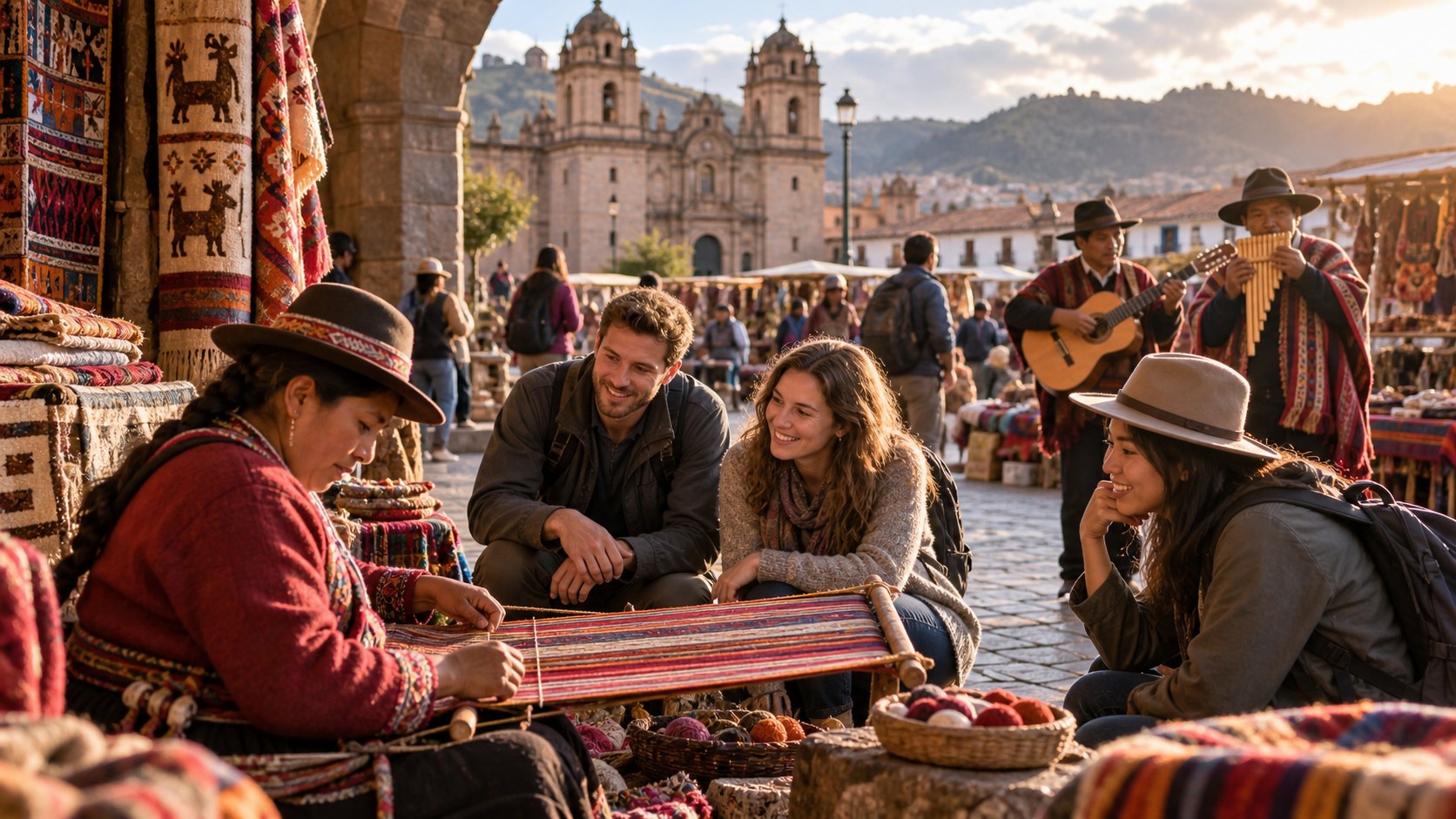
Workshops can turn culture from something observed into something felt in the hands. Learning to shape clay in Oaxaca, weave in Peru, cook in Thailand, carve in Bali, or make paper in Japan gives travelers a slower relationship with skill. The point is not to master a craft in one afternoon. It is to notice patience, repetition, local materials, and the pride that comes from a tradition surviving through people rather than displays.
The best workshops are small, fairly paid, and hosted by people who explain context as well as technique. Travelers should ask where materials come from, how the craft is used locally, and what pressures threaten it today. A souvenir bought after that kind of lesson carries more meaning because it is connected to a person, a process, and a place.
Food, Markets, and Daily Social Rhythm
Food is often the easiest doorway into culture because it appears every day, not only during special events. Morning markets reveal what a community values before ingredients become restaurant dishes. Bread lines, spice stalls, tea counters, fish auctions, family lunch rooms, and street snacks show timing, economy, season, and habit. A traveler who follows food carefully can learn why neighborhoods wake early, why certain meals are shared, and why some dishes belong to celebration rather than routine.
A food experience becomes more cultural when it includes explanation and humility. Instead of racing through famous dishes, travelers can choose one market tour, one household-style meal, and one local restaurant where the menu reflects the region. Asking how something is normally eaten often teaches more than asking what is most popular with visitors.
Markets also require good manners. Buy something before taking close photos, step aside after ordering, and remember that people are working. Respectful market travel feels less like collecting images and more like being briefly welcomed into a local system.
Music, Dance, and Performance With Context
Live performance can be unforgettable when it is understood as living culture rather than a nightly tourist product. Flamenco in Andalusia, tango in Buenos Aires, gamelan in Indonesia, fado in Lisbon, bluegrass in Appalachia, and drumming traditions across West Africa all carry histories of migration, resistance, celebration, class, faith, and place. The strongest experiences explain enough context that the sound has roots.
Travelers should look for venues where local audiences are present, artists are credited, and performances are not stripped of meaning for easy consumption. A small club, community festival, church concert, neighborhood dance hall, or cultural center may feel more honest than a polished show created only for buses. The evening should leave travelers with questions, not just applause.
Heritage Sites That Connect Past and Present
World heritage sites and historic districts can be powerful cultural experiences when travelers understand that they are not frozen scenes. Temples, old towns, archaeological sites, mosques, cathedrals, castles, memorials, and ruins sit inside present-day politics, community needs, conservation decisions, and visitor pressure. Seeing them well means asking what the site means now, not only when it was built.
A strong guide can change the entire visit. Dates and names matter, but so do stories about restoration, displaced communities, sacred rules, changing neighborhoods, and the tension between access and protection. Travelers who slow down at one site often understand more than those who rush through five.
Homestays, Neighborhood Walks, and Local Guides
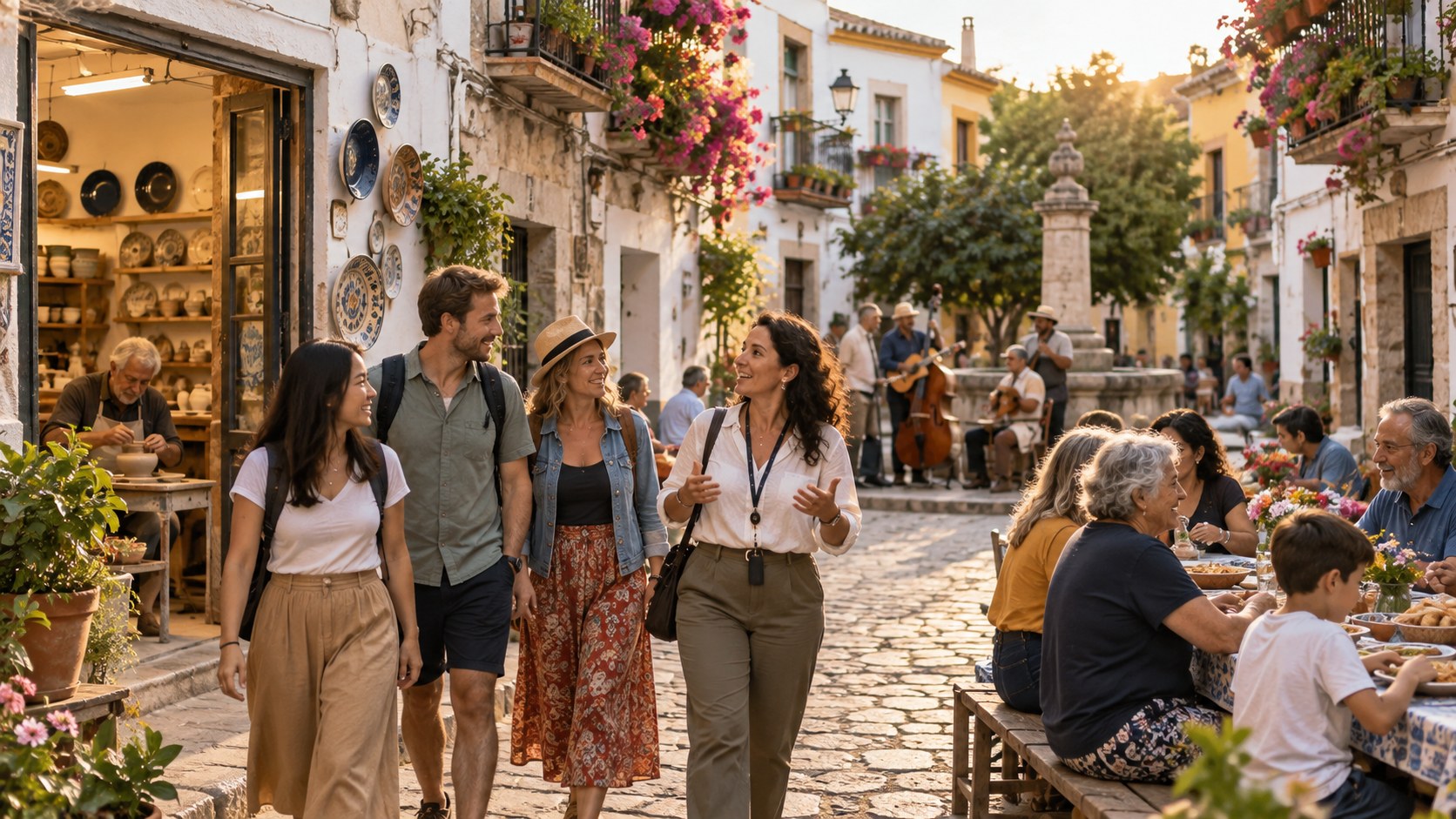
Homestays and neighborhood walks can be meaningful when they are structured ethically and chosen with care. The best versions do not treat private life as spectacle. They create a respectful exchange where hosts set boundaries, travelers learn local etiquette, and money reaches the people doing the welcoming. A good guide helps travelers notice ordinary details: laundry lines, corner shops, courtyard layouts, school schedules, gardens, public art, and how neighbors use shared space.
These experiences are strongest when groups are small and expectations are clear. Travelers should not arrive hoping for emotional access on demand. They should arrive ready to listen, support local businesses, and accept that some parts of community life are not theirs to enter.
Choosing Cultural Experiences Responsibly
Responsible cultural travel begins before booking. Read who owns the experience, how hosts are paid, whether sacred or private practices are being commercialized, and whether the activity seems built around dignity or display. Cheap cultural experiences can be expensive for communities if they underpay artists, crowd fragile sites, or reward shallow performances.
The best cultural experiences make travelers more careful, not more entitled. They help visitors understand that culture is not a backdrop for vacation. It is lived by people who continue after travelers leave. When an experience creates respect, context, and fair exchange, it can become one of the most valuable reasons to travel.
Travelers can improve almost any cultural itinerary by choosing fewer activities and giving each one more room. A market visit followed by a cooking class and a slow neighborhood walk may teach more than a whole day of disconnected stops. Depth often comes from staying with one subject long enough to notice its layers.
Language also matters. Even a handful of greetings and polite phrases can change the tone of an encounter. They show that the traveler has made an effort to meet people partway. Translation apps help, but they do not replace patience, eye contact, and the willingness to be corrected gently.
Museums deserve a place in cultural travel when they are used as preparation rather than replacement. Visiting a museum before entering a historic neighborhood, craft region, or sacred landscape can provide vocabulary and context. The experience outside then feels more legible because the traveler has already learned what to notice.
Cultural travel should also include rest. Constant interpretation can become tiring, especially in places with unfamiliar customs, languages, or sensory intensity. A quiet cafe, park bench, ferry ride, or simple meal helps travelers process what they have seen and avoid turning every encounter into a lesson.
The most rewarding experiences usually leave travelers with a more complicated affection for a place. They may reveal beauty and hardship together, pride and pressure together, tradition and change together. That complexity is the sign of a real cultural encounter. It means the destination has become more than a pretty setting.
Festivals can be excellent cultural experiences when travelers understand their role before arriving. A procession, dance, feast, costume, or public ritual may look beautiful, but it may also carry religious, ancestral, political, or seasonal meaning. Visitors should learn whether participation is welcome, where observation is appropriate, and what behavior would feel disruptive. Knowing those limits helps the event remain generous rather than invaded.
Cultural immersion can also happen through transportation. A ferry commute, long-distance train, shared minibus, tram route, or walking path can reveal how a city or region organizes itself. Travelers notice work patterns, school routes, market timing, class divisions, and the relationship between center and edge. These ordinary movements often explain a place more honestly than a single landmark.
Bookstores, libraries, cinemas, and small galleries are easy to overlook, yet they show how a place thinks about itself. Local stories, posters, performances, and exhibitions reveal contemporary identity in a way that historic attractions may not. Even when language is a barrier, the subjects people choose to display can tell travelers what is being debated, remembered, protected, or reimagined.
Cultural travel is stronger when travelers learn what not to access. Some ceremonies, neighborhoods, archives, kitchens, and family spaces are not improved by visitor attention. Accepting a boundary is not a missed opportunity. It is proof that the traveler understands culture as living life rather than an open exhibit.
A good cultural itinerary can pair old and new. Visit a historic site, then see how younger artists, chefs, designers, or musicians are reshaping inherited traditions. This prevents the destination from becoming a museum of itself. Culture is not only preservation. It is also argument, invention, adaptation, and the daily work of deciding what continues.
Travelers should think carefully about the stories they tell afterward. Describing a culture as exotic, untouched, simple, or timeless can erase real people and present-day complexity. Better stories name the specific craft, guide, meal, neighborhood, or lesson. They admit what the traveler did not know. They leave room for the place to be more than a memory.
Cultural experiences also become stronger when travelers compare less and notice more. It is tempting to measure every city against somewhere already known, but comparison can flatten the details that make a place distinct. Instead, ask what this community values, what the pace of public life feels like, and what kinds of hospitality appear in ordinary moments. Those questions keep attention anchored in the destination.
A strong cultural day usually has an arc. It might begin with context in a museum, move into a market or workshop, include a meal that connects with the morning, and end in a public space where the city relaxes. That progression gives travelers a way to understand what they are seeing instead of piling up unrelated impressions. The day feels less busy and more complete.
Travelers should be careful with words such as authentic, local, and traditional. These words can be useful, but they can also hide assumptions. A new restaurant run by young residents may be just as culturally meaningful as an old tavern. A contemporary dance piece may reveal more about a city than a heritage show. Culture is alive because people keep making choices.
Community-led tourism deserves special attention. When residents design the route, set the rules, and benefit from the income, visitors are more likely to encounter a place with dignity. These experiences may be quieter than mass-market tours, but they often provide better context. They also help travelers understand how tourism can support local priorities instead of merely using local atmosphere.
Souvenirs can extend a cultural experience when they are chosen carefully. A handmade bowl, textile, spice, print, book, or instrument should connect to something learned during the trip. Ask how it was made, what care it requires, and whether the sale supports the maker. Buying fewer objects with real provenance is usually better than buying many pieces that could have come from anywhere.
Finally, remember that cultural travel is not a test of how much a visitor can absorb. It is a practice of attention. Some days will be confusing, some explanations will be partial, and some meanings will remain outside the traveler's reach. That is acceptable. The goal is to become a more careful guest, not to claim complete understanding. That humility often creates the best memories.